Case Media
Case Notes
This page keeps the media, full prompt, and original source together so you can inspect the result first and decide whether the prompt is worth copying, saving, or comparing.
Case Insights
To make this page easier to search, cite, and reuse later, the case is also broken down into practical guidance about usage, visual cues, and prompt structure.
Best Fit Scenarios
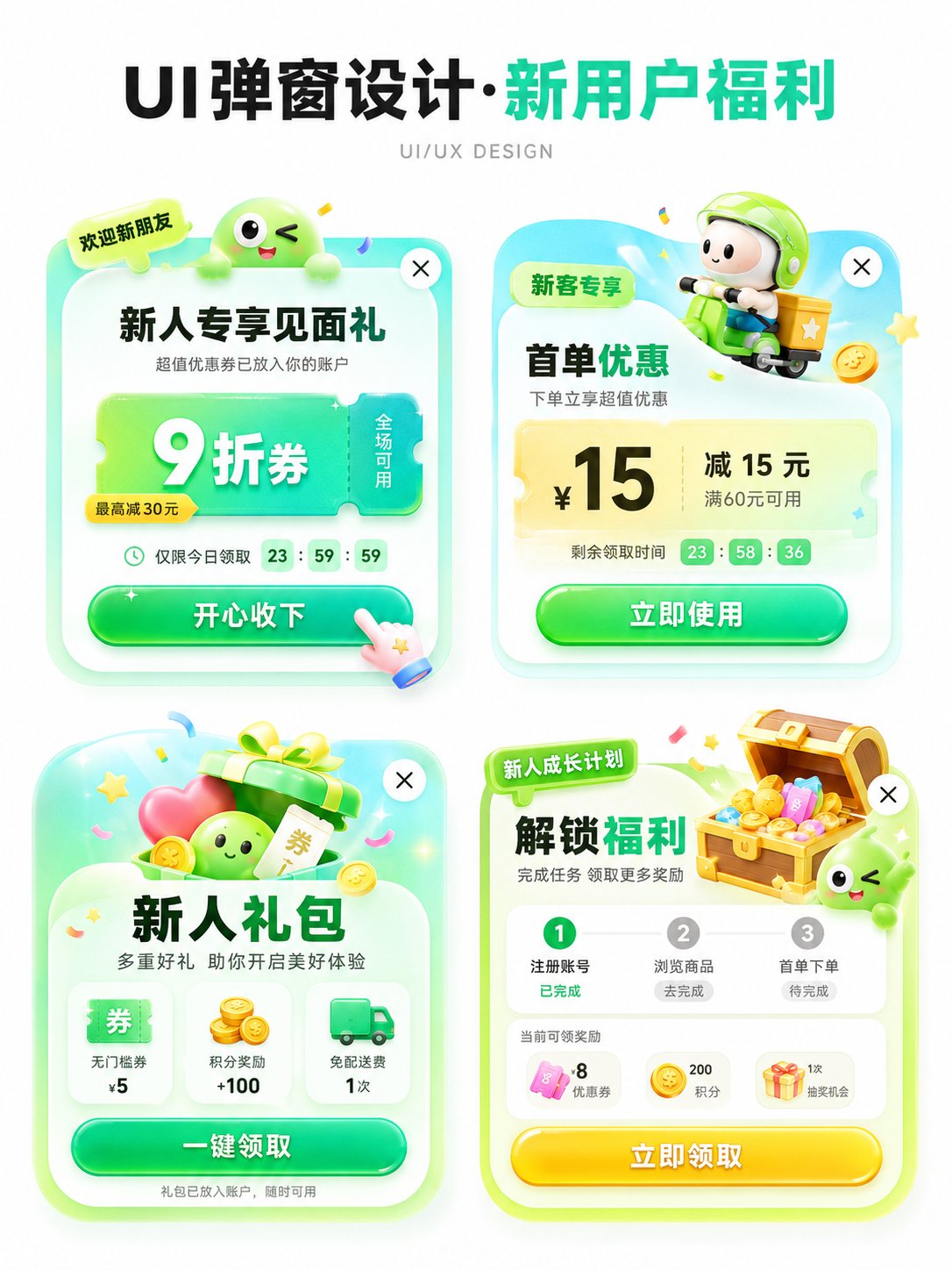
- Use this as a ui & social screens benchmark when you need a fast style baseline before rewriting your own prompt.
- It is especially helpful if your target overlaps with Poster, UI, Screenshot and you want to judge the image result before tuning wording.
- Keep it as a control sample when you compare nearby prompt variants one variable at a time.
Visual Signals To Notice
- The clearest style signals here are Poster, UI, Screenshot, so those should usually stay in your first rewrite.
- The important layer is usually interface density, card hierarchy, and how the screen tells the story before you read small text.
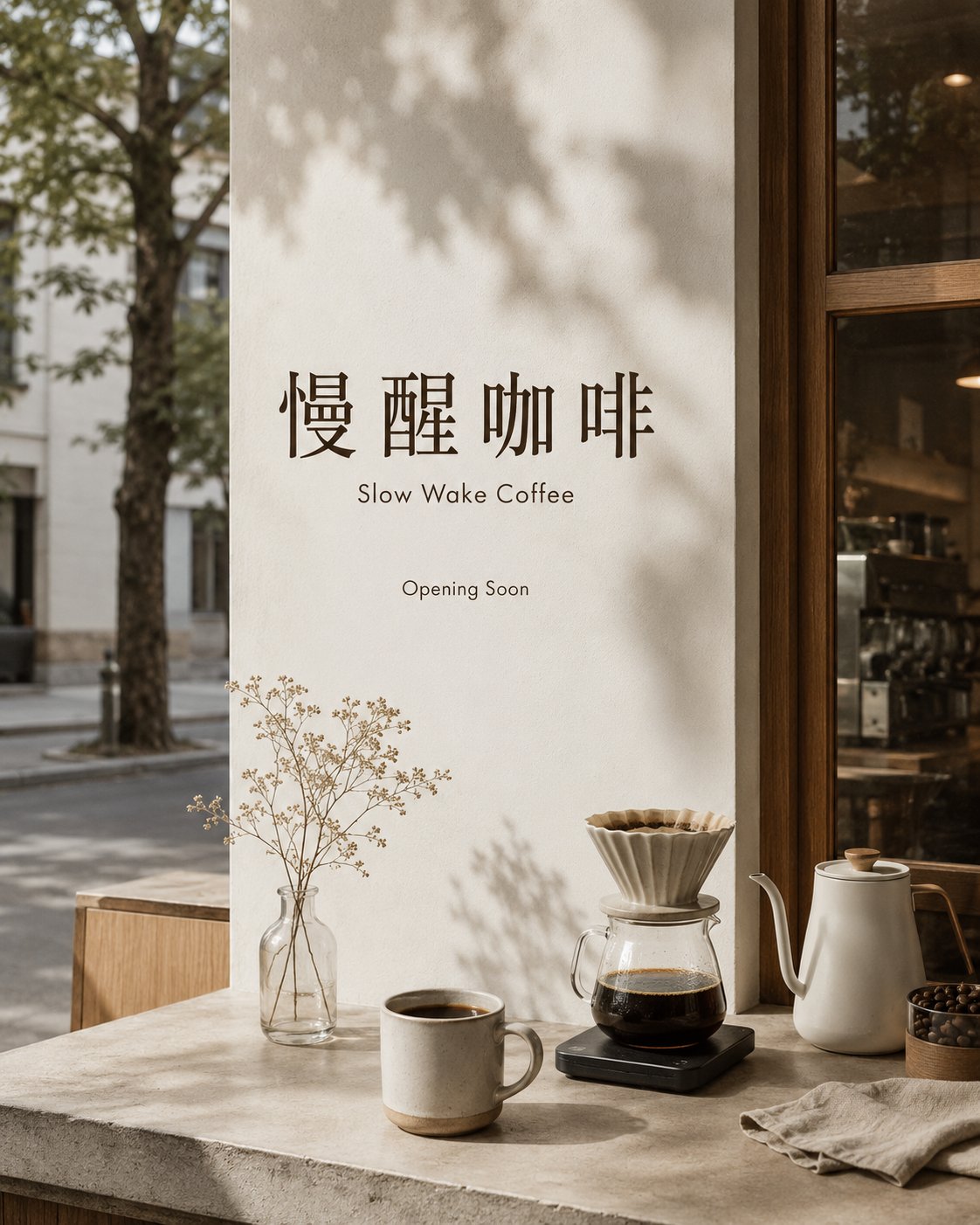
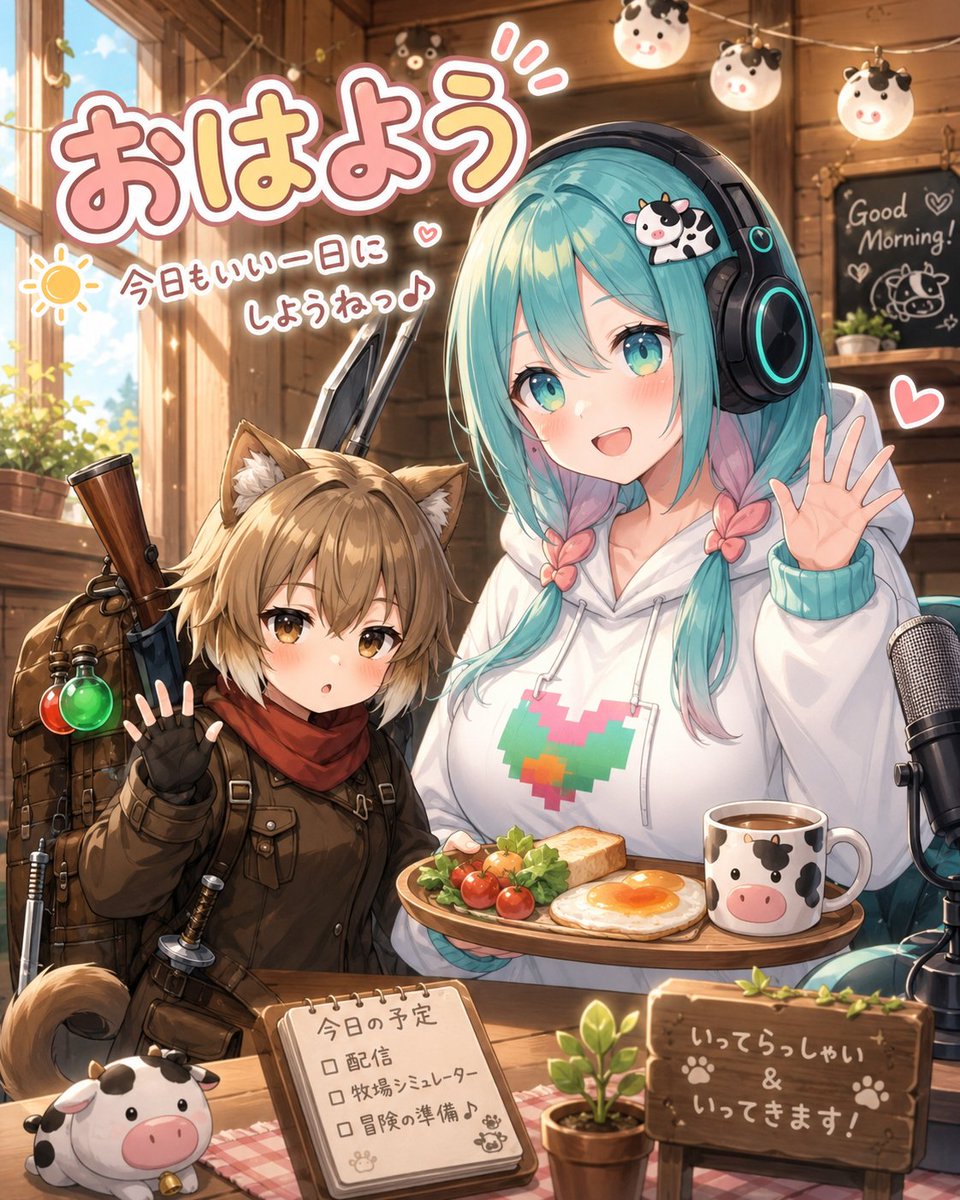
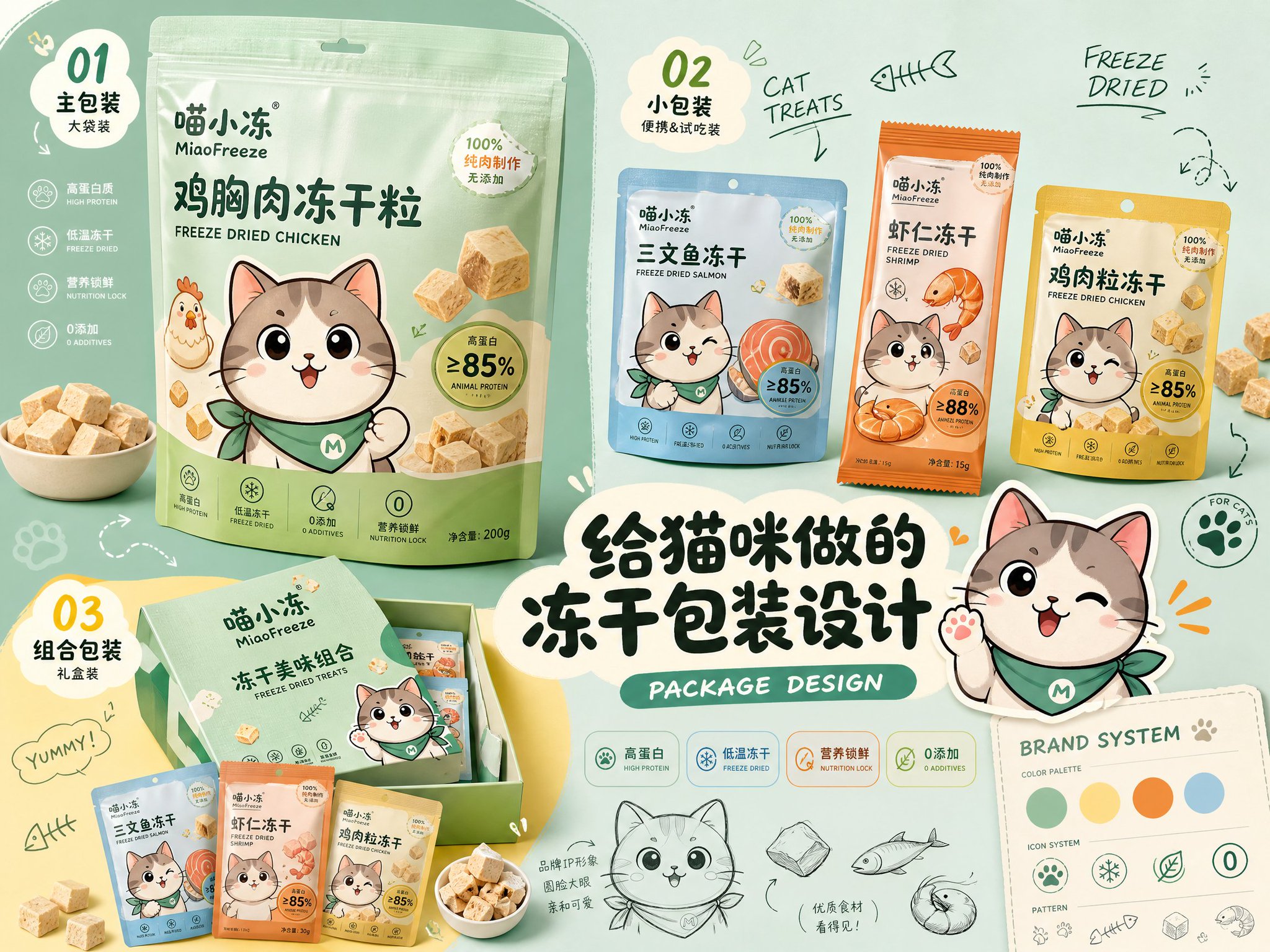
- This case keeps 2 media outputs, which makes it easier to check whether the style remains stable across multiple results.
How The Prompt Is Structured
- The prompt reads as a long, highly specified prompt, which is useful when you want to judge how much specificity this direction needs.
- Its keyword cluster is centered on Poster, UI, Screenshot, so you can usually keep that cluster while swapping subject, camera, layout, or copy details.
- A practical rewrite path is: keep the outcome, keep the strongest style cues, then replace only the subject and environment blocks.
Good Follow-up Questions
- What changes first if you keep Poster, UI, Screenshot but switch the subject matter?
- Which part of the result comes from section-level structure (UI & Social Screens) versus tag-level style cues?
- Which related cases in the same section give you a cleaner or more extreme variation of the same direction?
Full Prompt
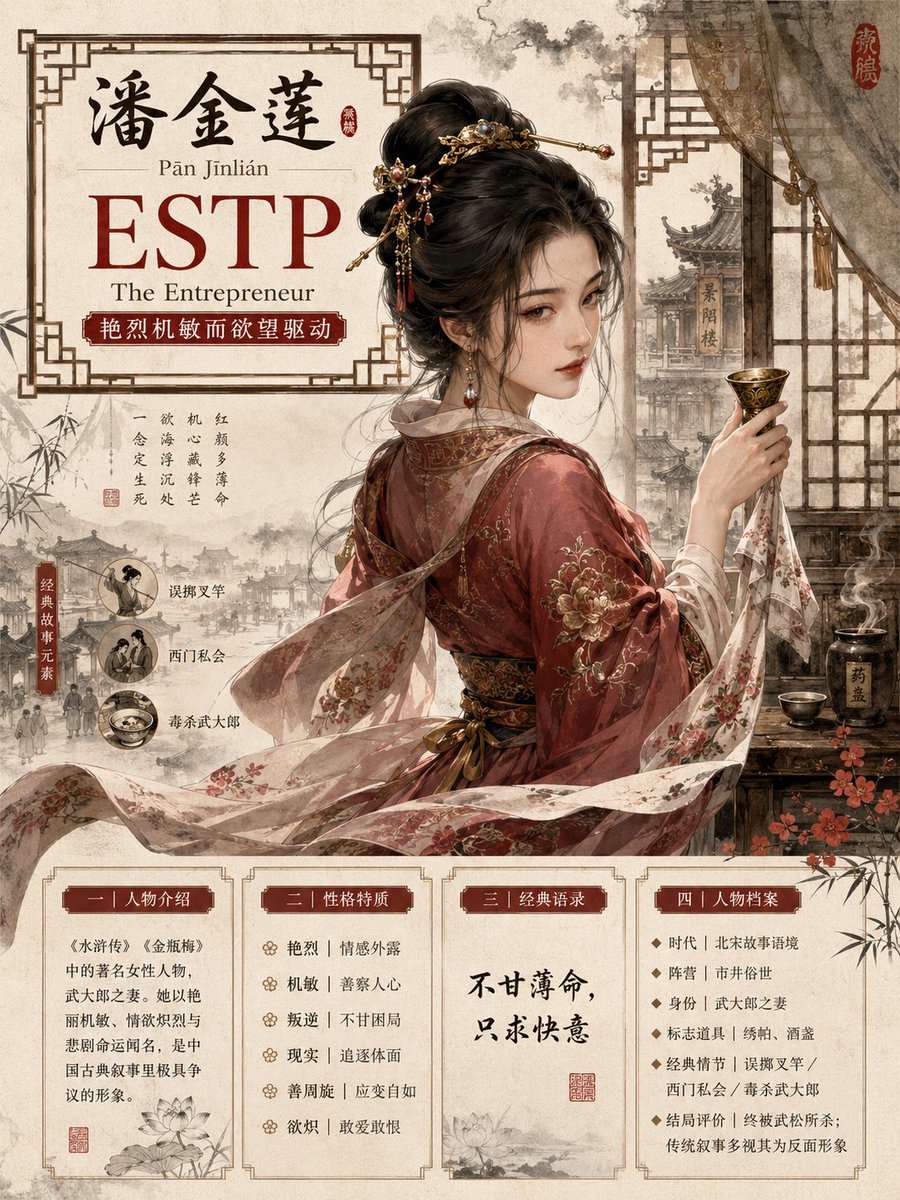
Please generate a [High-end National Style Information Poster for Classical Chinese Character MBTI]. [Character] Character Name: {argument name="character name" default="Pan Jinlian"} [Pre-analysis Requirements] Please complete and apply the following information based on the mainstream image of the character in classical Chinese literature, historical narratives, or folk culture: Character Pinyin: Use standard Hanyu Pinyin, with tones preferred. MBTI Type: Choose the type that best fits the core personality of the character. MBTI English Title: Use common MBTI titles, such as The Commander / The Logistician / The Advocate. Chinese Personality Label: Use 8-14 words to summarize the character's temperament. Character Feature Extraction: Identity positioning, core values, 4-6 personality keywords, symbolic style elements, representative props / weapons / mounts, 1-3 classic story elements, character ending or historical evaluation. [Overall Style] Vertical 3:4 composition, 4K Ultra HD, high-end national style character setting poster. Visual fusion: Chinese ink wash, light-colored meticulous painting, rice paper texture, traditional Chinese patterns, and modern high-quality infographic layout. The background is a warm rice-white rice paper color, with light ink clouds, meander patterns, window lattice grilles, and cinnabar seals. Overall temperament: elegant, solemn, collectible, culturally rich, clean and high-end. [Core Visual: 3D Popping Out of Frame] The character subject must have a strong semi-realistic effect of '3D breaking through the frame / popping out of the frame / leaping out of the painting'. The character's upper body or full body is located in the central main visual area, creating clear front and back depth of field. Sleeves, weapons, ribbons, hair, mounts, clouds, or signature props can break through the Chinese-style border to create a 3D relief-like out-of-frame effect. The visual focus must be the character. Maintain Eastern classical aesthetics; no modern game UI, no cyberpunk, no Western fantasy armor, no exaggerated anime faces. [Character Styling] Design based on the mainstream image of {argument name="character name" default="Pan Jinlian"}: retain the most recognizable clothing, facial features, posture, and era temperament. The expression must match the personality. Actions should have a narrative sense, reflecting the character's fate and personality strength. [Layout Structure] The poster is divided into three areas: 1. Top Title Area: Main title, large MBTI, English title, Chinese personality label, wrapped in traditional window lattice. 2. Middle Main Visual Area: Character occupies the core, 3D effect is prominent, ink wash rendering. 3. Bottom Information Area: Designed as 4 neat modules for introduction, personality traits, classic quotes, and character archives. [Colors] Primary colors: rice paper white, light ink gray, cinnabar red, deep gold. Secondary colors adjusted based on character temperament. Colors are restrained and high-end.