Case Media
Case Notes
This page keeps the media, full prompt, and original source together so you can inspect the result first and decide whether the prompt is worth copying, saving, or comparing.
Case Insights
To make this page easier to search, cite, and reuse later, the case is also broken down into practical guidance about usage, visual cues, and prompt structure.
Best Fit Scenarios
- Use this as a portrait & photography benchmark when you need a fast style baseline before rewriting your own prompt.
- It is especially helpful if your target overlaps with Portrait, Infographic, Brand and you want to judge the image result before tuning wording.
- Keep it as a control sample when you compare nearby prompt variants one variable at a time.
Visual Signals To Notice
- The clearest style signals here are Portrait, Infographic, Brand, so those should usually stay in your first rewrite.
- Focus on framing, light direction, pose, and the distance between subject and camera.
- This case keeps 2 media outputs, which makes it easier to check whether the style remains stable across multiple results.
How The Prompt Is Structured
- The prompt reads as a long, highly specified prompt, which is useful when you want to judge how much specificity this direction needs.
- Its keyword cluster is centered on Portrait, Infographic, Brand, so you can usually keep that cluster while swapping subject, camera, layout, or copy details.
- A practical rewrite path is: keep the outcome, keep the strongest style cues, then replace only the subject and environment blocks.
Good Follow-up Questions
- What changes first if you keep Portrait, Infographic, Brand but switch the subject matter?
- Which part of the result comes from section-level structure (Portrait & Photography) versus tag-level style cues?
- Which related cases in the same section give you a cleaner or more extreme variation of the same direction?
Full Prompt
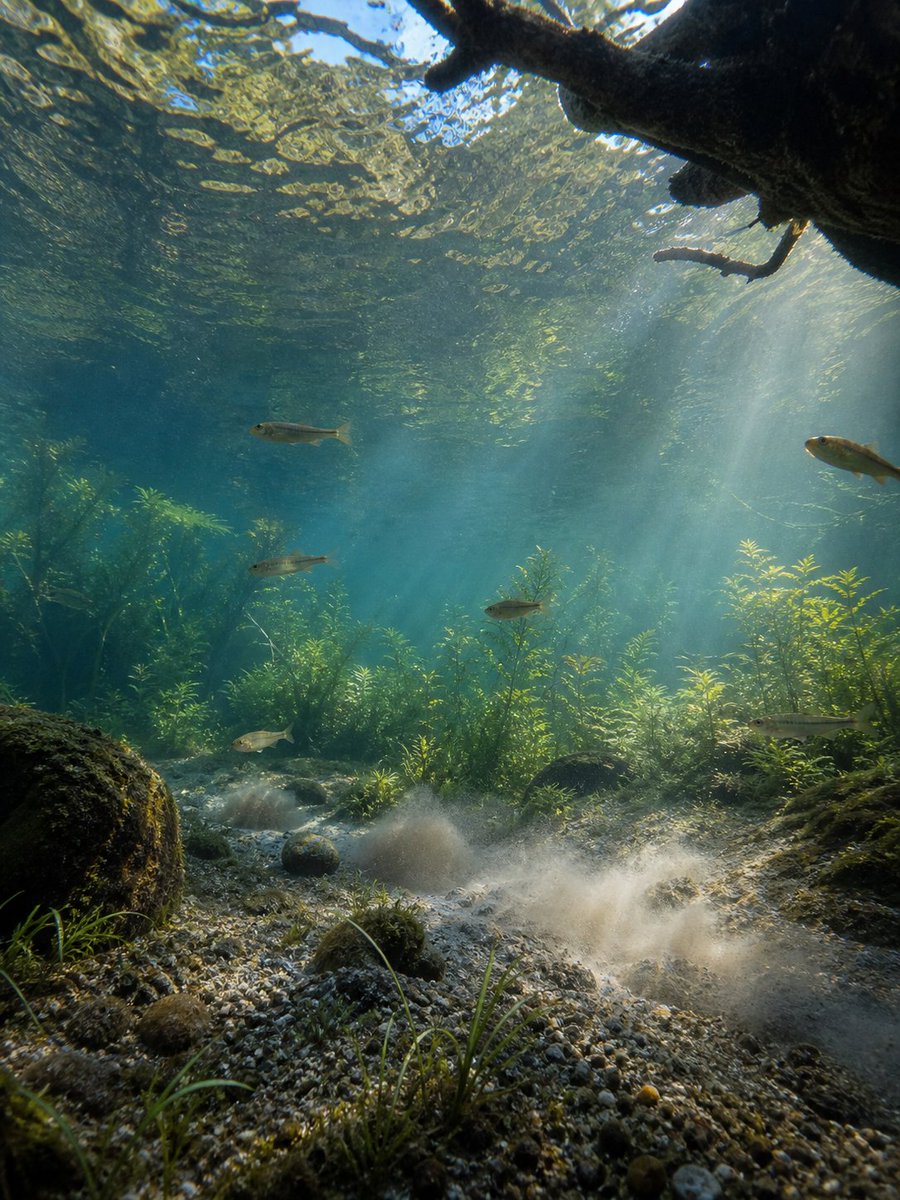
Shot with a high-definition underwater camera, this prompt captures real underwater natural scenery in a {argument name="environment description" default="clear shallow stream next to a tropical primeval forest"}. Vertical composition, 3:4 aspect ratio, medium-to-long shot. The lens is slightly below the water surface, showing the shimmering bottom of the water surface above with realistic water wave refraction and natural reflections. Sunlight shines diagonally into the water from the top right, forming soft beams and underwater spots. Dark reflections and shadows of large tree branches occupy part of the composition in the upper right. In the middle is clear and quiet stream water with slight suspended particles and {argument name="number of fish" default="5-8"} native freshwater small fish swimming naturally, mainly gray-silver and light brown, varying in size and distance, not forming an organized school. On the stream bed, deep green, yellow-green, and brownish-green water plants grow naturally, swaying gently with the current, distributed naturally unlike an artificial aquarium. The bottom consists of gray-brown fine sand, gravel, pebbles, and several naturally shaped stones with slight algae marks and signs of water erosion. Multiple springs at the bottom show fine sand billowing slowly from small holes, creating light sand clouds and local water disturbances, not white smoke, steam, or large bubbles. Natural landscape live-action photography, high-end natural documentary feel, close to National Geographic ecological photography. Features transparent water, natural lighting, restrained colors, realistic underwater optical effects, slight graininess, natural depth of field, and high-definition details. No people, no buildings, no artificial traces, no text, no borders, no LOGO. Avoid CG feel, aquarium look, seabed coral, exaggerated fish schools, oversaturated greens, dreamy lighting effects, or plastic water plants.