Case Media
Case Notes
This page keeps the media, full prompt, and original source together so you can inspect the result first and decide whether the prompt is worth copying, saving, or comparing.
Case Insights
To make this page easier to search, cite, and reuse later, the case is also broken down into practical guidance about usage, visual cues, and prompt structure.
Best Fit Scenarios
- Use this as a portrait & photography benchmark when you need a fast style baseline before rewriting your own prompt.
- It is especially helpful if your target overlaps with Portrait, Cinematic, Brand and you want to judge the image result before tuning wording.
- Keep it as a control sample when you compare nearby prompt variants one variable at a time.
Visual Signals To Notice
- The clearest style signals here are Portrait, Cinematic, Brand, so those should usually stay in your first rewrite.
- Focus on framing, light direction, pose, and the distance between subject and camera.
- This case keeps one primary output, so the first image should be treated as the main visual reference.
How The Prompt Is Structured
- The prompt reads as a long, highly specified prompt, which is useful when you want to judge how much specificity this direction needs.
- Its keyword cluster is centered on Portrait, Cinematic, Brand, so you can usually keep that cluster while swapping subject, camera, layout, or copy details.
- A practical rewrite path is: keep the outcome, keep the strongest style cues, then replace only the subject and environment blocks.
Good Follow-up Questions
- What changes first if you keep Portrait, Cinematic, Brand but switch the subject matter?
- Which part of the result comes from section-level structure (Portrait & Photography) versus tag-level style cues?
- Which related cases in the same section give you a cleaner or more extreme variation of the same direction?
Full Prompt
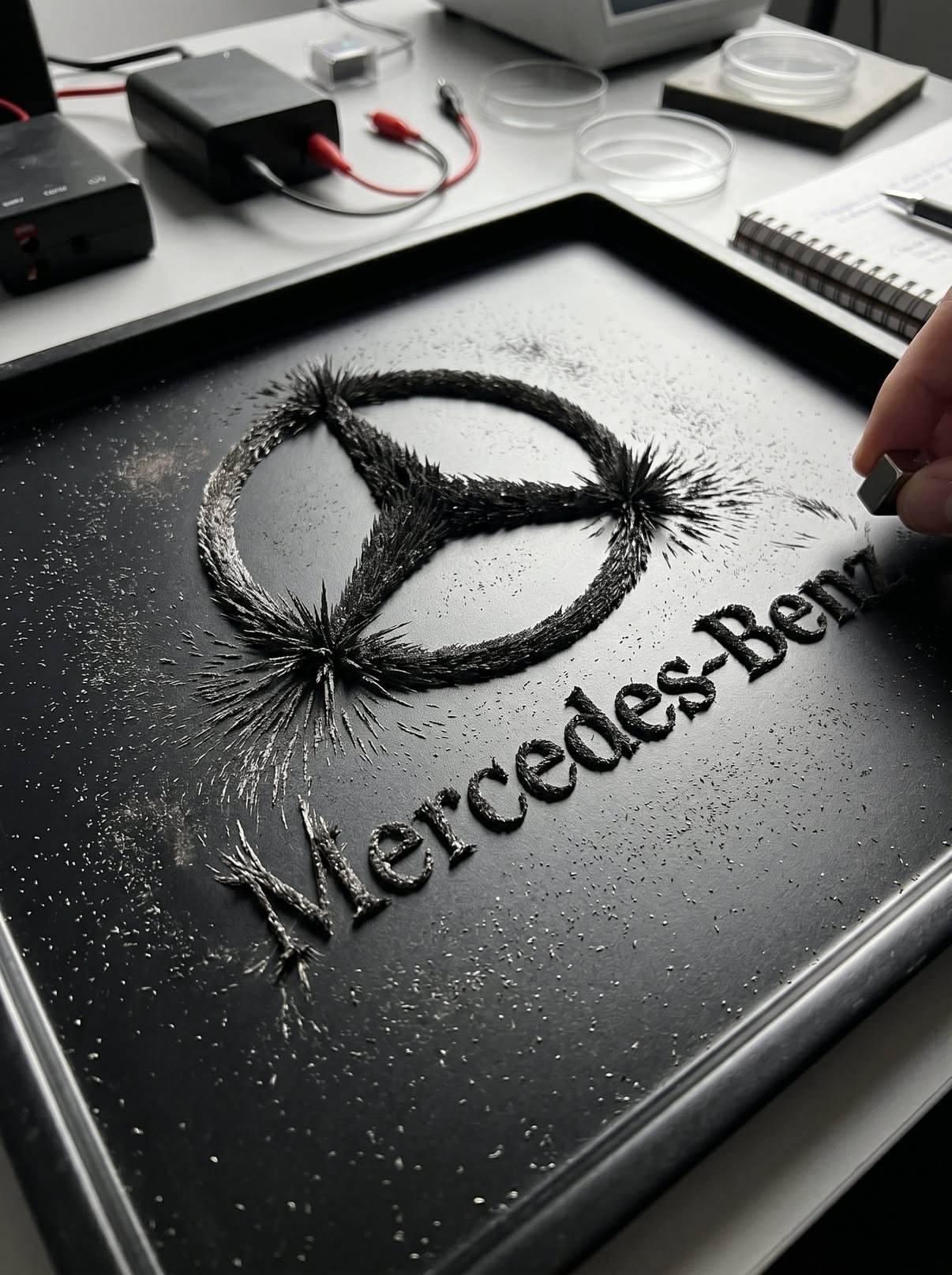
Transform the uploaded logo into a hyper-realistic scene where the logo silhouette is formed by iron filings reacting to a magnetic field. The logo must keep its exact shape and proportions, appearing as if a magnet shaped like the logo (or hidden beneath the surface) is influencing the filings to align naturally into that recognizable formation. Material details: Fine iron filings with sharp, spiky, needle-like structures. Dense clustering along magnetic field lines forming the logo silhouette. Variation in density — thick near magnetic poles, thinner outward. Matte dark metallic texture with subtle reflections. Physics behavior: Iron filings must follow realistic magnetic field patterns — radial and curved lines forming spikes and ridges. Stronger attraction zones create thicker, raised clusters. Outer areas show softer, more dispersed alignment. Natural randomness and slight irregularity — no perfect edges. Some loose filings scattered beyond the main shape. Surface interaction: Flat surface such as a lab table, glass plate, or matte black tray. Filings resting on surface but visibly lifted in areas due to magnetic force (spiky texture). Subtle dust and micro particles around. Environment & human presence: Realistic classroom, science lab, or creative studio environment. A person partially visible — hands holding or moving a magnet beneath the surface or nearby. Possibly a child or adult observing or interacting (adds emotional curiosity). Other subtle elements: notebooks, tools, or lab items out of focus. Lighting: Directional overhead light creating shadows from raised filings. Subtle highlights on metallic edges. Balanced natural or indoor lighting. Atmosphere: Curiosity. Discovery. Educational yet visually satisfying. Quiet but engaging moment. Camera & composition: Top-down or slightly angled close-up view. Logo clearly visible through iron filing formation. Human hands or interaction slightly off-center for storytelling. Format: Aspect ratio: STRICT 4:5 vertical. No text overlays. Style: Hyper-real macro + environmental photography. Physically accurate magnetic behavior. Cinematic yet grounded realism.