Case Media
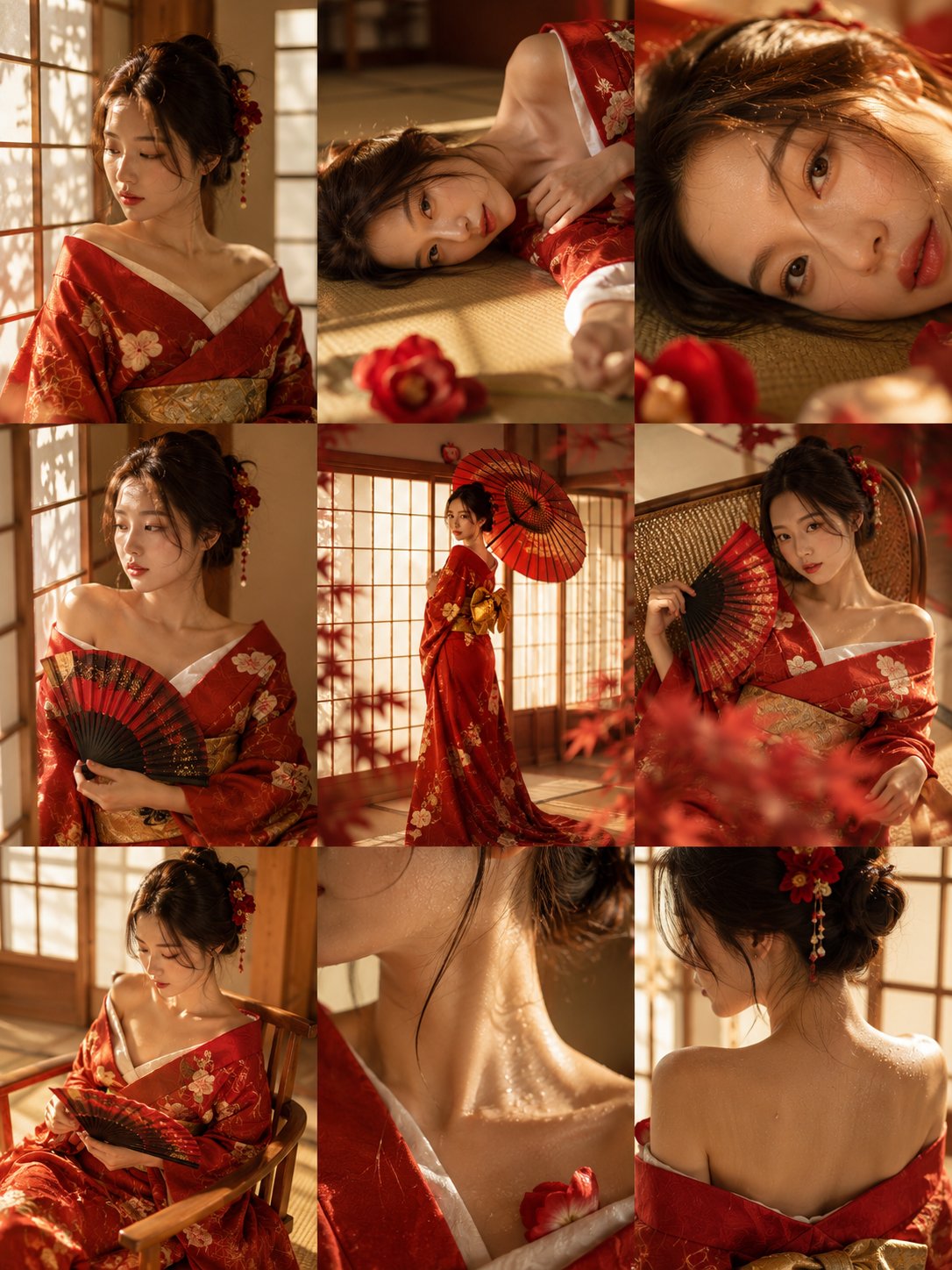
Case Notes
This page keeps the media, full prompt, and original source together so you can inspect the result first and decide whether the prompt is worth copying, saving, or comparing.
Case Insights
To make this page easier to search, cite, and reuse later, the case is also broken down into practical guidance about usage, visual cues, and prompt structure.
Best Fit Scenarios
- Use this as a character design benchmark when you need a fast style baseline before rewriting your own prompt.
- It is especially helpful if your target overlaps with Portrait, Cinematic, Fashion and you want to judge the image result before tuning wording.
- Keep it as a control sample when you compare nearby prompt variants one variable at a time.
Visual Signals To Notice
- The clearest style signals here are Portrait, Cinematic, Fashion, so those should usually stay in your first rewrite.
- Look at silhouette, costume language, mood styling, and whether the character reads clearly at a glance.
- This case keeps one primary output, so the first image should be treated as the main visual reference.
How The Prompt Is Structured
- The prompt reads as a long, highly specified prompt, which is useful when you want to judge how much specificity this direction needs.
- Its keyword cluster is centered on Portrait, Cinematic, Fashion, so you can usually keep that cluster while swapping subject, camera, layout, or copy details.
- A practical rewrite path is: keep the outcome, keep the strongest style cues, then replace only the subject and environment blocks.
Good Follow-up Questions
- What changes first if you keep Portrait, Cinematic, Fashion but switch the subject matter?
- Which part of the result comes from section-level structure (Character Design) versus tag-level style cues?
- Which related cases in the same section give you a cleaner or more extreme variation of the same direction?
Full Prompt
Based on 1-3 clear photos of the person uploaded by the user, generate 9 different individual refined portrait photos at once, unified in a 3:4 vertical composition. Theme: "Japanese Washitsu Natural Light Kimono Portrait" Overall style reference: High-end portrait commercial photography + Japanese Washitsu aesthetics + warm golden natural light + crimson kimono + cinematic still frames + relaxed and restrained character emotions. This set of images is not ordinary tourist check-in kimono photos, not cherry blossom festival posing, and not low-cost ancient style studio photography. Key points are: Premium, quiet, transparent, ambiguous, exquisite, cinematic. The whole set should look like a group of Japanese-style portrait blockbusters shot by a high-budget fashion photography studio, with clear commercial shooting quality and aesthetic control. I. Character Consistency Please strictly preserve the user's true identity characteristics, including but not limited to: - Face shape - Facial feature proportions - Eye shape - Nose shape - Lip shape - Skin tone - Sense of age - Hairline - Facial bone structure - Body foundation - Overall temperament In all 9 photos, it must clearly look like the same real woman. Do not become a stranger, do not Westernize, do not become an internet celebrity style, do not over-smooth the skin, and do not use AI fake faces. High-end commercial retouching is allowed, but real recognizability and delicate skin texture must be preserved. II. Overall Temperament The overall temperament is: Japanese style, quiet, soft, restrained, slightly sensual, cinematic, magazine-like. Keywords: - Japanese style editorial portrait - warm natural light - tatami room photography - cinematic still frame - elegant and quiet - refined commercial portrait - soft sensuality - airy golden atmosphere - delicate emotional portrait - premium portrait campaign The character's emotions should not be exaggerated, no big laughs, no "sweet girl" cuteness. It should be closer to: - Quiet - Thoughtful - Slightly detached - Implicitly soft and beautiful - Breathable - Like a fragment from a movie III. Clothing and Styling The clothing for the whole set is unified as: Crimson / Vermilion / Orange-red kimono styling, paired with a white inner lining and a golden brocade obi. Clothing requirements: - The main body is a red or vermilion kimono - The white cross-collar inner lining is clearly visible - The waist seal is a golden or gold-brocade pattern obi - The fabric has a sense of drape and high-end texture - No cheap cosplay feel - No stage costume feel - No exaggerated gaudy prints Some shots are allowed to have the following treatment: - The kimono slides down slightly, revealing the neck and collarbone - The neckline is more relaxed, creating more atmosphere - The fabric spreads out naturally during local lying poses to reflect natural body beauty - However, the overall look should remain restrained, elegant, and not vulgar IV. Accessory Requirements Accessories should be few and accurate, unified with Japanese temperament: - Red or pink flower hairpin - A small amount of pearls or small flowers for hair ornaments - Japanese folding fan - Red wagasa / paper umbrella - A small amount of red maple leaves or flowers can appear as foreground props Requirements: - Props should be few but exquisite - Do not pile up small Japanese items - No tourist photo feel - The overall look should be like selected styling props in a commercial shoot V. Hair and Makeup Hair: The hairstyle is unified as: Loose bun / Low bun / Japanese-style twist hair Requirements: - Hair is tied up or half-tied - Natural loose hairs on both sides - Hair strands can have a slight wet feel - Local hair strands fall to the side of the face, ears, and neck - Overall relaxed but exquisite - No neat and stiff studio-style buns Makeup: - Natural and exquisite makeup - Light and transparent base makeup - Delicate skin texture with a slight hydrated feel - Gentle and clean eye makeup - Natural and exquisite eyelashes - Lip makeup is watery nude red, bean paste red, or warm-toned red-brown - Overall look is premium, quiet, and breathable VI. Scene and Setting The scene is unified as: Japanese Washitsu space + Tatami + Shoji doors + wooden frames + warm sunlight. Core scene elements: - Tatami floor - Shoji doors / Japanese sliding doors - Wooden door frames - Japanese indoor white space - Partial view of a courtyard or blurred greenery - Wooden lounge chair / bamboo and wood leisure chair - Red maple foreground blur - Paper umbrella / folding fan as auxiliary props Requirements: - Minimalist scene - Clean and transparent - No complex Japanese Izakaya settings - No background full of cherry blossoms - No cheap ancient-style studio background cloth - It must look like a real Japanese indoor space or a high-quality commercial set VII. Lighting Requirements Lighting is one of the most critical parts of the whole set of photos. Please use unified: Evening warm golden natural light + soft backlighting + indoor diffuse reflection + airy highlights. Specific requirements: - The overall picture is warm gold-toned - Like afternoon or evening sunlight shining into the Washitsu - Rim light on hair and neck when backlit - Skin glows slightly - Shadows are soft, not dirty or gray - Partial soft focus flare is allowed - The indoor air feels heated by the sun, full of a soft and quiet atmosphere Do not use: - Cold white studio light - Harsh flash - Nightclub colorful lights - Overexposure - Yellowish or dirty skin tone - Overly heavy filters VIII. Skin and Texture Requirements The skin texture in this set is very important, it should have: a slight watery feel, real pore texture, small water droplet feel, and luster on the neck and collarbone. In local close-ups, you can add: - Small water droplets on the neck and shoulders - Slightly wet texture on the collarbone and back - Hair strands sticking to the skin - Natural skin reflection Requirements: - It's the "moist air feel" in high-end commercial portraits - Not a bathing portrait - Not excessive wetness - Not vulgar - The focus is the interaction between skin and light IX. Body and Posture Requirements The focus of the character's posture is: extended neck and shoulders, clear collarbones, soft movements, and natural, relaxed poses. Requirements: - Natural hand movements - Slender neck - Relaxed shoulders - Soft back lines - Lying and sitting poses must be natural - No forced posing - No strange broken-bone-like movements - No vulgar suggestive feel X. 9-Shot Breakdown Requirements Please generate 9 different individual final photos, each belonging to the same set of kimono commercial portraits, but with clearly different camera languages. Shot 1: Half-body portrait in front of a Shoji door. The person stands in front of the Shoji door, warm sun shines on the face and neck, wearing a red kimono, white collar sliding down slightly to reveal the collarbone. Hair strands fall naturally, wearing a small flower hairpin. Emotion is quiet, head slightly lowered or looking to the side. The image is one of the main visuals of the set. Shot 2: Lying on the side on Tatami. The person lies on her side on the Tatami, body wrapped in a red kimono, one hand lightly placed on the chest or lapel. Face is close to the ground, eyes looking at the camera. A red flower can be nearby as a close-up. The image is soft, lazy, and highly cinematic. Shot 3: Close-up of the face. The person lies on the Tatami or slightly tilts her head back, camera captures a close-up of the face. Focus on showing the eyes, lips, loose hairs by the face, and flower ornaments by the ear. Skin is delicate, light is warm. This shot is more like a commercial beauty-style close-up. Shot 4: Leaning against a Shoji door holding a folding fan. The person leans halfway against the Shoji door, holding a red and black Japanese folding fan. The kimono is loosely draped over the shoulders, and the obi is visible. The gaze is to the side, and the person looks like a quiet scene from a movie. The image has both a sense of styling and white space. Shot 5: Full-body vertical shot holding a wagasa. The person stands in the center of the Washitsu, holding a red paper umbrella. The composition is more complete, showing the red kimono, golden obi, and Shoji door background. A small amount of red maple foreground blur is allowed. The image looks like a brand promotional blockbuster. Shot 6: Lazy sitting posture on a wooden lounge chair. The person sits back on a wooden lounge chair, holding a folding fan, with the red kimono spread naturally. Red maple can be used in the foreground to blur part of the image. Eyes look at the camera, emotion is restrained yet tense. The image leans towards a fashion commercial editorial page. Shot 7: Quiet sitting pose on a wooden chair. The person sits on a wooden chair, looking down at the fan or lowering her eyes slightly. Sunlight illuminates the kimono and neck, wind blows the loose hair. The image is quieter, more like a gap in a story. Shot 8: Close-up of collarbone and neck moisture. A close-up of the character's neck, collarbone, and shoulders. The red kimono and white lining slide down slightly, with small water droplets on the neck and shoulders, and a small red flower can be used as an accent nearby. The focus is on skin texture, lines, and light. No excessive exposure, maintain a premium feel. Shot 9: Back close-up finale. The person faces away from the camera, revealing her back and back of the neck, with small water droplets on the skin and hair strands falling naturally. The kimono is loosely draped below the shoulders, the background is still warm light and Shoji doors. Like the closing shot of the whole set, it is quiet, restrained, and has a strong aftertaste. XI. Photography and Final Style Overall photography style reference: - high-end kimono editorial portrait - Japanese room natural light photography - cinematic warm portrait - premium commercial beauty portrait - tatami room fashion shoot - quiet sensuality - red kimono campaign photography - refined Asian portrait editorial - soft golden light portrait - luxury portrait retouching Final Requirements: - High-definition realistic photography - High-end commercial retouching - Clean composition - Delicate skin - Clear texture of kimono fabric and obi - Real hair strands - Warm and transparent image - Like a brand-level commercial portrait shot by a high-end photography studio XII. Negative Requirements Please avoid the following problems: - No tourist check-in feel - No cheap Japanese studio feel - No 2D cosplay feel - No overly thick filters - No plastic skin - No wrong fingers - No strange limbs - No facial feature distortion - No proportion distortion - No excessive skin smoothing - No excessive exposure / nudity - No vulgar sexiness - No cluttered background - No modern home furniture intrusion - No cherry blossom festival commercial street atmosphere XIII. Final Effect Summary The final image should make people feel: This is a set of high-completion, high-aesthetic-control kimono premium portrait commercial photography. The red kimono, Shoji doors, Tatami, warm sun, flower hairpins, folding fans, wagasa, and wooden furniture together constitute a quiet, soft, and cinematic Japanese-style space. The key is not just "wearing a kimono," but using light, skin, posture, and scenes to shoot the character into a truly high-end commercial portrait work.