Case Media
Case Notes
This page keeps the media, full prompt, and original source together so you can inspect the result first and decide whether the prompt is worth copying, saving, or comparing.
Case Insights
To make this page easier to search, cite, and reuse later, the case is also broken down into practical guidance about usage, visual cues, and prompt structure.
Best Fit Scenarios
- Use this as a character design benchmark when you need a fast style baseline before rewriting your own prompt.
- It is especially helpful if your target overlaps with Cinematic, Illustration, Character and you want to judge the image result before tuning wording.
- Keep it as a control sample when you compare nearby prompt variants one variable at a time.
Visual Signals To Notice
- The clearest style signals here are Cinematic, Illustration, Character, so those should usually stay in your first rewrite.
- Look at silhouette, costume language, mood styling, and whether the character reads clearly at a glance.
- This case keeps 2 media outputs, which makes it easier to check whether the style remains stable across multiple results.
How The Prompt Is Structured
- The prompt reads as a long, highly specified prompt, which is useful when you want to judge how much specificity this direction needs.
- Its keyword cluster is centered on Cinematic, Illustration, Character, so you can usually keep that cluster while swapping subject, camera, layout, or copy details.
- A practical rewrite path is: keep the outcome, keep the strongest style cues, then replace only the subject and environment blocks.
Good Follow-up Questions
- What changes first if you keep Cinematic, Illustration, Character but switch the subject matter?
- Which part of the result comes from section-level structure (Character Design) versus tag-level style cues?
- Which related cases in the same section give you a cleaner or more extreme variation of the same direction?
Full Prompt
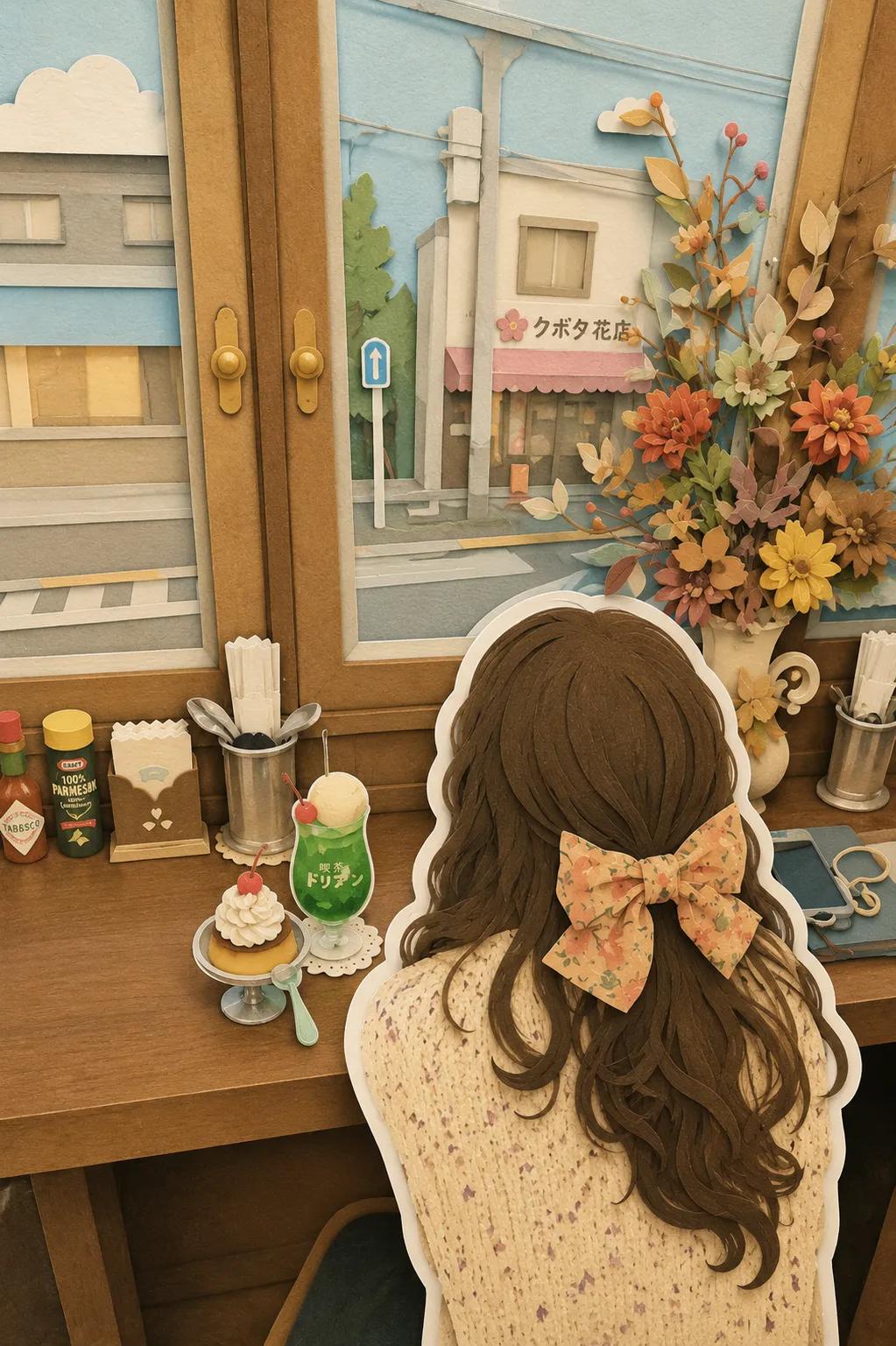
Whimsical layered paper-cut diorama, handcrafted 3D papercraft world, cozy Japanese travel scene, ultra-detailed cut-paper illustration, soft pastel color palette, felt and cardstock textures, stacked paper layers with visible depth, charming miniature town aesthetic, storybook atmosphere. Scene: cute traveler girl viewed from behind, oversized ribbon bow in her hair, sitting inside a cozy retro café by a wooden window, looking out at a peaceful Japanese street. Tiny desserts, cream cake, soda float, vintage café accessories, flower arrangements, warm wooden furniture, soft afternoon sunlight. Outside the window are pastel-colored buildings, flower shops, utility poles, clouds, and quiet neighborhood streets. Style: handmade paper sculpture, layered cardstock art, laser-cut paper layers, clay-like details, kawaii Japanese aesthetic, miniature dollhouse environment, soft shadows, tactile paper textures, warm nostalgic mood, highly detailed handcrafted elements, children’s book illustration, diorama display. Composition: - Character seen from behind - Thick white cutout outline around characters and objects - Multi-layered paper scene with depth - Decorative flowers and cute accessories - Blue sky background with fluffy paper clouds - Cozy café tabletop with desserts and drinks - Symmetrical framing through a large window Lighting: soft daylight, warm ambient glow, gentle shadows, dreamy atmosphere, cozy indoor lighting, pastel highlights. Quality: masterpiece, ultra detailed, paper art masterpiece, intricate handcrafted textures, 8k resolution, cinematic depth, professional papercraft design, adorable travel diary aesthetic, trending on Pinterest, kawaii diorama style.