Case Media
Case Notes
This page keeps the media, full prompt, and original source together so you can inspect the result first and decide whether the prompt is worth copying, saving, or comparing.
Case Insights
To make this page easier to search, cite, and reuse later, the case is also broken down into practical guidance about usage, visual cues, and prompt structure.
Best Fit Scenarios
- Use this as a character design benchmark when you need a fast style baseline before rewriting your own prompt.
- It is especially helpful if your target overlaps with Poster, Character, City Visual and you want to judge the image result before tuning wording.
- Keep it as a control sample when you compare nearby prompt variants one variable at a time.
Visual Signals To Notice
- The clearest style signals here are Poster, Character, City Visual, so those should usually stay in your first rewrite.
- Look at silhouette, costume language, mood styling, and whether the character reads clearly at a glance.
- This case keeps 2 media outputs, which makes it easier to check whether the style remains stable across multiple results.
How The Prompt Is Structured
- The prompt reads as a long, highly specified prompt, which is useful when you want to judge how much specificity this direction needs.
- Its keyword cluster is centered on Poster, Character, City Visual, so you can usually keep that cluster while swapping subject, camera, layout, or copy details.
- A practical rewrite path is: keep the outcome, keep the strongest style cues, then replace only the subject and environment blocks.
Good Follow-up Questions
- What changes first if you keep Poster, Character, City Visual but switch the subject matter?
- Which part of the result comes from section-level structure (Character Design) versus tag-level style cues?
- Which related cases in the same section give you a cleaner or more extreme variation of the same direction?
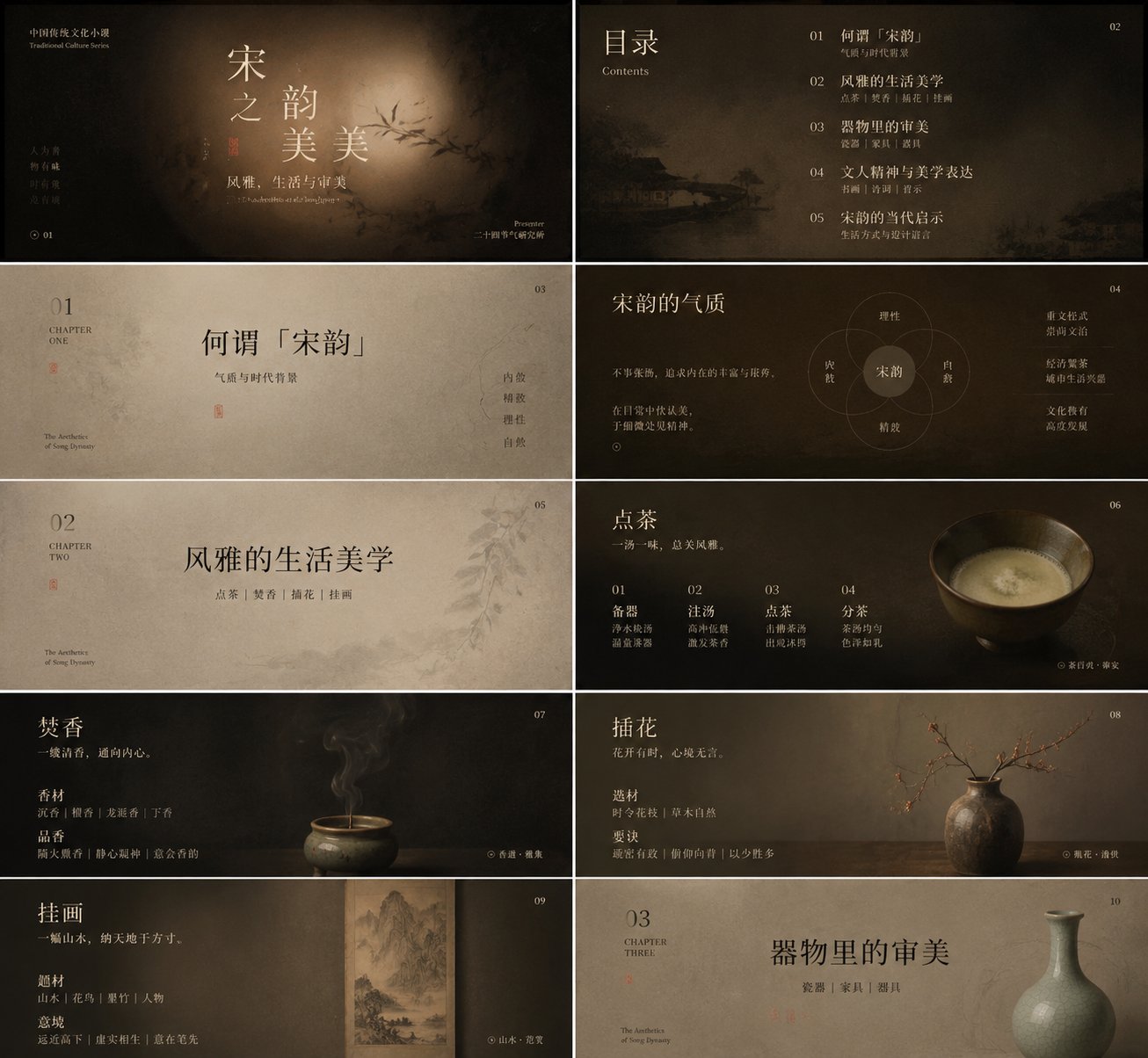
Full Prompt
Convert this aesthetic into a transferable visual generation style: The composition should not rely on clear objects to grab attention; instead, allow the subject, information, or product to slowly emerge from a warm, time-worn texture. Maintain a low-saturation, low-noise, soft-focus depth throughout. The background can be wood grain, paper fiber, leather, clay, smoke, fabric, rock surfaces, food texture, data base maps, or abstract spaces, but all must present a tactile thickness, a subtle sense of rotation, and dark edges, making the center appear as if gently lifted by a restrained, diffused light. Avoid template-like posters and do not let decoration overpower the content; all elements should appear as if naturally deposited—quiet, mature, subtle, and memorable. Text is the primary shaping force of the image. The Chinese title should have a slender, lean, breathable Song typeface or bookish temperament, with slightly loose letter spacing and air in the line spacing. Allow words to be split, misaligned, or layered, making the text blocks look like a group of floating specimens or fallen leaves—not perfectly aligned, but possessing an internal order. Use lighter serif or narrow fonts for English, numbers, notes, and small labels as rhythmic pauses and marginalia; small in area but precise in position. Form a contrast in size, language, and light/dark between the main title and subtitle: large Chinese characters bear emotion and poetic quality; small English or numbers bear explanation, time, category, ranking, indicators, sources, or a slight rational echo. A minimalist symbolic graphic, line, leaf, dot, emblem, or data marker can be added as a visual turning point; do not create cute icons, and do not steal the weight of the text. Organize the color system with 'dark air + warm subject + low-light text + small-area semantic highlights.' Retain the light-dark relationships and soft boundaries of the reference image's amber brown, caramel brown, smoky black, and rice white, but the colored parts should change roles according to the actual content: for knowledge, reports, finance, and technology themes, make the accent colors colder, cleaner, and more like shimmer annotations; for food, lifestyle, solar terms, and cultural themes, make them warmer, more oily, or paper-like; for medical, environmental, and public welfare themes, make them cleaner, paler, and more breathable; for commercial releases or cover themes, make them sharper and more concentrated, occupying only a tiny area. Large color surfaces in the background should always be restrained; do not let accent colors spread into full-screen decoration, but rather assume emotional shifts near title junctions, key figures, legends, labels, buttons, or visual focal points. Text colors should be ivory white, old paper white, pale gray-gold, or misty light colors; retain details in dark areas, avoiding hard cuts of pure black or white. The layout adopts an order of central concentration with quiet surroundings. The center of the image can hold titles, core data, product outlines, human postures, chart conclusions, or main visual objects, with a slow space wrapped in dark areas left around it; keep a small amount of brand, series name, chapter name, or short sentences at the top, place bracketed notes on the sides, and use ultra-fine dividing lines, short English, footnotes, sources, indicator explanations, or a line of dense small text at the bottom to hold down the image, making the work resemble both a cover and a high-level report. The reading path enters from the large central text, pauses briefly at the graphic or accent color, and then falls to the bottom information layer; density decreases from the center to the edges; edge information should be small, stable, and accurate. When used for charts and rankings, let the data be absorbed into this quiet texture, with key numbers becoming part of the poetic title; when used for PPT or reports, let chapter titles, key conclusions, and auxiliary notes form a soft but clear hierarchy; when used for products, figures, food, architecture, or natural objects, capture the outline, material, shadow, and negative space, rather than copying the original subject matter. Now, apply this aesthetic to my actual content, and let the image naturally grow into the form it requires. Theme: Plan a knowledge topic suitable for this prompt style and create a PPT presentation around it, preferably focusing on a specific sub-direction of traditional Chinese culture. Minimum 10 images.