案例媒体
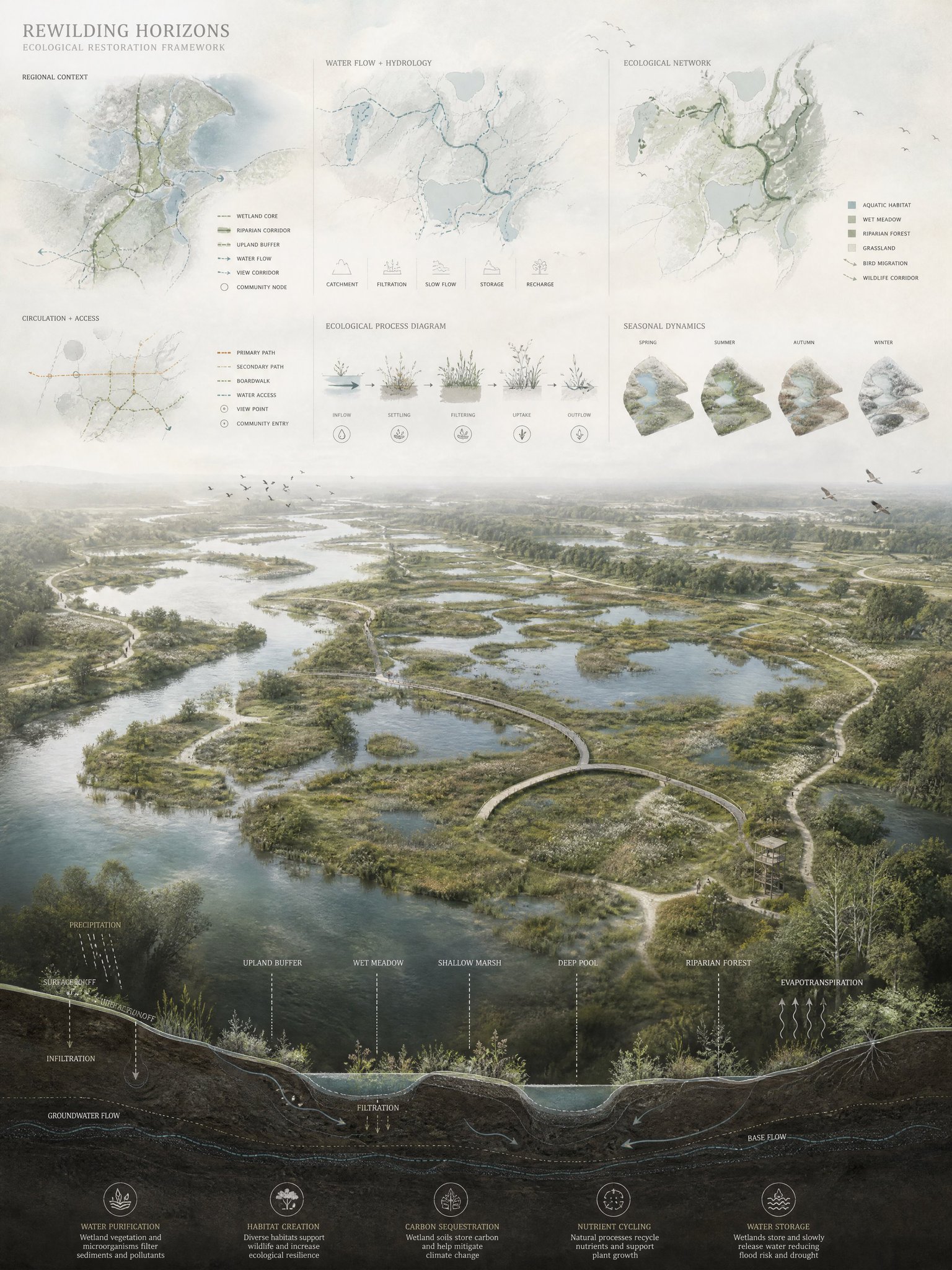
案例说明
这个页面把案例媒体、完整 Prompt 和出处放在一起,方便你先看结果,再判断这条 Prompt 是否值得复制、收藏或加入对比。
案例解读
为了方便搜索、引用和后续复用,这里会把案例的适用场景、画面重点和 Prompt 结构拆成更容易浏览的说明。
这类案例适合用在什么场景
- 把它当作 人像与摄影 的基准案例最合适,先看成片方向,再决定自己的 Prompt 要往哪边改。
- 如果你的目标也落在 人像、电影感、海报 这些方向,这条案例特别适合先看图判断风格,再回头微调描述。
- 做 Prompt 对比时,也很适合作为控制组,只改一个变量去看结果变化。
画面重点与风格信号
- 这条案例最明显的风格信号集中在 人像、电影感、海报,所以第一次改写时最好先保留这些关键词。
- 重点先看构图、光线方向、人物姿态,以及主体和镜头之间的距离感。
- 当前只有一张主图,所以第一张结果图就是最核心的参考基准。
Prompt 结构可以怎么理解
- 这条 Prompt 整体属于一条比较长、约束条件很多的 Prompt,很适合拿来判断这类方向到底需要写到多细。
- 关键词簇主要围绕 人像、电影感、海报 展开,所以复用时可以先保留这组风格词,再替换主体、镜头、环境或文案信息。
- 最稳的改写方式通常是先保留结果方向和最强风格信号,只替换主体设定与场景块。
如果你是带着问题来的,可以先看这些角度
- 如果保留 人像、电影感、海报,只换主体题材,结果最先变化的会是哪一部分?
- 这条结果里,哪些特征更像是 人像与摄影 的结构特征,哪些又是标签风格本身带来的?
- 同分类的相关案例里,哪几条能给你更克制或更极致的相邻变体?
完整 Prompt
Create a competition-level 3:4 vertical architectural presentation board that transforms a landscape design into a hybrid environmental visualization combining photorealistic aerial rendering, ecological section drawings, and analytical architectural diagrams. → Composition layout Top zone: analytical diagrams and ecological mapping overlays Middle zone: large aerial landscape rendering as the primary visual focus Bottom zone: continuous sectional cut through the ecological landscape system → Overall style Hybrid of photorealistic landscape rendering and refined architectural diagram language. Calm, atmospheric, regenerative, and environmentally focused. Presentation should feel like a high-end international landscape architecture competition board. → Top analytical layer → Include simplified ecological maps with soft transparent color overlays → Ultra-thin white and pale gray linework → Diagrams showing water flow, circulation systems, ecological networks, habitat zones, and landscape connectivity → Dashed lines for movement and flow systems → Minimal annotations and soft ecological icons → Floating overlay effect above the rendering → Very light pastel tones with high transparency → Clean spacing and minimal composition → Avoid dense technical clutter → Middle aerial rendering → Bird’s-eye perspective ecological restoration landscape → Wetlands, ponds, flowing water systems, vegetation patches, bioswales, and regenerative terrain → Soft natural color palette with slightly desaturated greens, browns, and muted water blues → Atmospheric depth with subtle haze in the distance → Include gentle human and ecological activity such as walking paths, birds, and small environmental interactions → Wide landscape depth and smooth terrain transitions → Calm cinematic environmental lighting → Soft paper-texture finish integrated into the rendering → Bottom sectional cut → Continuous sectional landscape cut through terrain and ecological systems → Show soil layers, hydrology, groundwater movement, vegetation roots, ecological restoration processes, and water filtration systems → Thin white or pale linework → Muted tones with minimal color usage → Include arrows indicating water movement and ecological flow → Maintain elegant architectural drafting quality → Seamlessly integrated into the board composition → Diagram language → Extremely thin and precise linework → Slightly softened edges, avoiding sharp vector aesthetics → Minimal labels and clean scientific notation → Soft ecological symbols and analytical overlays → Balanced between scientific clarity and poetic visualization → Color system → Base palette: desaturated greens, earthy browns, muted blue water tones → Overlay palette: pale green, soft cyan, light beige, translucent pastel layers → Avoid saturated accents and harsh contrast → No bright reds or overly graphic colors → Texture and atmosphere → Soft atmospheric rendering quality → Slight environmental haze and diffused lighting → Subtle paper-grain or printed board texture → Refined competition-board aesthetic → Mood Calm, ecological, regenerative, scientific yet poetic. The board should communicate environmental intelligence, landscape restoration, and harmonious coexistence between water systems, ecology, and human movement. → Format 3:4 vertical architectural competition board composition.