案例媒体
案例说明
这个页面把案例媒体、完整 Prompt 和出处放在一起,方便你先看结果,再判断这条 Prompt 是否值得复制、收藏或加入对比。
案例解读
为了方便搜索、引用和后续复用,这里会把案例的适用场景、画面重点和 Prompt 结构拆成更容易浏览的说明。
这类案例适合用在什么场景
- 把它当作 角色设计 的基准案例最合适,先看成片方向,再决定自己的 Prompt 要往哪边改。
- 如果你的目标也落在 电影感、海报、角色 这些方向,这条案例特别适合先看图判断风格,再回头微调描述。
- 做 Prompt 对比时,也很适合作为控制组,只改一个变量去看结果变化。
画面重点与风格信号
- 这条案例最明显的风格信号集中在 电影感、海报、角色,所以第一次改写时最好先保留这些关键词。
- 重点可以先看轮廓、服饰语言、情绪气质,以及角色是否一眼就能立住。
- 当前保留了 2 份媒体输出,适合顺手观察同一方向在多张结果里的稳定性。
Prompt 结构可以怎么理解
- 这条 Prompt 整体属于一条比较长、约束条件很多的 Prompt,很适合拿来判断这类方向到底需要写到多细。
- 关键词簇主要围绕 电影感、海报、角色 展开,所以复用时可以先保留这组风格词,再替换主体、镜头、环境或文案信息。
- 最稳的改写方式通常是先保留结果方向和最强风格信号,只替换主体设定与场景块。
如果你是带着问题来的,可以先看这些角度
- 如果保留 电影感、海报、角色,只换主体题材,结果最先变化的会是哪一部分?
- 这条结果里,哪些特征更像是 角色设计 的结构特征,哪些又是标签风格本身带来的?
- 同分类的相关案例里,哪几条能给你更克制或更极致的相邻变体?
完整 Prompt
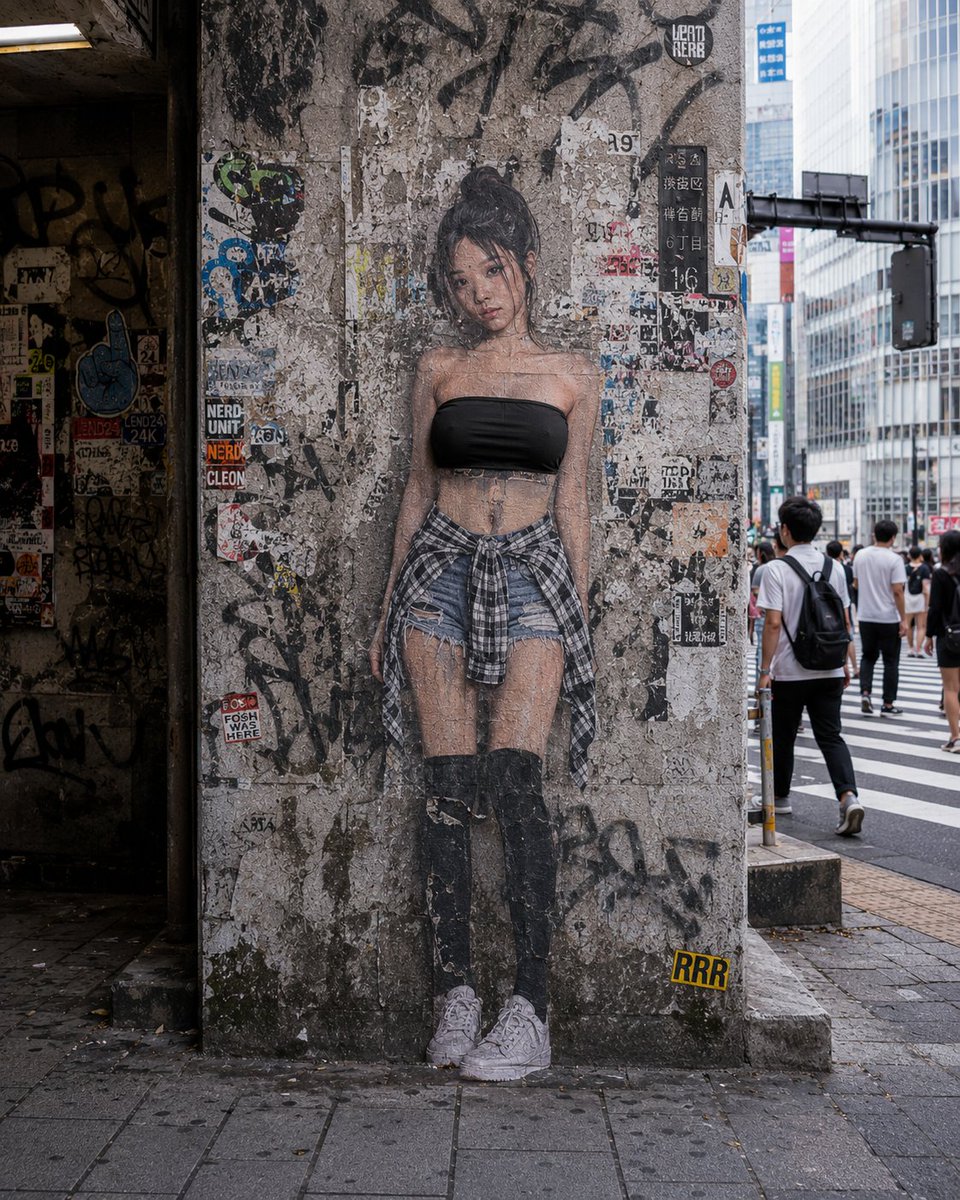
An {argument name="character setting" default="Asian adult female"} appears in {argument name="environment" default="Shibuya, Tokyo"}, close to or attached in front of a [background surface], using a front perspective, eye-level camera, and real street photography composition. The person's body is clearly divided into 2D and 3D states: the [2D body part] is a 2D flat printed image attached to the [background surface], while the [3D body part] suddenly turns into a real 3D human body starting from the [boundary position], entering the real space. The [2D body part] is completely a flat printed image, tightly attached to the [background surface], with no real thickness, volume, or protruding spatial structure. This 2D area presents the texture of real paper / poster / sticker / mural / wheatpaste poster, with a matte printing effect, slight fading, fine particles, paper fibers, aging marks, and edge wear. The edges of the 2D image can be slightly curled, peeled, or damaged, with visible glue marks, paste residue, torn paper scraps, or background texture in some areas. The texture of the [background surface] needs to show through or affect the 2D body area, such as concrete wall grains, brick wall gaps, metal plate scratches, old wood textures, graffiti marks, stains, cracks, sticker residue, etc., which should naturally blend with the 2D area of the character. The 2D body part should look like an image that has long been printed, pasted, spray-painted, or drawn on the background surface, rather than a real standing person. The [3D body part] suddenly transforms into a real 3D human body from the [boundary position], with complete real volume, anatomical structure, material details, light and shadow, perspective, occlusion, and physical contact. The 3D area should clearly enter the real space, forming a strong contrast with the 2D area. Skin, clothing, shoes, hair, accessories, or other body details should present hyper-realistic textures, with real highlights, shadows, folds, textures, and spatial depth. The [boundary position] between 2D and 3D must form a clear, sharp, precise, and visible boundary line. This boundary looks like a flat printed image and a real 3D human body being abruptly but accurately spliced together on the same body. The division cannot be blurred, gradient, or like a normal transformation or semi-transparent effect; it must clearly show: one side is a 2D flat image attached to the background, and the other side is a 3D body truly entering the real space. If there are graffiti, stickers, stains, cracks, spray paint, text, or other background elements in the scene, they can cover or press on the [2D body part], as if the background surface continued to be written on, spray-painted, or covered after the 2D image was pasted. Background elements should have a real surface relationship with the 2D body area rather than simply staying behind the person. The 3D body area needs to interact clearly with the real environment: if the [3D body part] includes feet, legs, hands, arms, head, or any body part sticking out, it must show real physical contact, shadows, occlusion, and spatial relationships. For example, feet stepping on the ground with slight pressure deformation; arms extending from the flat image, blocking the background and casting shadows on the wall or ground; the head protruding from the poster, with real facial volume, skin texture, and light/shadow structure. The overall style is surrealist real photography, maintaining the credibility of real street shots while strengthening the visual paradox of 2D and 3D body splicing. Lighting is [light condition], background is [background details], and the overall atmosphere is [visual style]. The image should have cinematic composition, high detail, real materials, real light and shadow, and real spatial perspective, hyper-realistic surreal photography, cinematic, photorealistic, high detail, 8K.