Case Media
Case Notes
This page keeps the media, full prompt, and original source together so you can inspect the result first and decide whether the prompt is worth copying, saving, or comparing.
Case Insights
To make this page easier to search, cite, and reuse later, the case is also broken down into practical guidance about usage, visual cues, and prompt structure.
Best Fit Scenarios
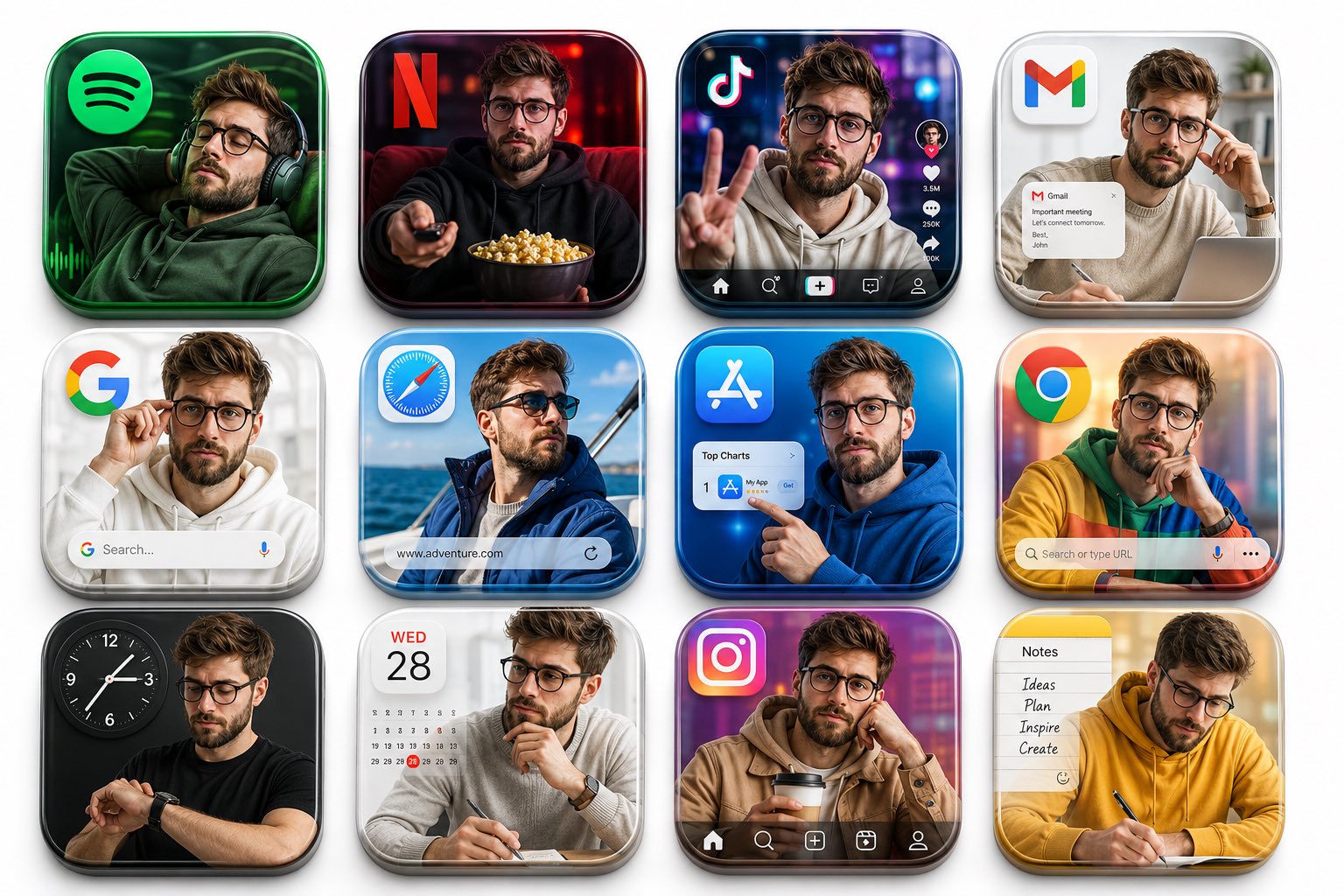
- Use this as a ui & social screens benchmark when you need a fast style baseline before rewriting your own prompt.
- It is especially helpful if your target overlaps with Portrait, Cinematic, UI and you want to judge the image result before tuning wording.
- Keep it as a control sample when you compare nearby prompt variants one variable at a time.
Visual Signals To Notice
- The clearest style signals here are Portrait, Cinematic, UI, so those should usually stay in your first rewrite.
- The important layer is usually interface density, card hierarchy, and how the screen tells the story before you read small text.
- This case keeps one primary output, so the first image should be treated as the main visual reference.
How The Prompt Is Structured
- The prompt reads as a long, highly specified prompt, which is useful when you want to judge how much specificity this direction needs.
- Its keyword cluster is centered on Portrait, Cinematic, UI, so you can usually keep that cluster while swapping subject, camera, layout, or copy details.
- A practical rewrite path is: keep the outcome, keep the strongest style cues, then replace only the subject and environment blocks.
Good Follow-up Questions
- What changes first if you keep Portrait, Cinematic, UI but switch the subject matter?
- Which part of the result comes from section-level structure (UI & Social Screens) versus tag-level style cues?
- Which related cases in the same section give you a cleaner or more extreme variation of the same direction?
Full Prompt
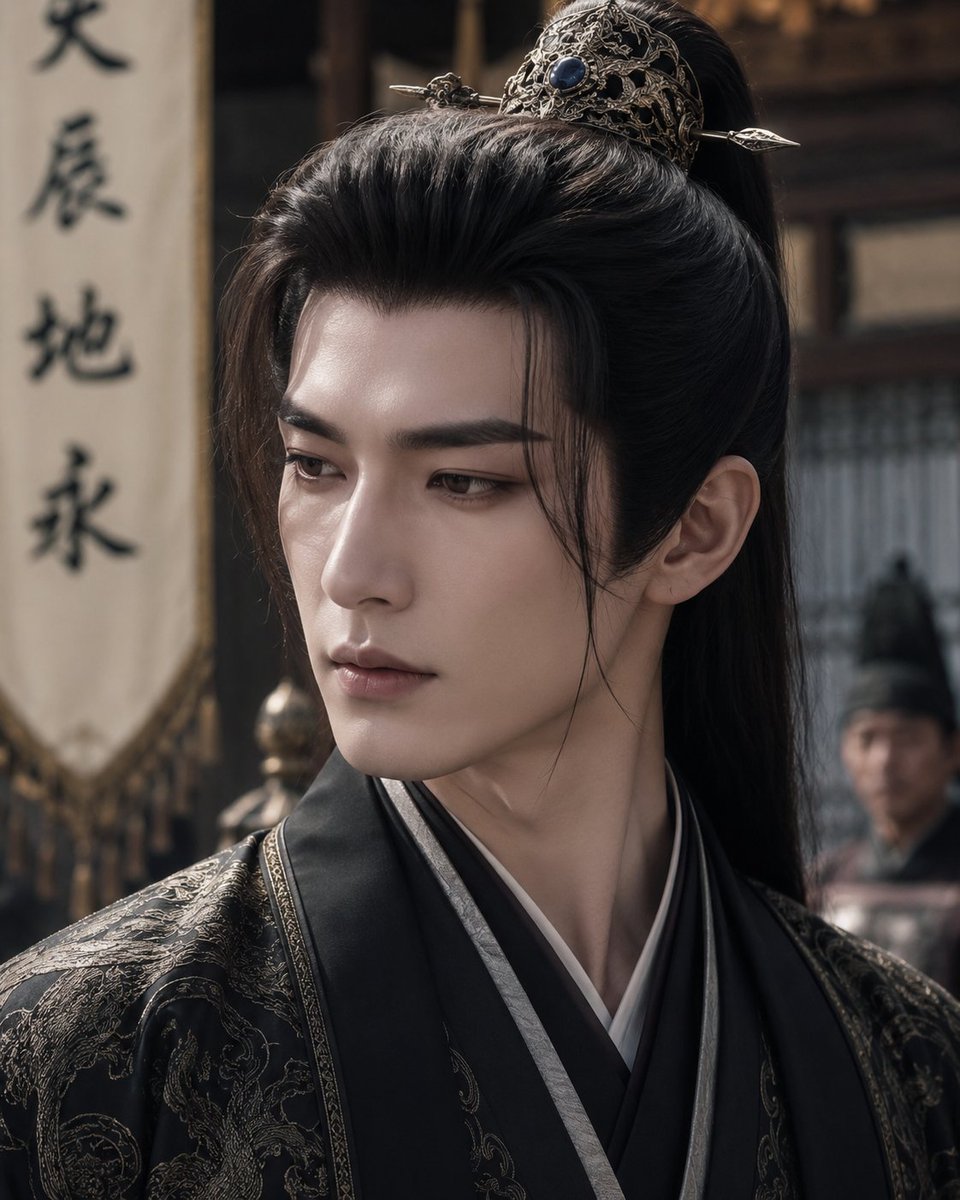
Create a cinematic vertical close-up portrait of {argument name="character type" default="a handsome male protagonist from a Chinese historical drama"} standing in an ancient palace or sect courtyard. He wears elegant black layered hanfu robes with dark gray lapels, white inner collar, and intricate gold embroidered dragon-and-cloud patterns on the shoulders and sleeves. His long glossy black hair is pulled into a high half-up ponytail with a large ornate silver filigree crown hairpiece set with a dark blue gemstone and secured by a horizontal hairpin. The camera frames him from chest to top of head, slightly off-center, with his head turned subtly to the viewer's right so one ear and neck are visible. Place a large solid matte brown rectangular censor block over the center of his face, covering the facial features completely, and a smaller similar blurred/censored rectangle over one background extra at the right. The background is softly out of focus: traditional wooden architecture, a vertical cloth banner on the left with black Chinese calligraphy, muted warm daylight, and indistinct guards or attendants. Use a realistic TikTok Chinese costume-drama aesthetic, shallow depth of field, dramatic natural lighting, high-detail textile texture, muted black-gold color palette, 4:5 portrait composition, no modern objects, no subtitles, no watermark.