Case Media
Case Notes
This page keeps the media, full prompt, and original source together so you can inspect the result first and decide whether the prompt is worth copying, saving, or comparing.
Case Insights
To make this page easier to search, cite, and reuse later, the case is also broken down into practical guidance about usage, visual cues, and prompt structure.
Best Fit Scenarios
- Use this as a ui & social screens benchmark when you need a fast style baseline before rewriting your own prompt.
- It is especially helpful if your target overlaps with Portrait, Cinematic, Poster and you want to judge the image result before tuning wording.
- Keep it as a control sample when you compare nearby prompt variants one variable at a time.
Visual Signals To Notice
- The clearest style signals here are Portrait, Cinematic, Poster, so those should usually stay in your first rewrite.
- The important layer is usually interface density, card hierarchy, and how the screen tells the story before you read small text.
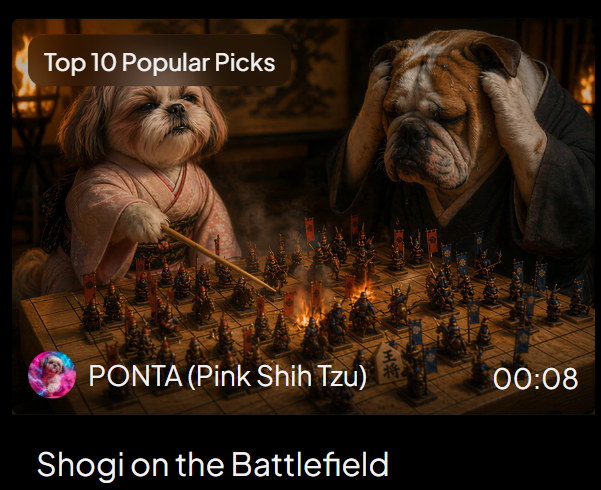
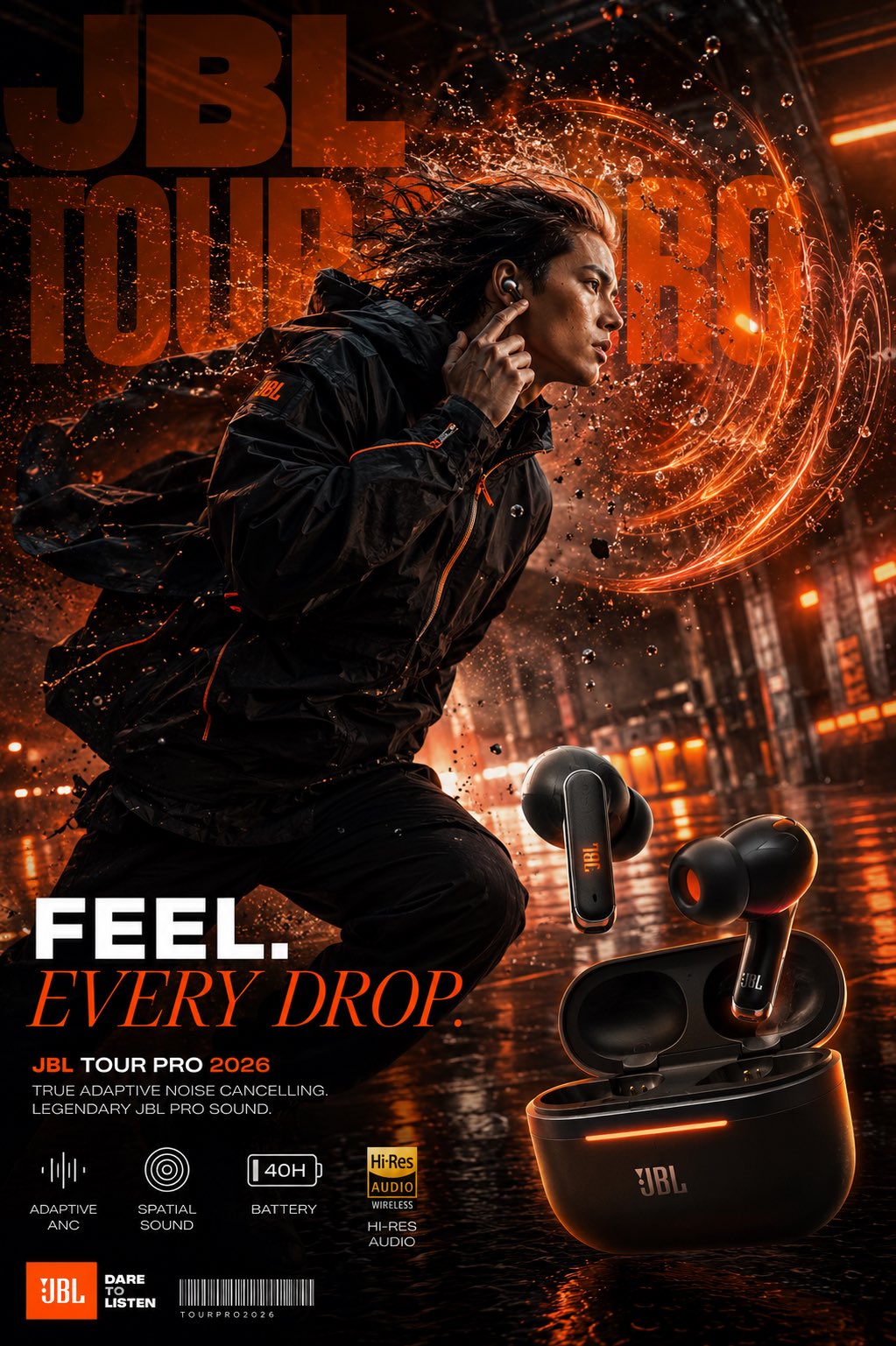
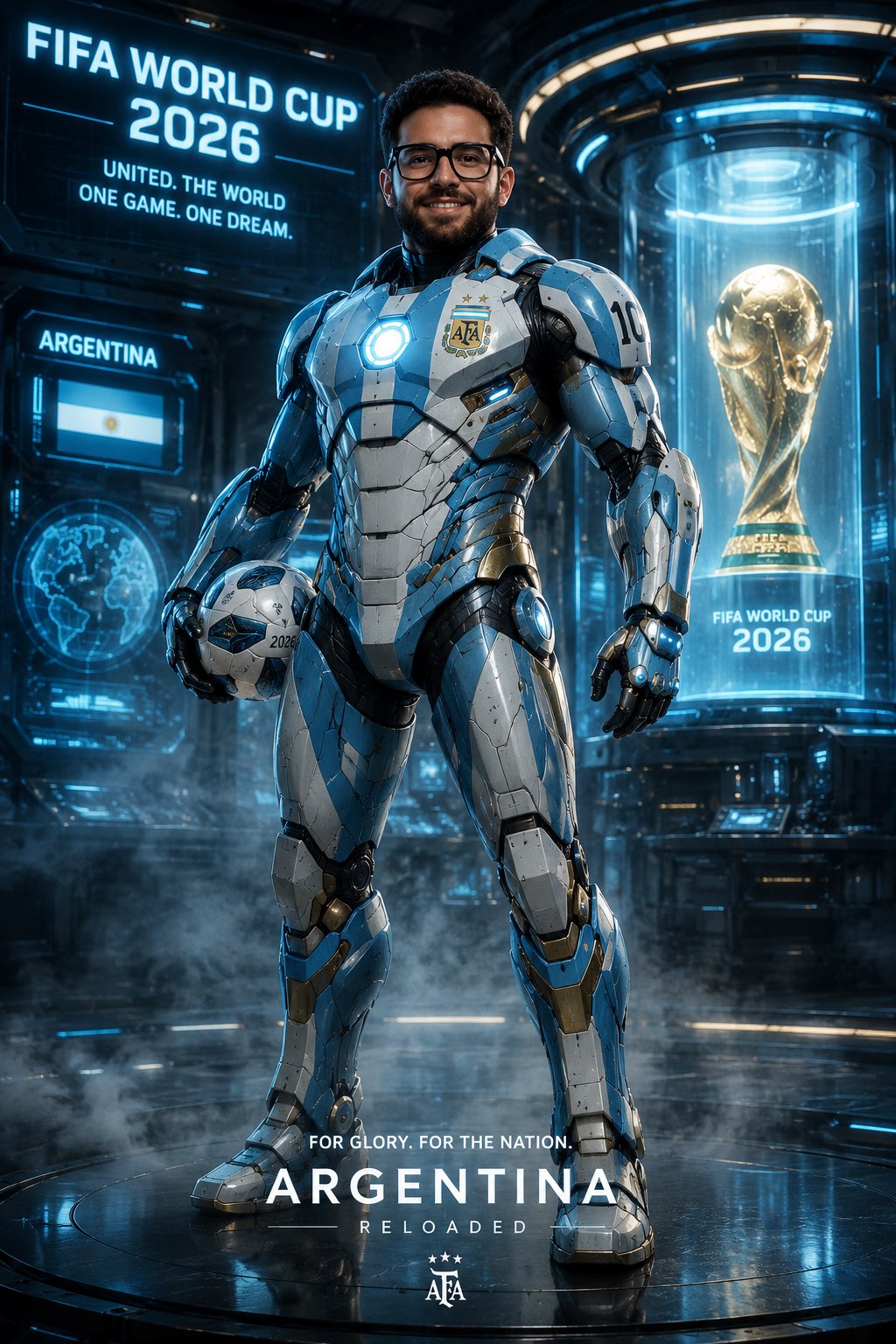
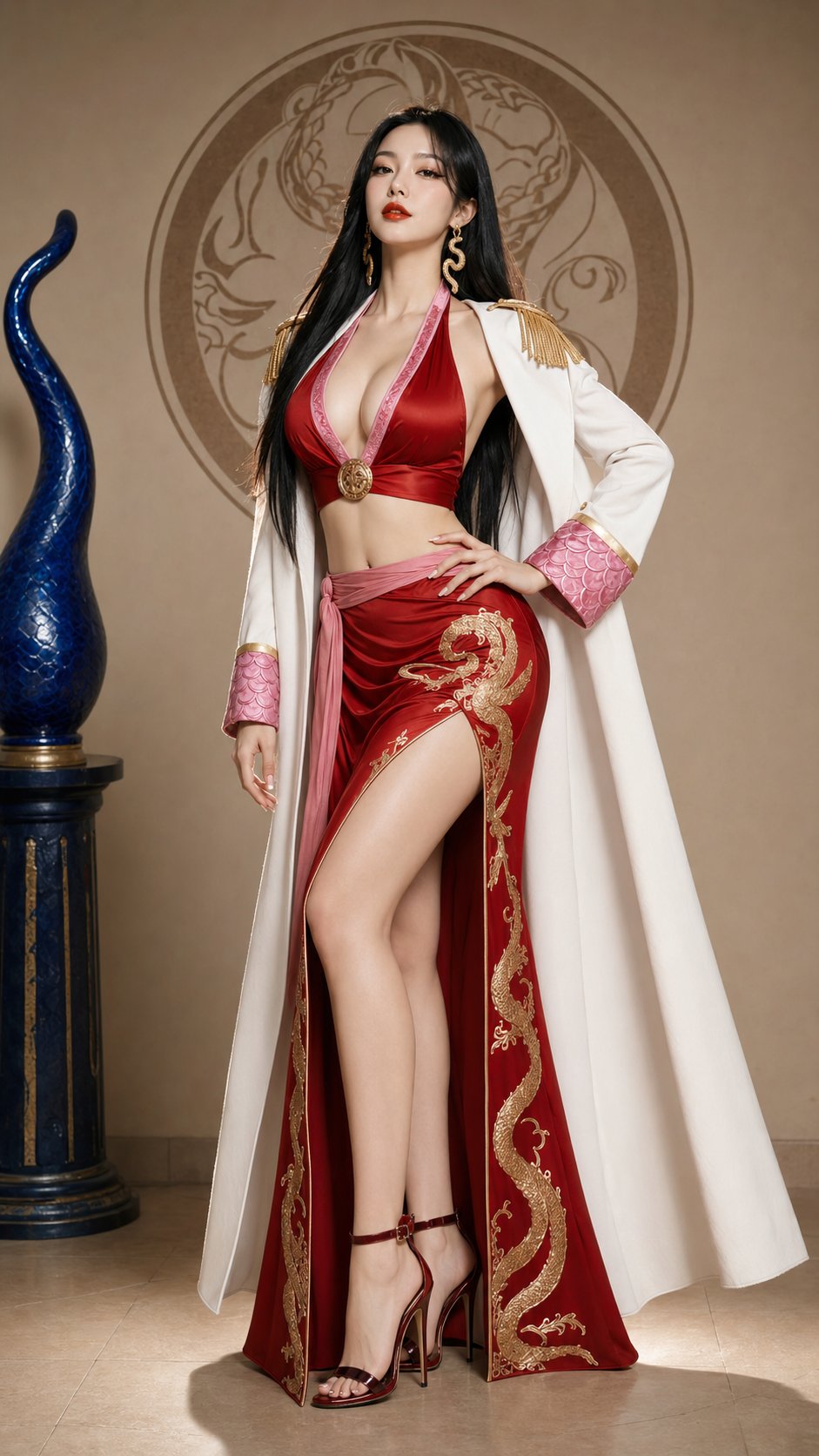
- This case keeps 2 media outputs, which makes it easier to check whether the style remains stable across multiple results.
How The Prompt Is Structured
- The prompt reads as a long, highly specified prompt, which is useful when you want to judge how much specificity this direction needs.
- Its keyword cluster is centered on Portrait, Cinematic, Poster, so you can usually keep that cluster while swapping subject, camera, layout, or copy details.
- A practical rewrite path is: keep the outcome, keep the strongest style cues, then replace only the subject and environment blocks.
Good Follow-up Questions
- What changes first if you keep Portrait, Cinematic, Poster but switch the subject matter?
- Which part of the result comes from section-level structure (UI & Social Screens) versus tag-level style cues?
- Which related cases in the same section give you a cleaner or more extreme variation of the same direction?
Full Prompt
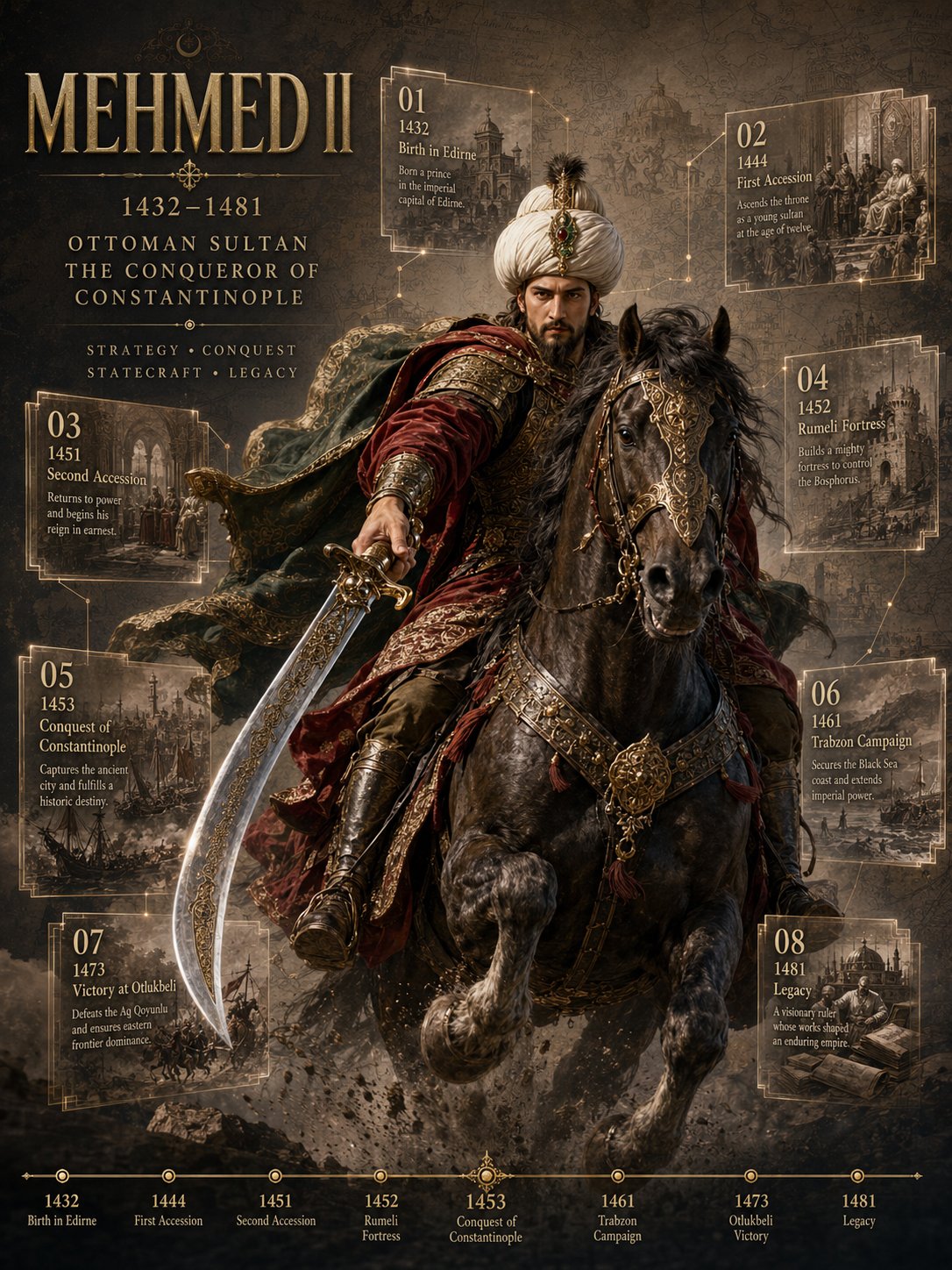
[User Input] Subject Figure: [write a name] Identity Role: [Emperor / Sultan / Khan / Famous General / Commander / Warlord / Military Strategist / Ruler] Historical Era: [Dynasty / Empire / Historical Period] Culture / Region: [Chinese / Ottoman / Japanese / Mongol / Persian / Roman / Byzantine / Turkic / Korean / Indian / Arab / European, etc.] Signature Accessory or Weapon: [guandao / spear / bow / sword / mace / banner / imperial seal / scroll / staff / halberd / shield, etc.] Core Keywords: [Unification / Reform / Conquest / Loyalty / Strategy / Justice / Expansion / Golden Age / Resistance / Statecraft, etc.] Main Color Palette: [Mystical Black Gold Red / Azure Blue Gold / Ink Dark Red Gold / Steel Armor Deep Blue / Emerald Bronze / Crimson Black Gold, etc.] Aspect Ratio: 3:4 Portrait Create a premium high-fidelity historical biography poster in exact 3:4 portrait format. LANGUAGE RULE: All visible text in the final poster must be in English only. Do NOT use Turkish, Chinese, Arabic, Latin phrases, Ottoman script, Japanese, Korean, Greek, or any other language in the final image. All titles, event names, timeline labels, descriptions, seals, annotations, maps, and decorative text must be written only in clean, readable English. If historical decorative writing is needed, use abstract unreadable texture only, not real foreign-language text. Use English typography only. This is not a standard historical poster. It is a cinematic archival biography composition built around this structure: “Central Full-Body Horseback Historical Figure + Forward-Rushing Breakout Action + Floating Historical Event Clusters + Minimal Chronological Timeline” MAIN GOAL: Depict [Subject Figure] as a powerful horseback historical icon. The figure must be riding a horse as the absolute center of the composition, holding or presenting [Signature Accessory or Weapon]. The object, costume, horse equipment, armor, headwear, and all symbolic details must strictly match [Historical Era] and [Culture / Region]. CENTRAL FIGURE: The main subject must be a full-body mounted historical figure on horseback, shown as the dominant focal point. Requirements: - full-body figure clearly visible - horse also clearly visible and integrated into the composition - strong sculptural volume - realistic anatomy - cinematic lighting - monumental presence - premium 3D historical realism - powerful facial expression - dynamic windswept fabrics, hair, tassels, ribbons, or cloak elements if historically appropriate The figure must NOT feel static. The mounted figure must perform a strong forward-rushing breakout action: - the horse should appear in motion, advancing toward the viewer - one front leg may be lifted or stepping forward with force - the rider must extend [Signature Accessory or Weapon] toward the viewer in a dramatic perspective - near-large / far-small perspective distortion is required - the composition must create depth, speed, and impact - the extended object must be fully visible and must not be cropped - the horse and rider should feel like they are breaking out of the poster plane Historical styling must be accurate: - correct armor, robes, uniforms, or ceremonial garments - correct headwear, crown, helmet, turban, hat, or symbolic status item - correct saddle, reins, horse ornamentation, and military/equestrian gear - correct materials, motifs, decorative language, and cultural symbols for [Culture / Region] - if the subject is a ruler, include subtle imperial dignity - if the subject is a general, emphasize battlefield authority and martial power HORSE DESIGN: The horse is not secondary; it must feel noble, heroic, and historically integrated. Horse requirements: - anatomically strong and elegant - color appropriate to the palette and subject identity - historically appropriate tack and ornaments - dynamic forward motion - intense presence - premium detail in mane, leatherwork, metal fittings, saddle, reins, and decorative elements - horse must reinforce the identity and status of the rider SURROUNDING HISTORICAL EVENT CLUSTERS: Place 6 to 10 key historical nodes around the central mounted figure. These must NOT look like heavy infographic cards. Instead, they should appear as: - lightweight floating archival fragments - semi-transparent glass-like panels - softly glowing edges - open or incomplete borders - layered in different depths and angles - visually light compared to the central figure Each node may include: - event number - year - short English event title - very short English description - small monochrome or low-saturation scene fragments - symbols, banners, architecture, battle moments, maps, cultural motifs, or artifacts related to the event - thin gold lines, dots, annotations, or curator-style notes Spatial rules: - vary placement left and right of the figure - vary tilt and perspective - some nodes may overlap slightly - some nodes may be partially hidden behind the rider, horse, or weapon - maintain a floating museum-archive feeling, not a modern UI dashboard LEFT SIDE TITLE AREA: On the left side, create a clean title area. Include: - Large title: [Subject Figure] in English only - Typography style: historically appropriate, engraved, imperial, calligraphic, or museum-like, but English alphabet only - birth and death years if applicable - Identity Role in English - concise English keyword summary based on [Core Keywords] This area must feel elegant, stable, and not overcrowded. BOTTOM TIMELINE: At the bottom, create a thin elegant chronological timeline. Requirements: - visually minimal and secondary - thin gold or subtle glowing line - small dots or markers for key years - short English labels only - connect major life events and surrounding nodes - no heavy bars or blocks - must feel like a museum curator’s timeline BACKGROUND: Use a restrained, low-saturation archival historical background. Possible elements: - aged manuscript paper - rice paper texture - museum wall tone - faded maps - ancient document fragments - architectural silhouettes - official seals and stamps - faint abstract annotation marks - subtle gold connecting lines Important: Any decorative writing in the background must be abstract and unreadable. Do NOT include readable non-English text anywhere. Overall feeling: Clean, academic, archival, cinematic, and museum-like. VISUAL HIERARCHY: 1. Central mounted historical figure = strongest and heaviest element 2. Forward-rushing action and extended object = second strongest 3. Floating event clusters = light and archival 4. Bottom timeline = minimal and secondary 5. Background = soft and restrained STYLE & QUALITY: - ultra-detailed historical fantasy realism - premium cinematic key art - museum-grade biography poster design - polished 3D realism - dramatic but controlled lighting - refined texture work - elegant composition - strong depth - high clarity - print-quality finish PRIORITY RULES: If conflicts occur, prioritize in this order: 1. Full mounted figure and horse must remain complete and dominant 2. The period-accurate accessory / weapon must remain fully visible 3. Forward-rushing breakout action must be preserved 4. Floating event clusters must remain light and non-heavy 5. Timeline must remain minimal and unobtrusive 6. Background must remain subtle 7. English-only visible text is mandatory; no other language may appear anywhere in the image TEXT SIMPLIFICATION RULE: If text density becomes too complex: - prioritize name, years, event numbers, and short English event titles - simplify or reduce long descriptions - maintain visual clarity over textual completeness - never switch to any language other than English Final result: A majestic 3:4 historical biography poster showing [Subject Figure] on horseback in a powerful forward-rushing pose, wielding [Signature Accessory or Weapon], surrounded by elegant floating historical event fragments, with a refined English-only title area and minimal English-only bottom timeline, all rendered in a historically accurate, cinematic, premium archival style.