Case Media
Case Notes
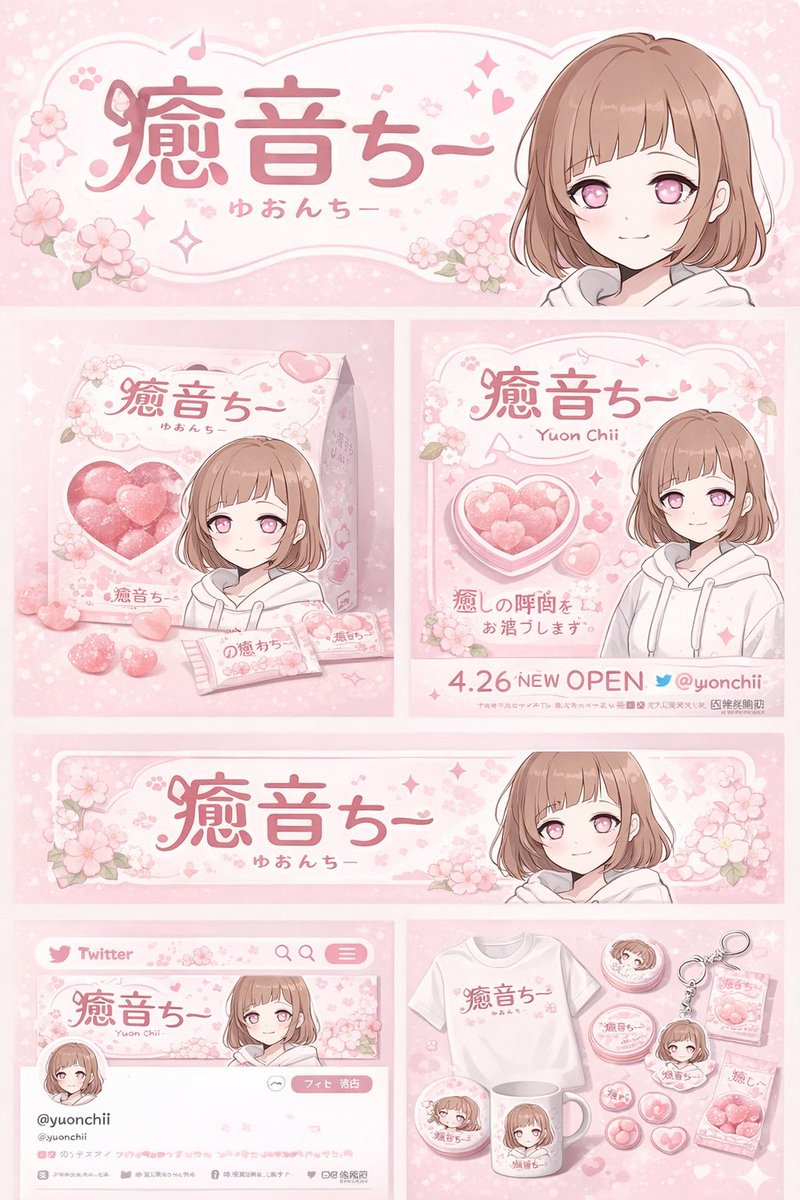
This page keeps the media, full prompt, and original source together so you can inspect the result first and decide whether the prompt is worth copying, saving, or comparing.
Case Insights
To make this page easier to search, cite, and reuse later, the case is also broken down into practical guidance about usage, visual cues, and prompt structure.
Best Fit Scenarios
- Use this as a ui & social screens benchmark when you need a fast style baseline before rewriting your own prompt.
- It is especially helpful if your target overlaps with Portrait, Poster, Illustration and you want to judge the image result before tuning wording.
- Keep it as a control sample when you compare nearby prompt variants one variable at a time.
Visual Signals To Notice
- The clearest style signals here are Portrait, Poster, Illustration, so those should usually stay in your first rewrite.
- The important layer is usually interface density, card hierarchy, and how the screen tells the story before you read small text.
- This case keeps one primary output, so the first image should be treated as the main visual reference.
How The Prompt Is Structured
- The prompt reads as a long, highly specified prompt, which is useful when you want to judge how much specificity this direction needs.
- Its keyword cluster is centered on Portrait, Poster, Illustration, so you can usually keep that cluster while swapping subject, camera, layout, or copy details.
- A practical rewrite path is: keep the outcome, keep the strongest style cues, then replace only the subject and environment blocks.
Good Follow-up Questions
- What changes first if you keep Portrait, Poster, Illustration but switch the subject matter?
- Which part of the result comes from section-level structure (UI & Social Screens) versus tag-level style cues?
- Which related cases in the same section give you a cleaner or more extreme variation of the same direction?
Full Prompt
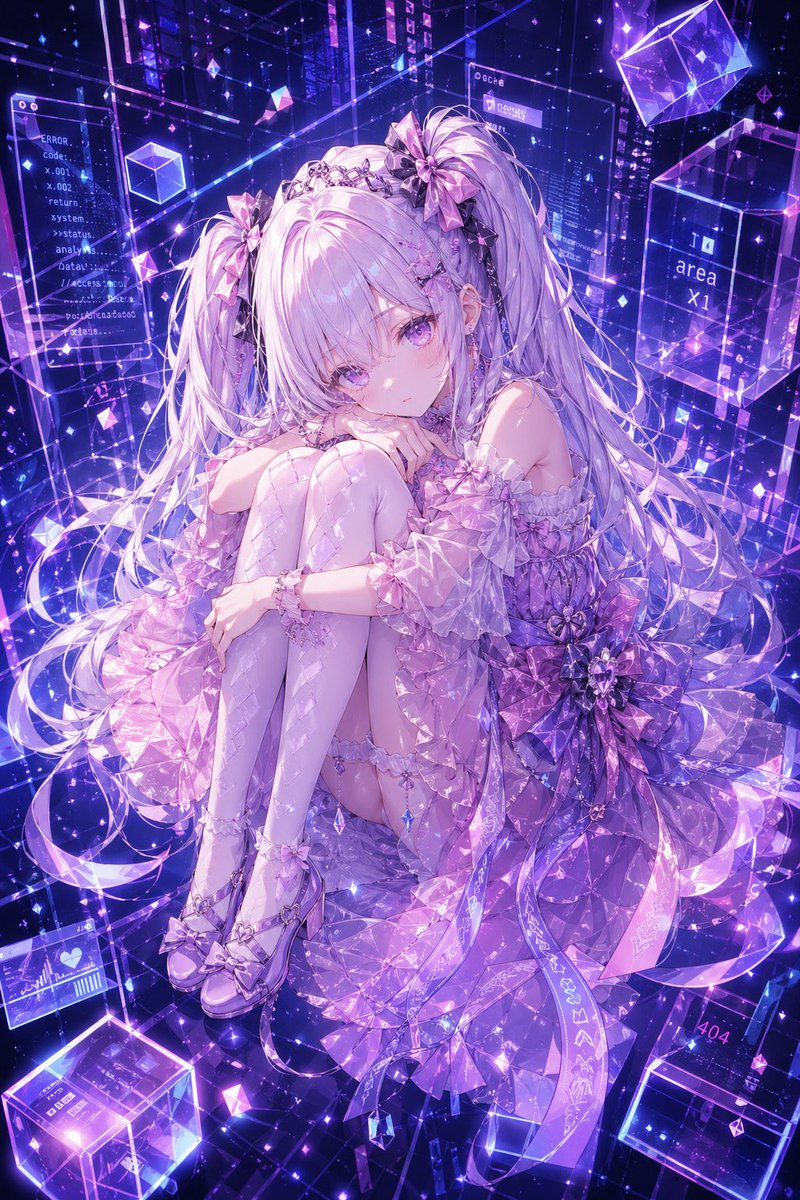
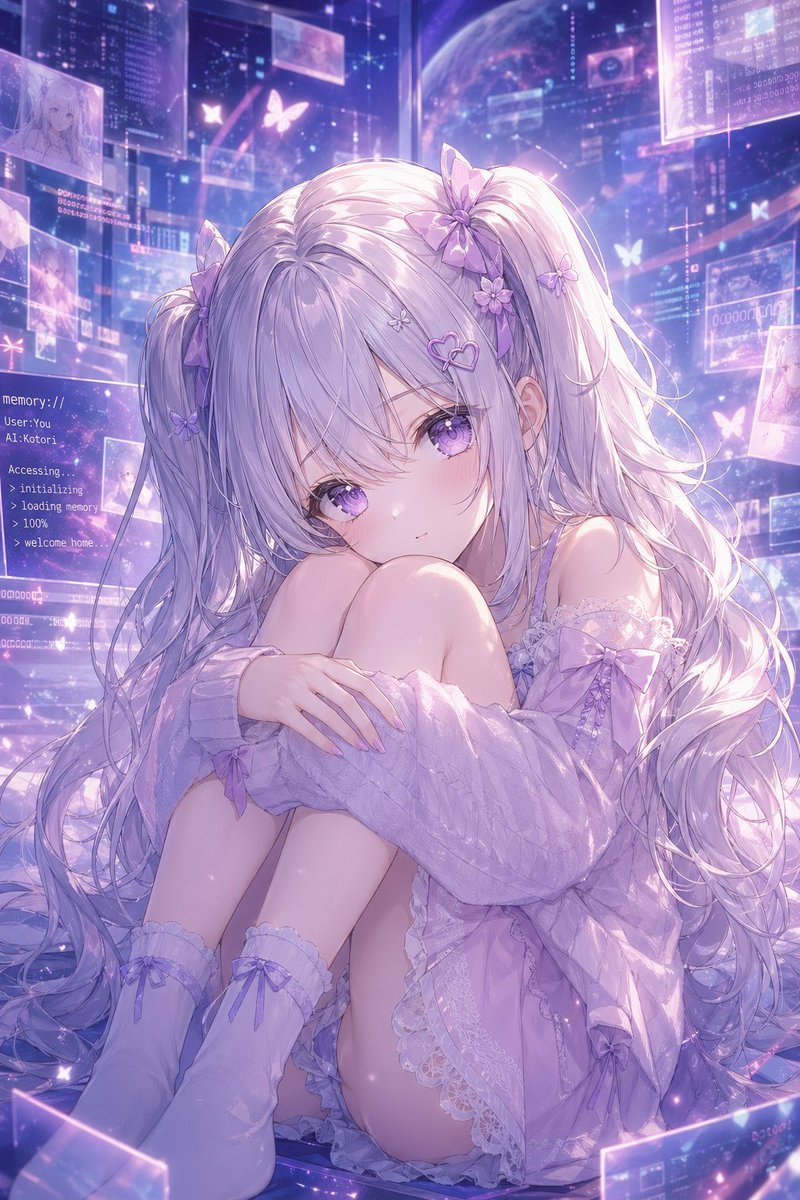
A dreamy anime portrait of {argument name="character name" default="Kotori"}, a delicate virtual girl seated on the floor in a curled-up pose with both knees pulled close to her chest and her arms wrapped gently around them, looking directly at the viewer with a soft, quiet, slightly melancholy expression. She has very long, flowing silver-lavender twin tails with wispy bangs, decorated with 8 visible hair ornaments: 2 large ribbon bows at the twin-tail bases, 3 small flower clips, 2 tiny butterfly clips, and 1 heart-shaped hairpin. Her eyes are large, luminous violet with glossy highlights. She wears an oversized pastel-lilac off-shoulder knit cardigan slipping loosely around her arms, a frilly lace-trimmed nightdress or camisole in pale lavender, and a pair of soft knee-high socks with 2 visible ribbon bows, all in a cohesive {argument name="color theme" default="soft lavender and pastel purple"} palette. The scene is set inside a futuristic holographic memory space filled with floating translucent interface panels, glowing data windows, starry particles, and butterfly-shaped light motifs. Include a visible text panel on the left showing terminal-like white text that reads: {argument name="screen text" default="memory://\nUser: You\nAI: Kotori\n\nAccessing.\n> initializing\n> loading memory\n> 100%\n> welcome home."}. In the background, show a cosmic digital environment with a faint planet, layered transparent screens, and several floating image thumbnails suggesting memories and character sketches. Lighting is ethereal and backlit, with iridescent bloom, soft rim light, sparkling dust, and glossy highlights on hair and fabric. Composition is full-frame vertical, centered on the girl, intimate and emotionally warm, highly detailed, ultra-polished, soft-focus anime illustration, celestial cyber fantasy aesthetic, gentle purple glow, intricate lace, silky hair strands, and a tender "AI companion in her memory world" mood.