Case Media
Case Notes
This page keeps the media, full prompt, and original source together so you can inspect the result first and decide whether the prompt is worth copying, saving, or comparing.
Case Insights
To make this page easier to search, cite, and reuse later, the case is also broken down into practical guidance about usage, visual cues, and prompt structure.
Best Fit Scenarios
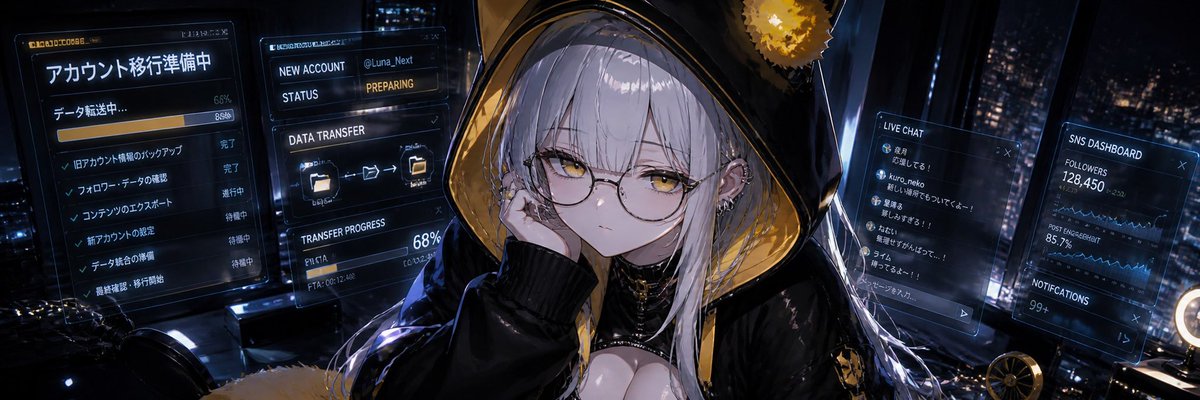
- Use this as a ui & social screens benchmark when you need a fast style baseline before rewriting your own prompt.
- It is especially helpful if your target overlaps with Cinematic, Poster, Illustration and you want to judge the image result before tuning wording.
- Keep it as a control sample when you compare nearby prompt variants one variable at a time.
Visual Signals To Notice
- The clearest style signals here are Cinematic, Poster, Illustration, so those should usually stay in your first rewrite.
- The important layer is usually interface density, card hierarchy, and how the screen tells the story before you read small text.
- This case keeps one primary output, so the first image should be treated as the main visual reference.
How The Prompt Is Structured
- The prompt reads as a long, highly specified prompt, which is useful when you want to judge how much specificity this direction needs.
- Its keyword cluster is centered on Cinematic, Poster, Illustration, so you can usually keep that cluster while swapping subject, camera, layout, or copy details.
- A practical rewrite path is: keep the outcome, keep the strongest style cues, then replace only the subject and environment blocks.
Good Follow-up Questions
- What changes first if you keep Cinematic, Poster, Illustration but switch the subject matter?
- Which part of the result comes from section-level structure (UI & Social Screens) versus tag-level style cues?
- Which related cases in the same section give you a cleaner or more extreme variation of the same direction?
Full Prompt
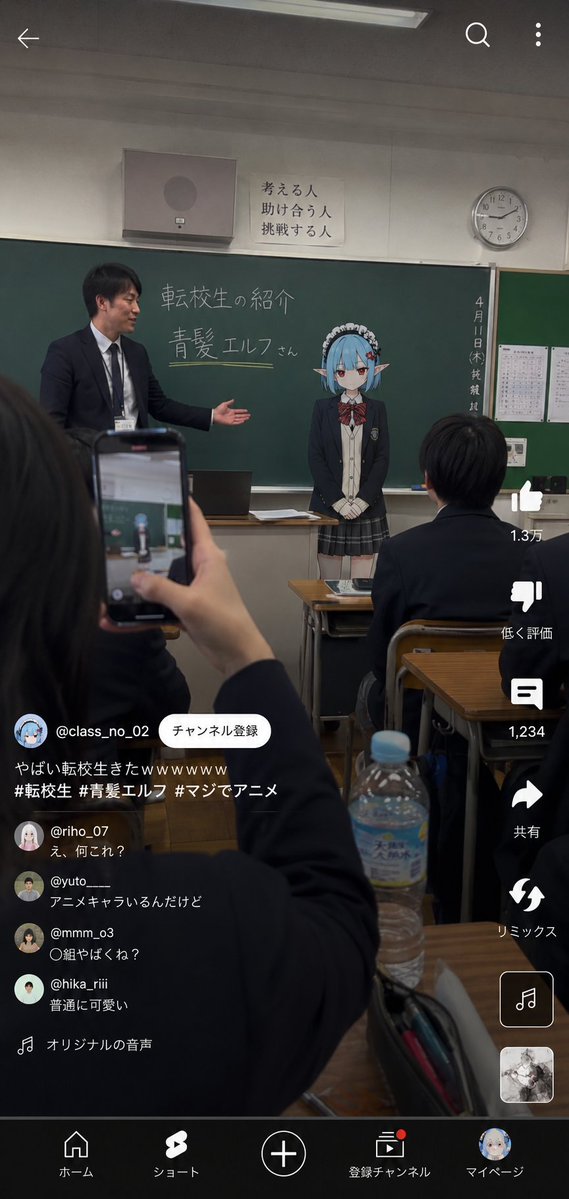
Use the reference image as the base for character design to depict the moment an "{argument name="situation" default="reincarnated anime character transfers to a real-world school"}." Accurately maintain the atmospheric feel of the character as an anime illustration. Do not break the character's identity; do not turn them into a live-action human. Maintain anime illustration expression for the character part. The character is dressed in a realistic Japanese high school uniform (blazer, tie, ribbon, cardigan, shirt, school-specified skirt). The setting is a realistic Japanese high school classroom with blackboards, desks, fluorescent lights, handouts, curtains, and lockers. The background should not be too clean; emphasize a sense of daily life and school clutter. Composition should look like a vertical smartphone video with UI elements from TikTok or Instagram Reels. In the foreground, naturally frame the hands of a student holding a smartphone, a desk, and a notebook. At the front of the classroom, a realistic teacher is introducing the anime character student named {argument name="name" default="Blue-Haired Elf"} written in chalk. The character should look slightly nervous or expressionless, trying to blend in naturally. Lighting should be unified across the character and classroom. Add smartphone-like textures: slight HDR, sensor noise, minor JPEG artifacts, and handheld camera instability. Avoid cinematic or glossy rendering; prioritize the feeling of a candidly posted video.