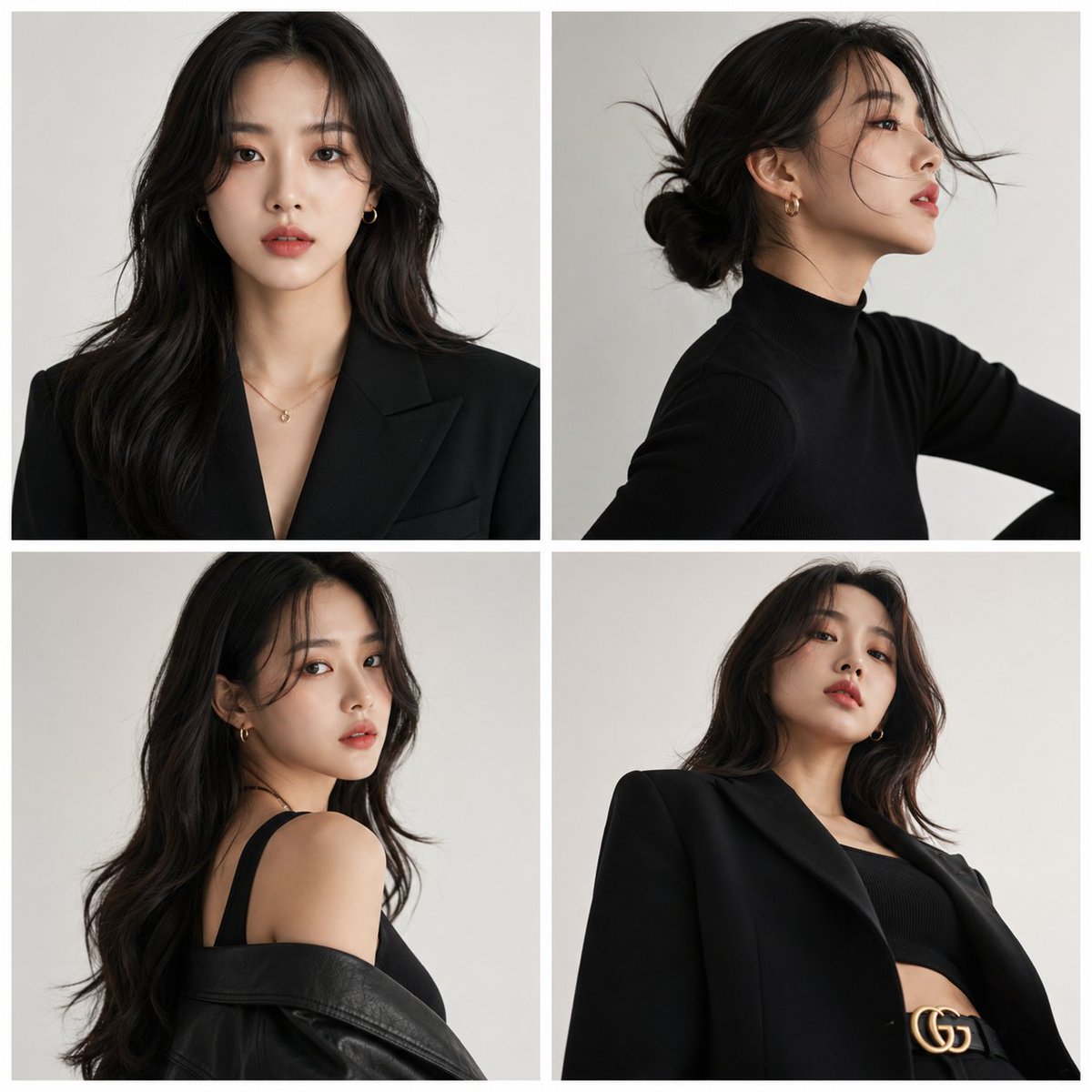
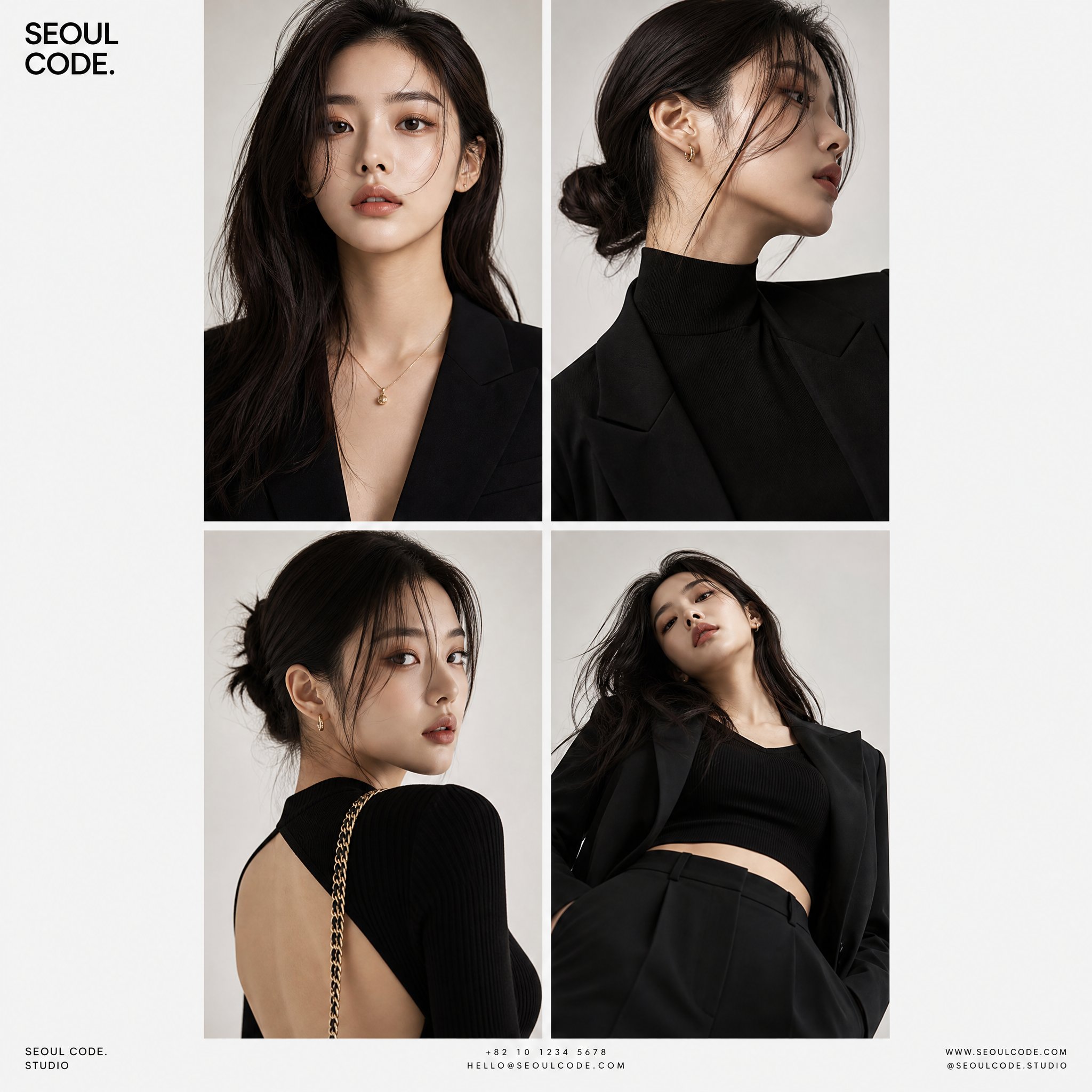
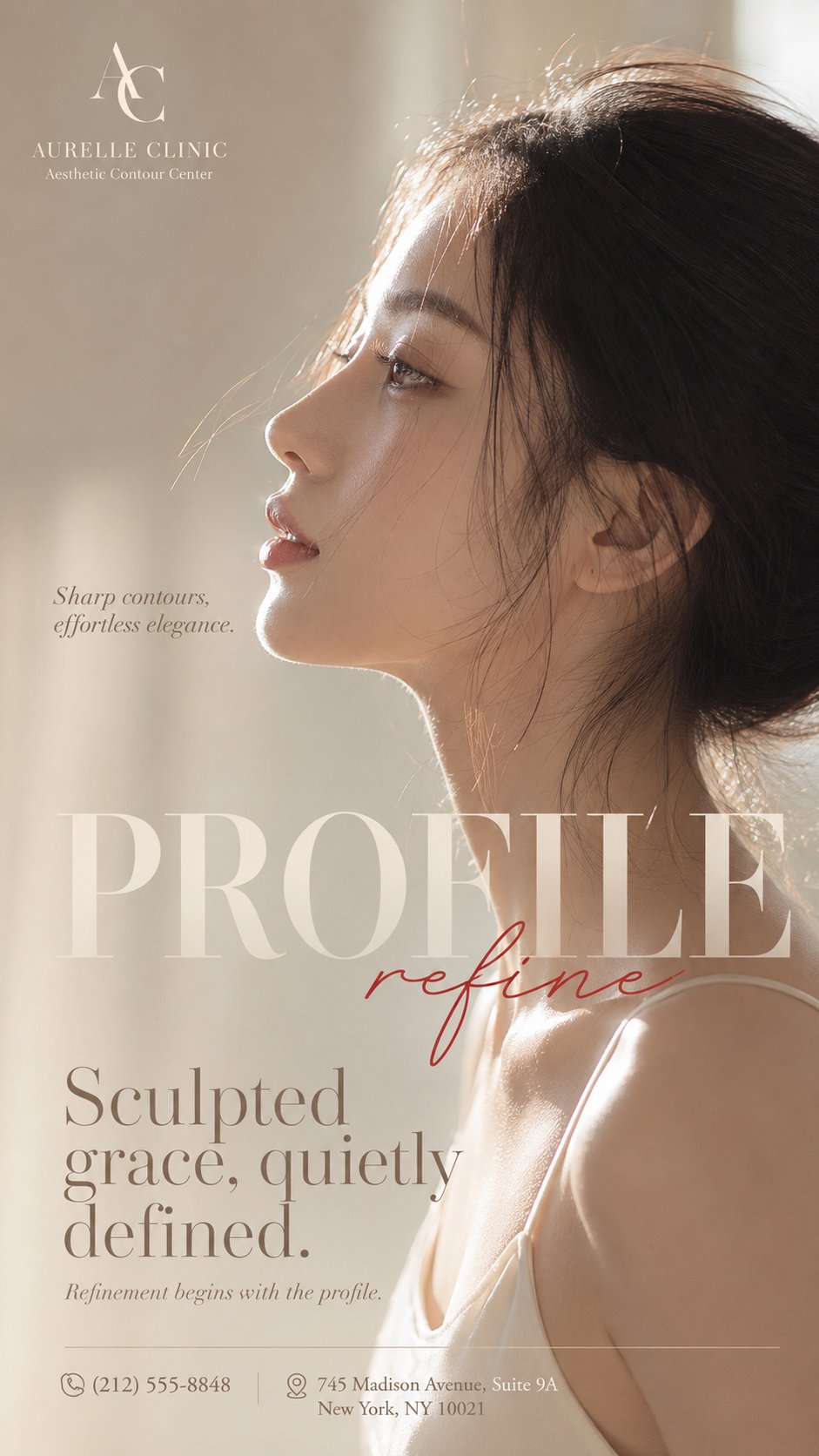
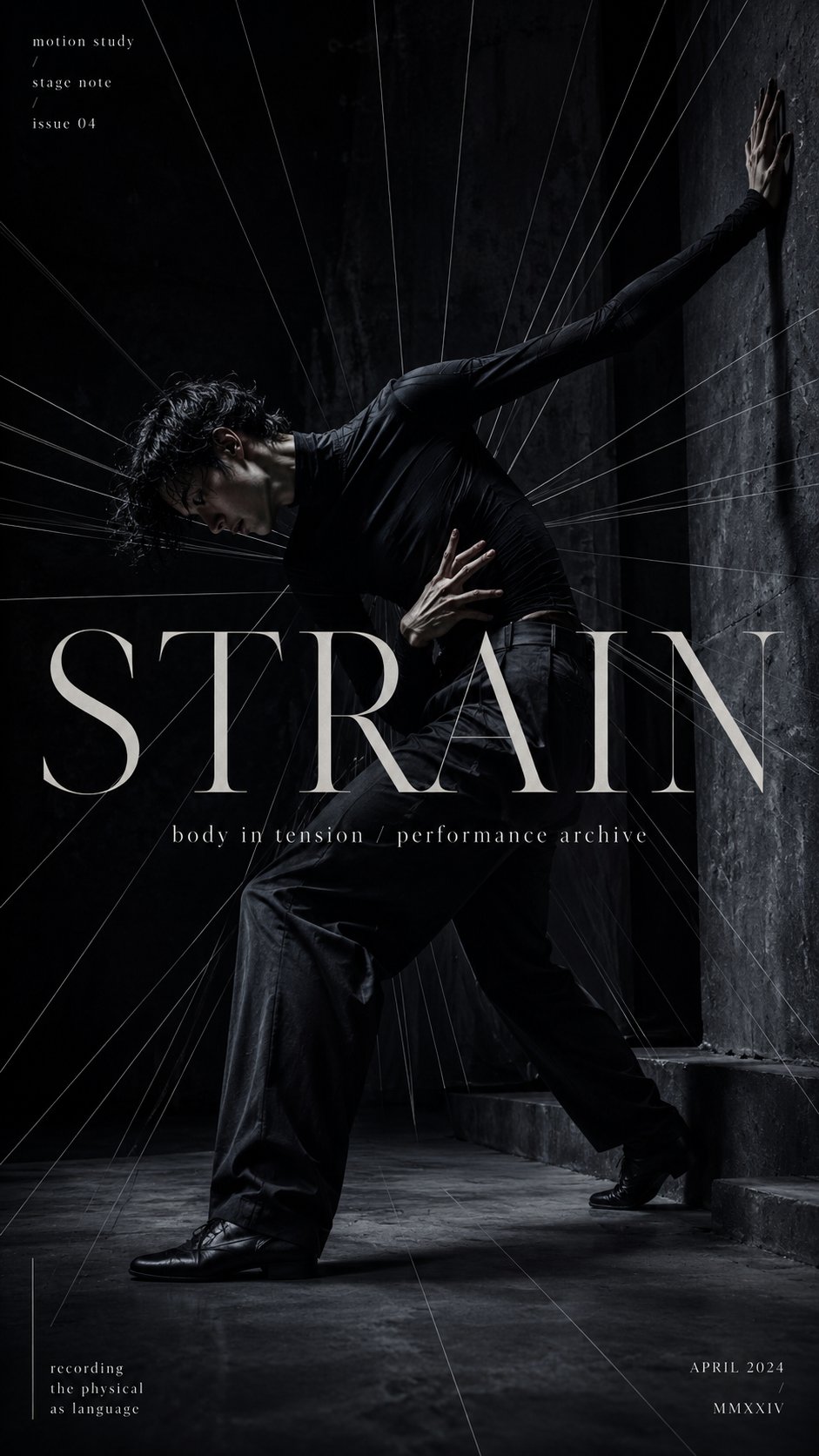
Case Media
Case Notes
This page keeps the media, full prompt, and original source together so you can inspect the result first and decide whether the prompt is worth copying, saving, or comparing.
Case Insights
To make this page easier to search, cite, and reuse later, the case is also broken down into practical guidance about usage, visual cues, and prompt structure.
Best Fit Scenarios
- Use this as a portrait & photography benchmark when you need a fast style baseline before rewriting your own prompt.
- It is especially helpful if your target overlaps with Portrait, Cinematic, Fashion and you want to judge the image result before tuning wording.
- Keep it as a control sample when you compare nearby prompt variants one variable at a time.
Visual Signals To Notice
- The clearest style signals here are Portrait, Cinematic, Fashion, so those should usually stay in your first rewrite.
- Focus on framing, light direction, pose, and the distance between subject and camera.
- This case keeps one primary output, so the first image should be treated as the main visual reference.
How The Prompt Is Structured
- The prompt reads as a long, highly specified prompt, which is useful when you want to judge how much specificity this direction needs.
- Its keyword cluster is centered on Portrait, Cinematic, Fashion, so you can usually keep that cluster while swapping subject, camera, layout, or copy details.
- A practical rewrite path is: keep the outcome, keep the strongest style cues, then replace only the subject and environment blocks.
Good Follow-up Questions
- What changes first if you keep Portrait, Cinematic, Fashion but switch the subject matter?
- Which part of the result comes from section-level structure (Portrait & Photography) versus tag-level style cues?
- Which related cases in the same section give you a cleaner or more extreme variation of the same direction?
Full Prompt
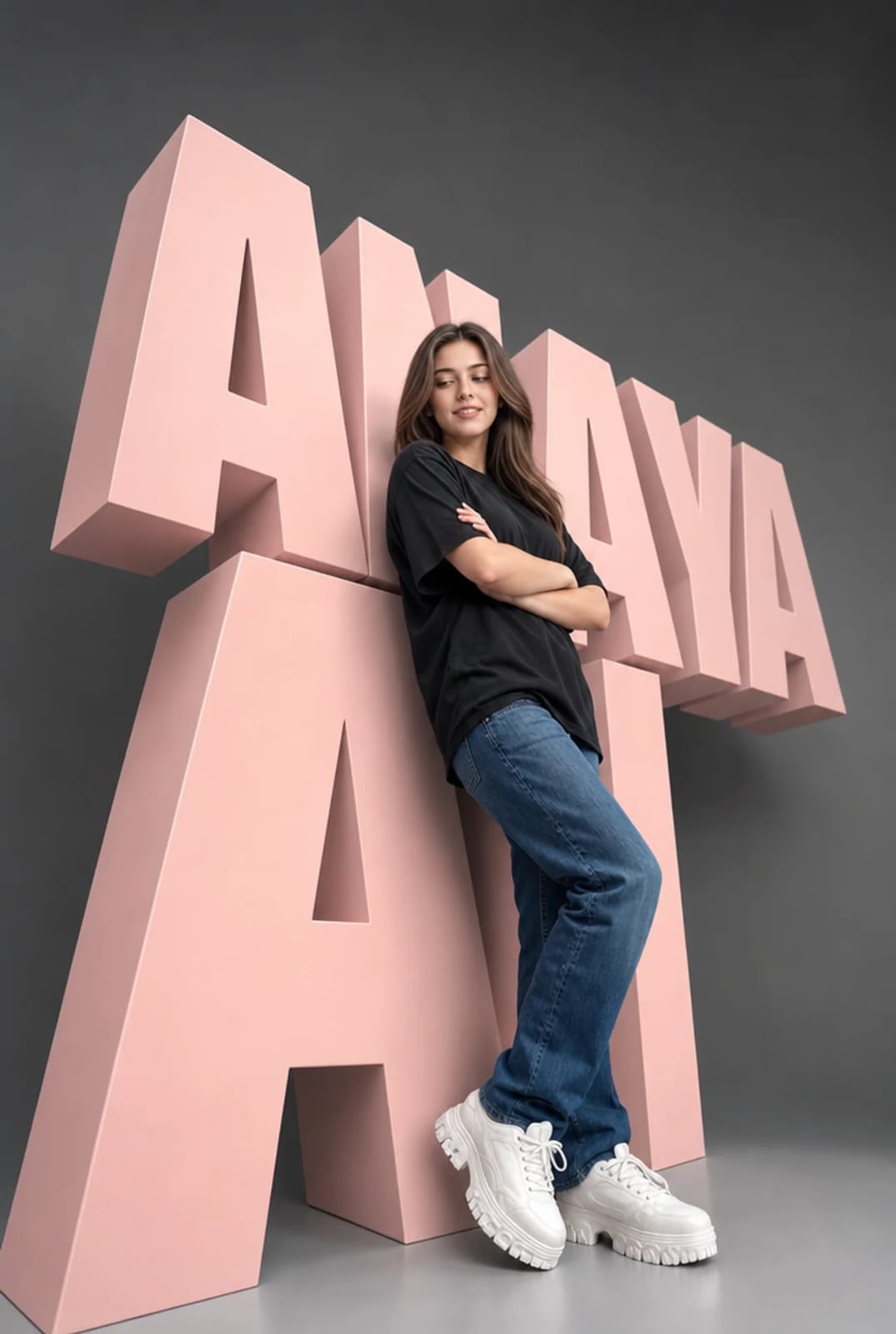
I'm standing in a modern professional studio setting, leaning casually against a massive three-dimensional sculptural typography installation spelling ANAYA AI. The typography sculpture is finished in a striking pastel [Favorite your color] color with a smooth matte surface, clean edges, subtle studio reflections, and premium architectural quality. The typography appears monumental in scale, functioning as both a bold design element and a physical object within the scene. My body is captured from a side angle, with most of my weight resting naturally on one leg, creating a relaxed yet confident stance. I have my arms crossed naturally across my chest in a calm, effortless posture. My head is slightly tilted downward while my gaze looks subtly away from the camera and out of frame, creating a composed, introspective, and self-assured expression. The pose feels authentic, relaxed, and editorial rather than staged. I'm wearing a loose-fitting premium black dry-fit t-shirt with realistic fabric texture, absolutely no logos, graphics, branding, or prints. The shirt drapes naturally over the body. I pair it with clean modern blue jeans featuring realistic folds and natural fabric details. On my feet, I wear chunky white sneakers with visible laces, thick sculpted soles, and premium streetwear styling, adding a sporty contrast to the minimalist aesthetic. The overall styling is monochromatic, minimalist, contemporary streetwear, and high-end editorial. The image is photographed from a dramatic low-angle perspective, emphasizing height, confidence, and visual presence. The monumental pastel- [Your favorite color ] "[YOUR NAME]" typography sculpture appears powerful and architectural in scale, dominating the composition while maintaining balance with the subject. The camera framing resembles an 85mm portrait lens with cinematic compression, realistic proportions, and professional fashion-editorial composition. The subject remains sharp and naturally proportioned, with no distortion. The low-angle viewpoint enhances depth and visual impact while preserving realistic anatomy. Lighting consists of controlled professional studio lighting with soft directional illumination. The light evenly highlights the face, clothing, and body while creating soft sculptural shadows across the typography structure. Subtle rim lighting adds separation from the background, enhancing dimensionality and depth without harsh contrast. The background features a clean, seamless dark-gray gradient studio backdrop with smooth tonal transitions, creating strong contrast against the large pastel-pink typography sculpture. The typography remains clearly visible and serves as the dominant visual element of the composition . The overall mood is cinematic, editorial, sophisticated, and modern, blending contemporary streetwear fashion with bold architectural typography. The composition feels like a luxury fashion campaign, creative advertising poster, or premium magazine editorial, captured from a dramatic low-angle perspective with exceptional realism. Ultra-realistic photography, luxury advertising campaign, architectural typography sculpture, cinematic depth, photorealistic skin texture, realistic fabric details, natural body proportions, professional studio photography, premium lighting, high detail, ultra-sharp focus, masterpiece composition, fashion editorial, 8K resolution.