Case Media
Case Notes
This page keeps the media, full prompt, and original source together so you can inspect the result first and decide whether the prompt is worth copying, saving, or comparing.
Case Insights
To make this page easier to search, cite, and reuse later, the case is also broken down into practical guidance about usage, visual cues, and prompt structure.
Best Fit Scenarios
- Use this as a portrait & photography benchmark when you need a fast style baseline before rewriting your own prompt.
- It is especially helpful if your target overlaps with Portrait, Cinematic, Poster and you want to judge the image result before tuning wording.
- Keep it as a control sample when you compare nearby prompt variants one variable at a time.
Visual Signals To Notice
- The clearest style signals here are Portrait, Cinematic, Poster, so those should usually stay in your first rewrite.
- Focus on framing, light direction, pose, and the distance between subject and camera.
- This case keeps one primary output, so the first image should be treated as the main visual reference.
How The Prompt Is Structured
- The prompt reads as a long, highly specified prompt, which is useful when you want to judge how much specificity this direction needs.
- Its keyword cluster is centered on Portrait, Cinematic, Poster, so you can usually keep that cluster while swapping subject, camera, layout, or copy details.
- A practical rewrite path is: keep the outcome, keep the strongest style cues, then replace only the subject and environment blocks.
Good Follow-up Questions
- What changes first if you keep Portrait, Cinematic, Poster but switch the subject matter?
- Which part of the result comes from section-level structure (Portrait & Photography) versus tag-level style cues?
- Which related cases in the same section give you a cleaner or more extreme variation of the same direction?
Full Prompt
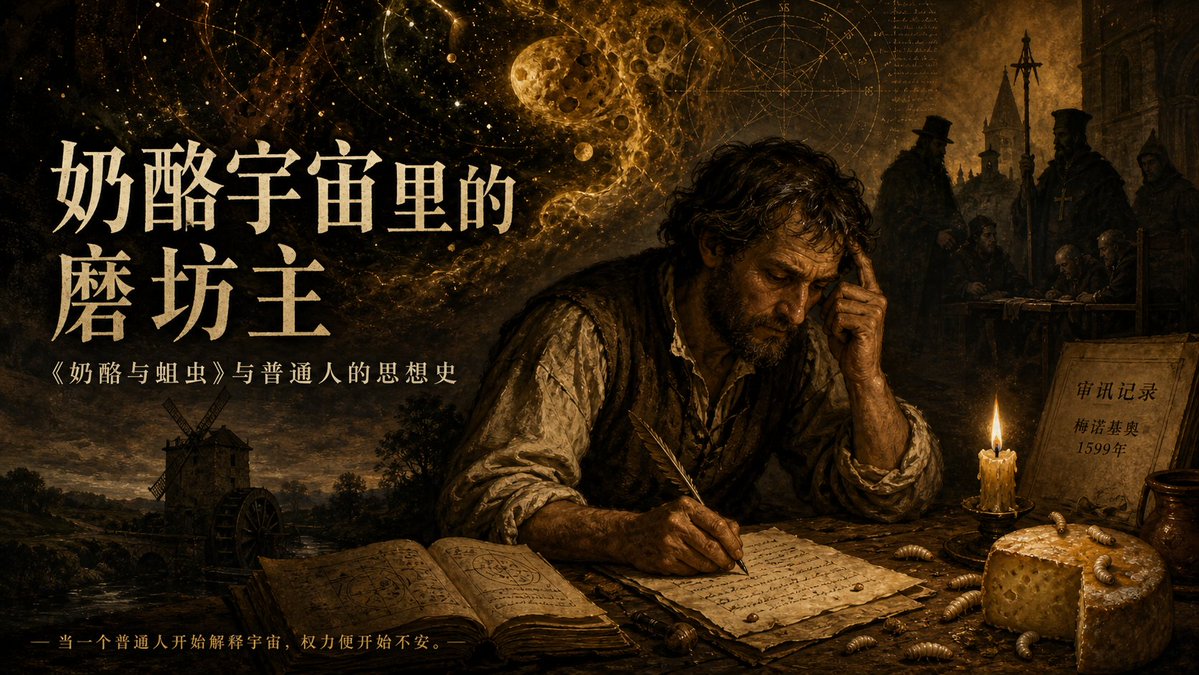
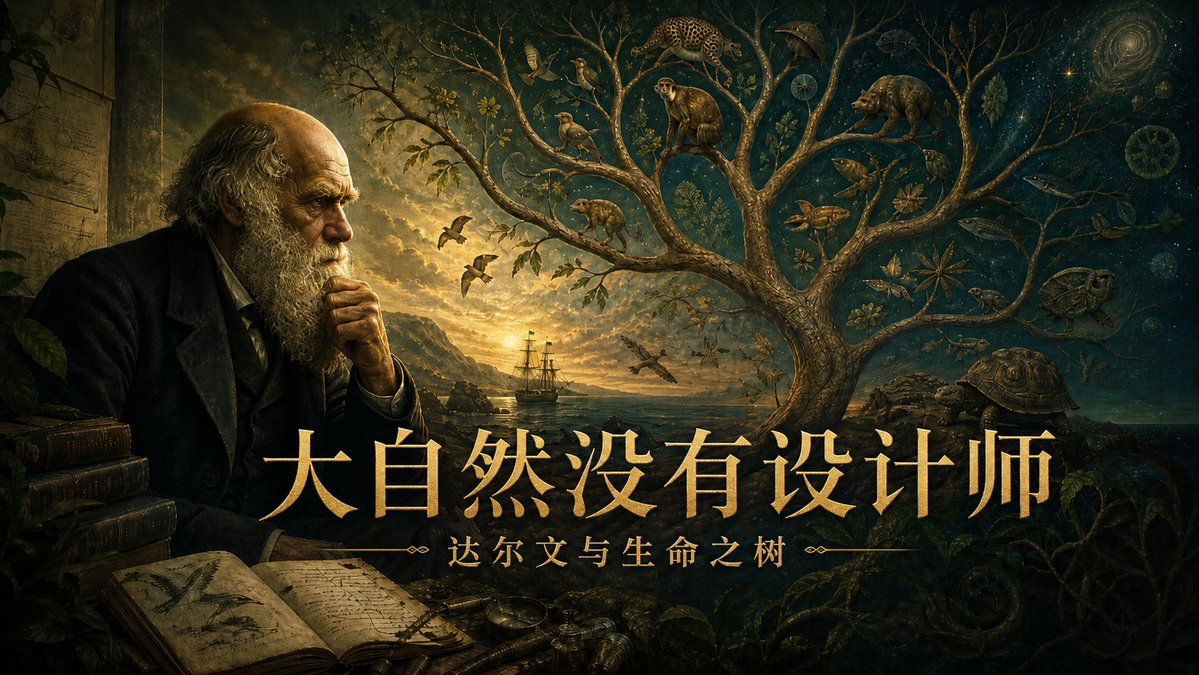
Create a cinematic 16:9 podcast cover illustration in a dark Renaissance natural-history style, like an antique oil painting mixed with fantasy scientific engraving. On the left, show an elderly Victorian-era naturalist resembling Charles Darwin seated in shadow beside stacked leather-bound books, an open sketchbook full of botanical and animal notes, loose papers, brass instruments, and a dim study wall; his face is intentionally covered by a plain vertical brown rectangular block as if redacted. The center and right side open into a glowing seascape at sunset with a sailing ship near distant cliffs, birds in flight, and a huge symbolic tree of life whose twisting branches fill the sky. In the branches place exactly 13 visible natural-history elements: a jaguar or leopard, a monkey, a bear-like mammal, a perched bird, two small birds together, a pangolin-like animal, a fox or small canine, a sea turtle, a large tortoise, a fish, a lizard or reptile, a spiral shell, and a star-shaped botanical specimen. The right background should transition into a deep cosmic blue night sky with stars, a spiral galaxy, circular scientific diagrams, fossils, leaves, insects, roots, and ocean creatures, suggesting evolution, biodiversity, and cosmic time. Use dramatic chiaroscuro lighting, warm gold highlights, teal-green shadows, intricate engraved details, painterly textures, and a mysterious scholarly atmosphere. Across the lower center place large elegant gold Chinese title text {argument name="headline text" default="大自然没有设计师"}, with smaller gold subtitle text beneath it {argument name="subtitle text" default="达尔文与生命之树"}, flanked by thin ornamental divider lines and small decorative flourishes. Keep the typography crisp, centered, luxurious, and readable, like a premium science-history podcast cover. Overall palette: antique amber, dark forest green, deep teal, black, and luminous gold; high detail, cinematic composition, no modern objects.