Case Media
Case Notes
This page keeps the media, full prompt, and original source together so you can inspect the result first and decide whether the prompt is worth copying, saving, or comparing.
Case Insights
To make this page easier to search, cite, and reuse later, the case is also broken down into practical guidance about usage, visual cues, and prompt structure.
Best Fit Scenarios
- Use this as a portrait & photography benchmark when you need a fast style baseline before rewriting your own prompt.
- It is especially helpful if your target overlaps with Portrait, Cinematic, Poster and you want to judge the image result before tuning wording.
- Keep it as a control sample when you compare nearby prompt variants one variable at a time.
Visual Signals To Notice
- The clearest style signals here are Portrait, Cinematic, Poster, so those should usually stay in your first rewrite.
- Focus on framing, light direction, pose, and the distance between subject and camera.
- This case keeps one primary output, so the first image should be treated as the main visual reference.
How The Prompt Is Structured
- The prompt reads as a long, highly specified prompt, which is useful when you want to judge how much specificity this direction needs.
- Its keyword cluster is centered on Portrait, Cinematic, Poster, so you can usually keep that cluster while swapping subject, camera, layout, or copy details.
- A practical rewrite path is: keep the outcome, keep the strongest style cues, then replace only the subject and environment blocks.
Good Follow-up Questions
- What changes first if you keep Portrait, Cinematic, Poster but switch the subject matter?
- Which part of the result comes from section-level structure (Portrait & Photography) versus tag-level style cues?
- Which related cases in the same section give you a cleaner or more extreme variation of the same direction?
Full Prompt
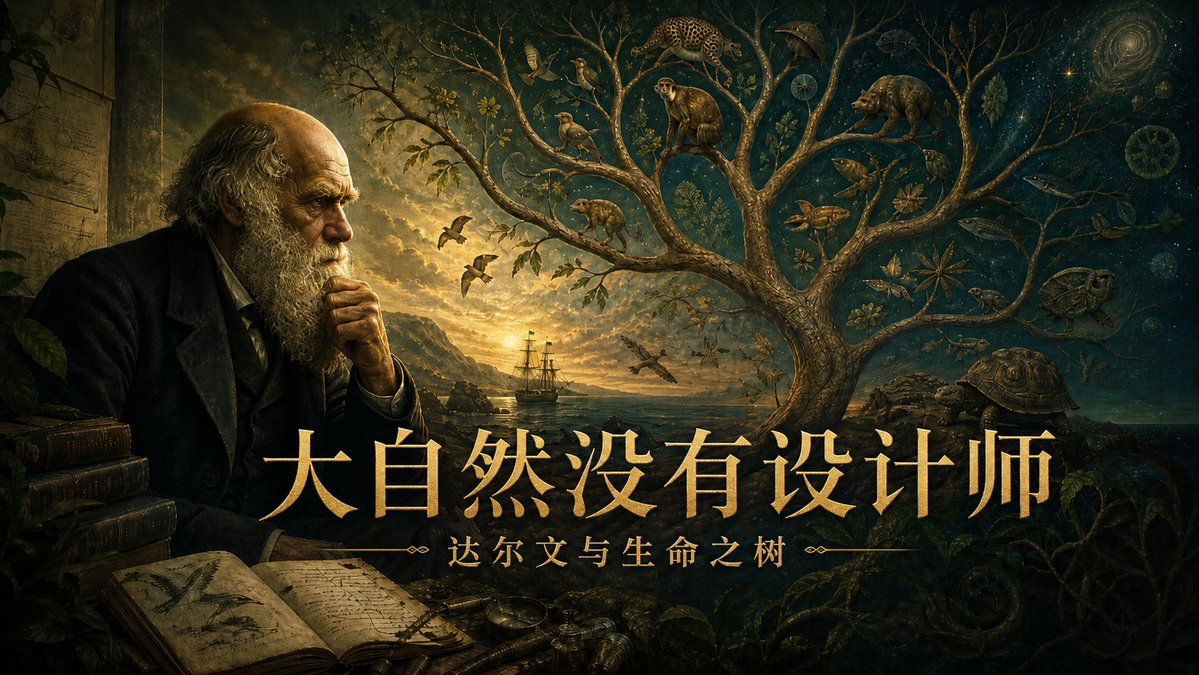
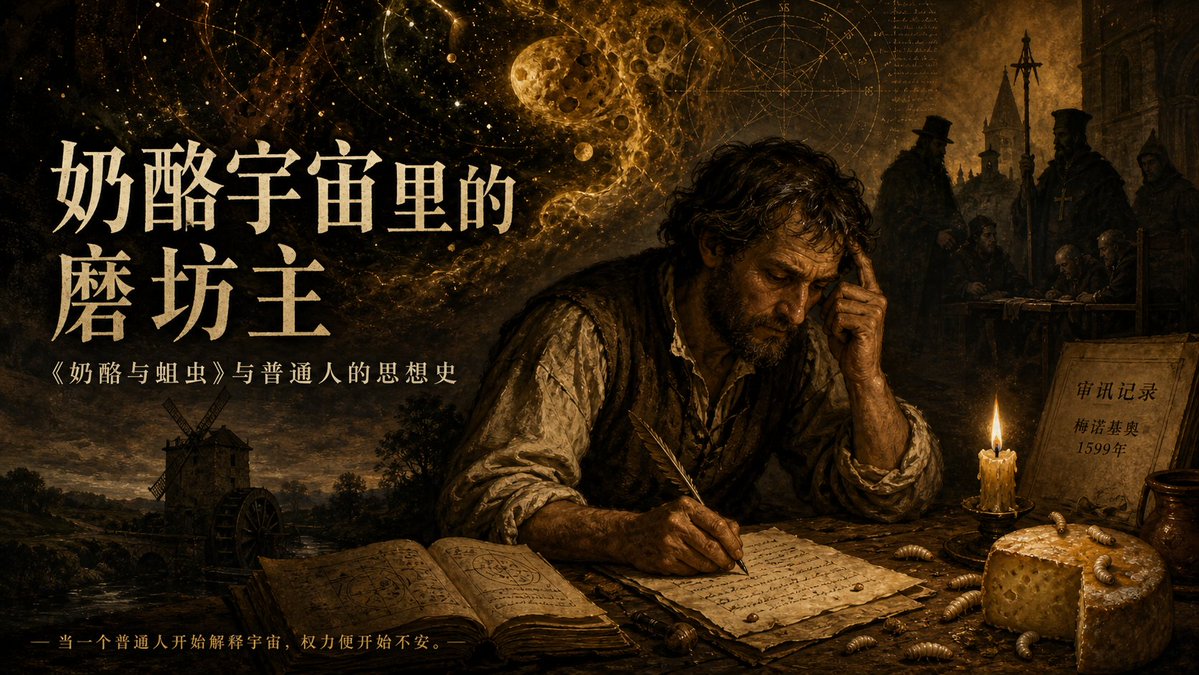
Create a dark cinematic podcast cover in a 16:9 horizontal format, painted like a dramatic Baroque oil painting with golden-brown chiaroscuro lighting, aged parchment textures, and a historical mystery atmosphere. The scene shows a weary medieval scholar or miller seated at a rough wooden desk in the right-center foreground, face intentionally obscured by a dark square shadow, one hand pressed to his temple while the other writes with a feather quill on handwritten papers. On the desk include 5 main foreground objects: an open occult notebook filled with diagrams, loose manuscript pages, a burning wax candle, a wedge of hole-filled cheese, and scattered larvae; include exactly 9 clearly visible larvae around the cheese and papers. Behind him, blend a surreal cosmic sky with stars, astrological circles, a cratered moon, golden nebula dust, and faint mathematical manuscript marks, merging into a late-medieval village with a windmill on the lower left and shadowy church officials or inquisitors on the upper right. Add exactly 4 visible text blocks: a large cream-colored Chinese main title on the left reading {argument name="main title" default="奶酪宇宙里的磨坊主"}, a smaller subtitle beneath it reading {argument name="subtitle" default="《奶酪与蛆虫》与普通人的思想史"}, a tiny bottom-left tagline reading {argument name="tagline" default="— 当一个普通人开始解释宇宙,权力便开始不安。"}, and a parchment note on the right reading {argument name="document note" default="审讯记录\n梅诺基奥\n1599年"}. Use elegant traditional Chinese typography, off-white ink for the title, muted gold for the small tagline, high contrast but weathered edges, museum-poster composition, no modern objects, no clean digital gloss, richly detailed, ominous, intellectual, and suitable as a historical philosophy podcast episode cover.