Case Media
Case Notes
This page keeps the media, full prompt, and original source together so you can inspect the result first and decide whether the prompt is worth copying, saving, or comparing.
Case Insights
To make this page easier to search, cite, and reuse later, the case is also broken down into practical guidance about usage, visual cues, and prompt structure.
Best Fit Scenarios
- Use this as a character design benchmark when you need a fast style baseline before rewriting your own prompt.
- It is especially helpful if your target overlaps with Portrait, Fashion, Illustration and you want to judge the image result before tuning wording.
- Keep it as a control sample when you compare nearby prompt variants one variable at a time.
Visual Signals To Notice
- The clearest style signals here are Portrait, Fashion, Illustration, so those should usually stay in your first rewrite.
- Look at silhouette, costume language, mood styling, and whether the character reads clearly at a glance.
- This case keeps 2 media outputs, which makes it easier to check whether the style remains stable across multiple results.
How The Prompt Is Structured
- The prompt reads as a long, highly specified prompt, which is useful when you want to judge how much specificity this direction needs.
- Its keyword cluster is centered on Portrait, Fashion, Illustration, so you can usually keep that cluster while swapping subject, camera, layout, or copy details.
- A practical rewrite path is: keep the outcome, keep the strongest style cues, then replace only the subject and environment blocks.
Good Follow-up Questions
- What changes first if you keep Portrait, Fashion, Illustration but switch the subject matter?
- Which part of the result comes from section-level structure (Character Design) versus tag-level style cues?
- Which related cases in the same section give you a cleaner or more extreme variation of the same direction?
Full Prompt
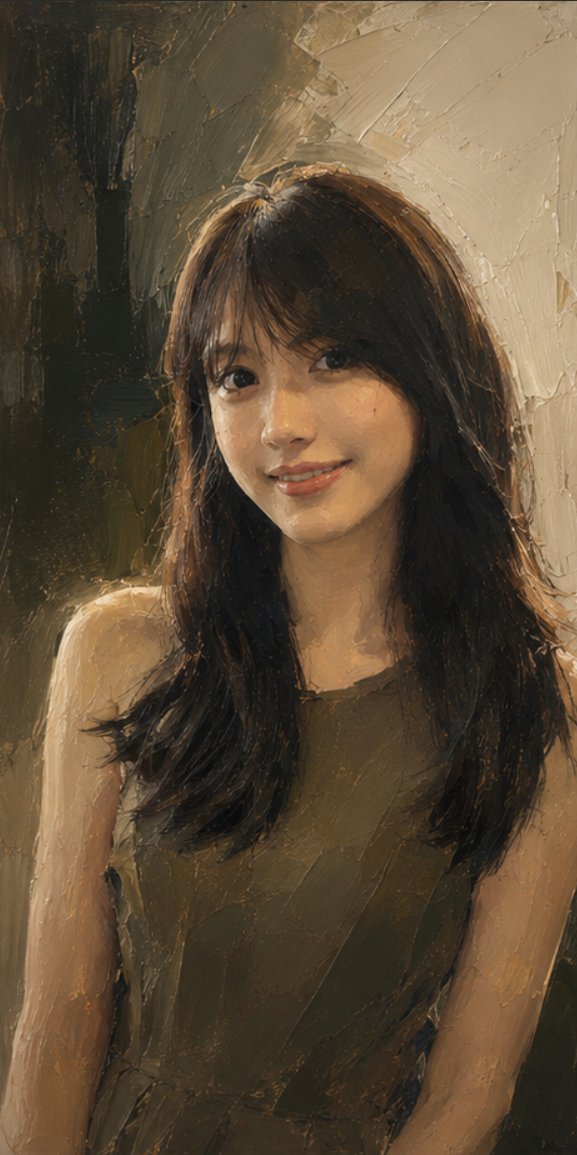
Please use the uploaded portrait photo as the sole reference to transform it into a modern museum-grade fashion oil portrait. You must preserve the original person's identity features, facial proportions, facial structure, gaze, expression, sense of age, hairstyle contour, and overall temperament. Do not swap faces, do not change the person's gender, do not change the person's demeanor, and do not paint the person as a stranger. Only reshape the artistic style, color relationships, background, clothing texture, lighting, and brushstrokes of the image. The image style is a contemporary high-end fashion oil portrait, vertical 9:16 aspect ratio. The subject should be centered or slightly off-center, as the sole visual focus of the frame. The overall quality should fall between a museum collection portrait, a fashion magazine cover, and a modern oil painting, but do not include any text, logos, magazine titles, or brand identifiers. Painting Language: Use large blocks of color, simplified forms, restrained brushstrokes, local impasto, palette knife marks, and visible oil paint textures. Do not perform photo-realistic detailed rendering of the face; only preserve the most critical facial features and demeanor. The skin should be treated in a high-end oil painting manner, preserving the person's true temperament while weakening pores, messy hair strands, and photographic noise. Clothing Treatment: Transform the original clothing into a minimalist high-end gown or a simple dark outfit with sharp silhouettes and restrained textures. No exaggerated decorations, and no cheap photo studio feel. The clothing color should be unified with the overall color scheme. Background Treatment: Remove the complex background of the original image and replace it with a large-area abstract color block background. The background should not depict a specific space, and no furniture, street scenes, props, or complex decorations should appear. Maintain the uneven edges of handmade oil painting, impasto textures, and palette knife marks between color blocks. Lighting Treatment: Use soft directional light similar to a museum spotlight, cutting into the subject's contour from the side and top, forming quiet highlights on the edges of the face, neck, hair, and clothing silhouette. The overall light and shadow should be high-end, restrained, and calm; do not overexpose, and do not use influencer-style soft light filters. Color Schemes: Please choose one from the following high-end color systems and maintain unity throughout the image: 1. Emerald, Peacock Green, Forest Green, Cream White, Dark Brown-Black 2. Burgundy Red, Smoky Pink, Ivory White, Warm Gray, Dark Coffee 3. Prussian Blue, Haze Blue, Silver Gray, Cold White, Ink Black 4. Caramel Brown, Ochre, Sand, Cream White, Charcoal Black 5. Olive Green, Gray Blue, Off-White, Warm Brown, Smoke Gray 6. Deep Purple Gray, Rose Brown, Off-White, Black Brown, Dark Gold Overall Temperament: Minimalist, high-end, quiet, expensive, restrained, with a sense of museum curation. The image should not look like a common photo filter, not like a random AI illustration, not like a wedding studio sample, and not like an influencer portrait. Negative Requirements: Do not change the original person's identity. Do not swap faces. Do not make the person younger or older. Do not over-beautify. No anime feel. No 2D style. No sweet girl vibe. No commercial portrait feel. No photo studio feel. No vintage court style. No complex backgrounds. No extra people. No real brand logos. No text. No signatures. No watermarks. No garbled code. Do not obviously imitate any specific artist.