Case Media
Case Notes
This page keeps the media, full prompt, and original source together so you can inspect the result first and decide whether the prompt is worth copying, saving, or comparing.
Case Insights
To make this page easier to search, cite, and reuse later, the case is also broken down into practical guidance about usage, visual cues, and prompt structure.
Best Fit Scenarios
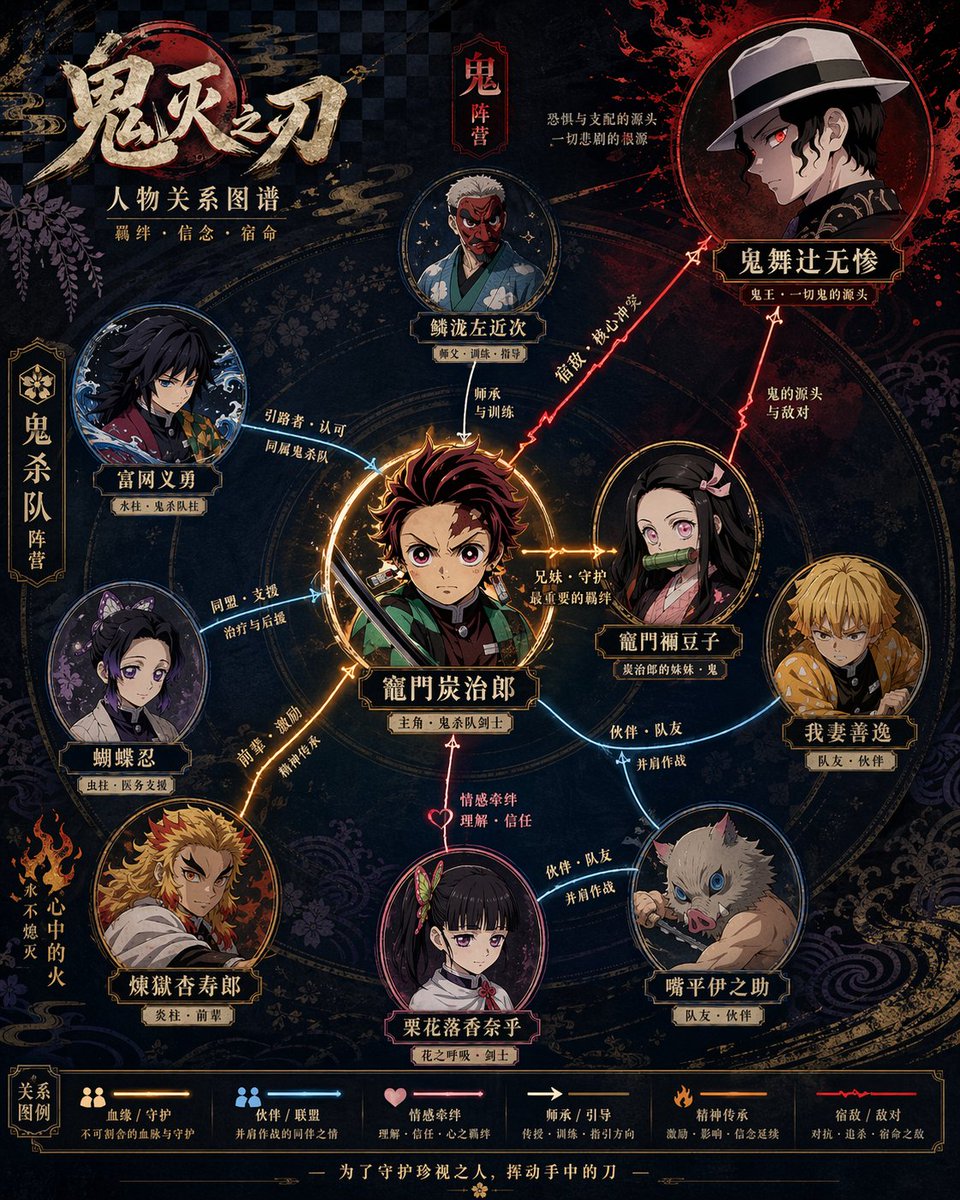
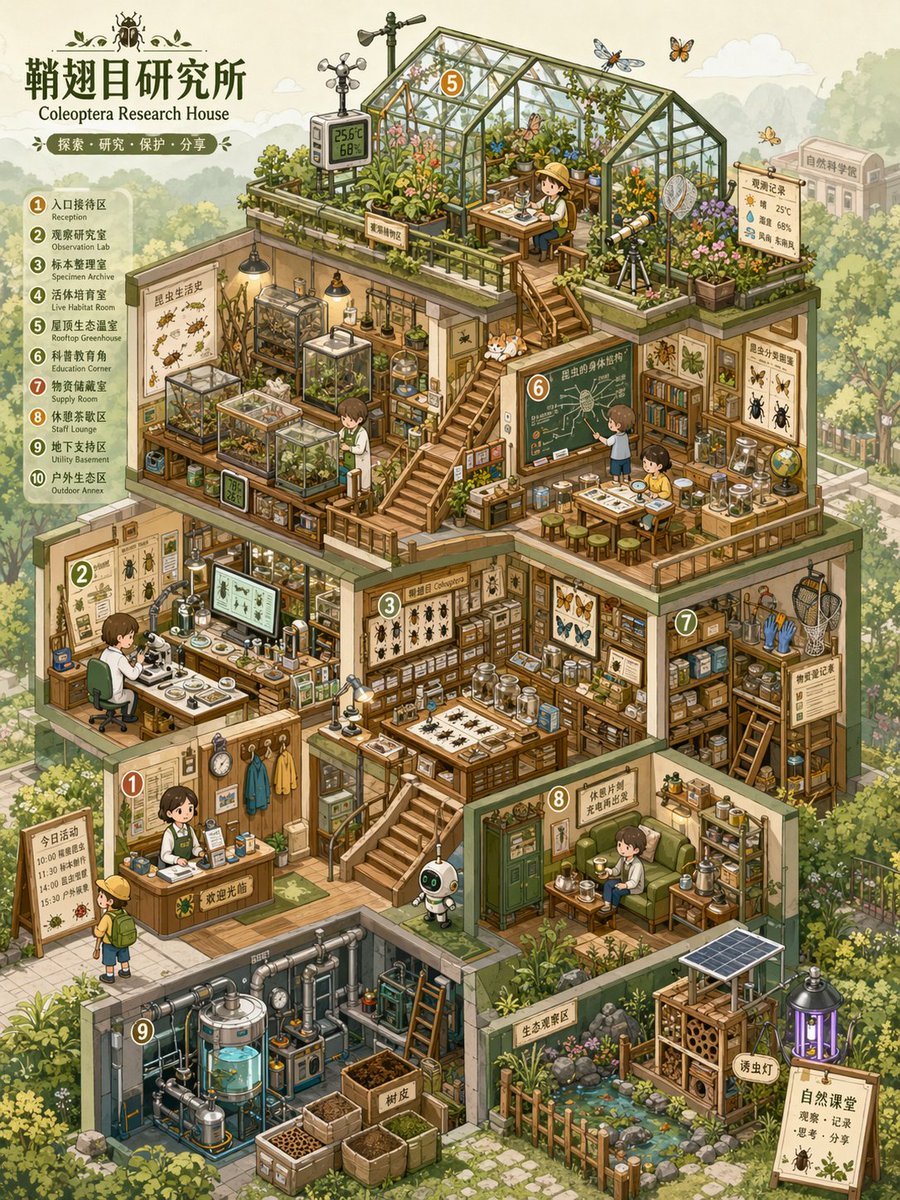
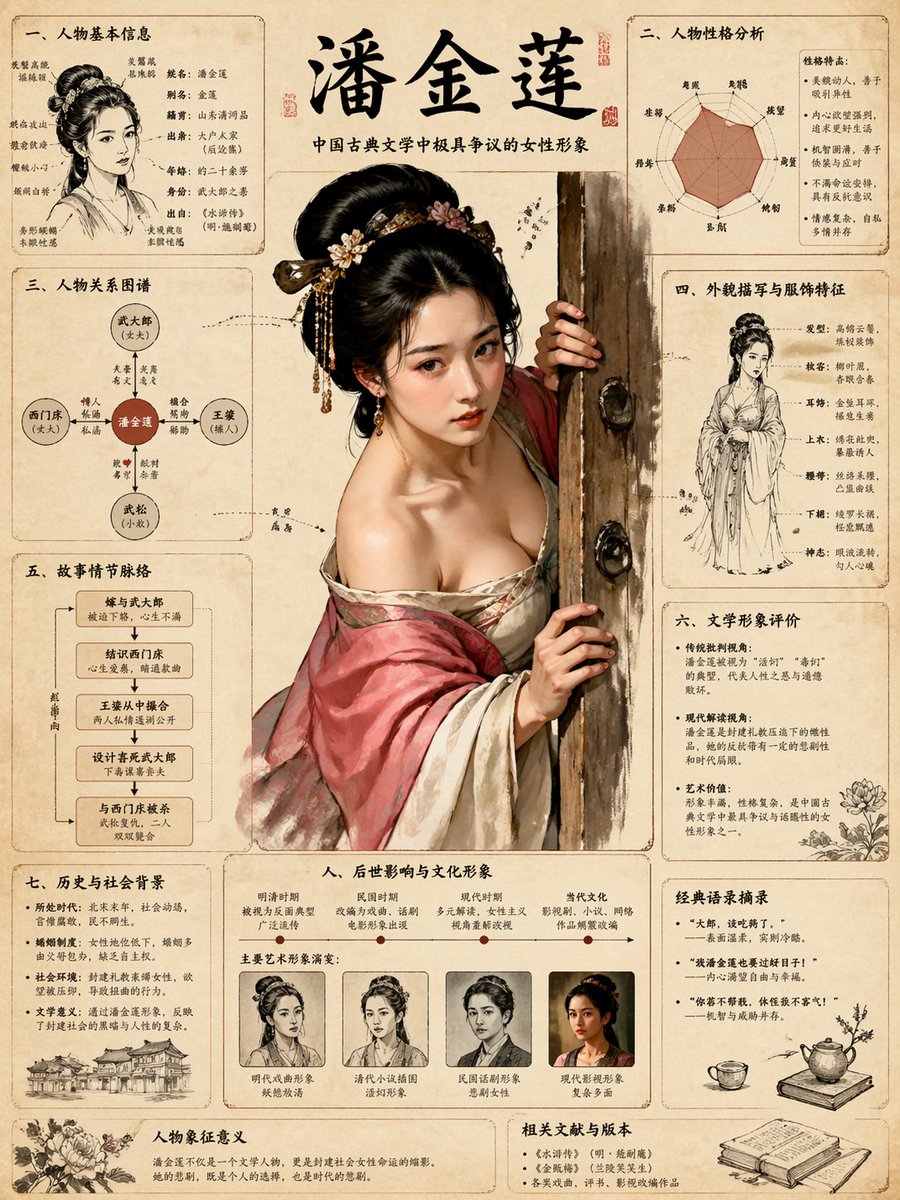
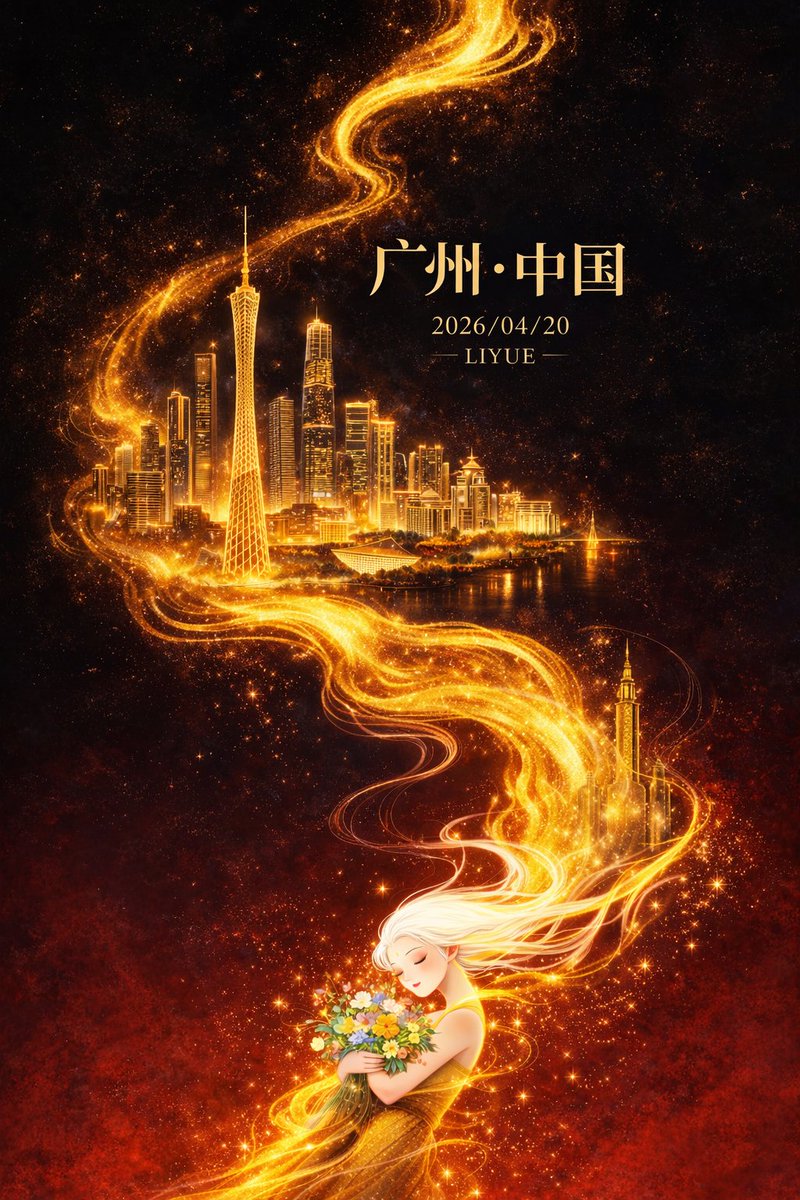
- Use this as a character design benchmark when you need a fast style baseline before rewriting your own prompt.
- It is especially helpful if your target overlaps with Poster, Illustration, Character and you want to judge the image result before tuning wording.
- Keep it as a control sample when you compare nearby prompt variants one variable at a time.
Visual Signals To Notice
- The clearest style signals here are Poster, Illustration, Character, so those should usually stay in your first rewrite.
- Look at silhouette, costume language, mood styling, and whether the character reads clearly at a glance.
- This case keeps one primary output, so the first image should be treated as the main visual reference.
How The Prompt Is Structured
- The prompt reads as a long, highly specified prompt, which is useful when you want to judge how much specificity this direction needs.
- Its keyword cluster is centered on Poster, Illustration, Character, so you can usually keep that cluster while swapping subject, camera, layout, or copy details.
- A practical rewrite path is: keep the outcome, keep the strongest style cues, then replace only the subject and environment blocks.
Good Follow-up Questions
- What changes first if you keep Poster, Illustration, Character but switch the subject matter?
- Which part of the result comes from section-level structure (Character Design) versus tag-level style cues?
- Which related cases in the same section give you a cleaner or more extreme variation of the same direction?
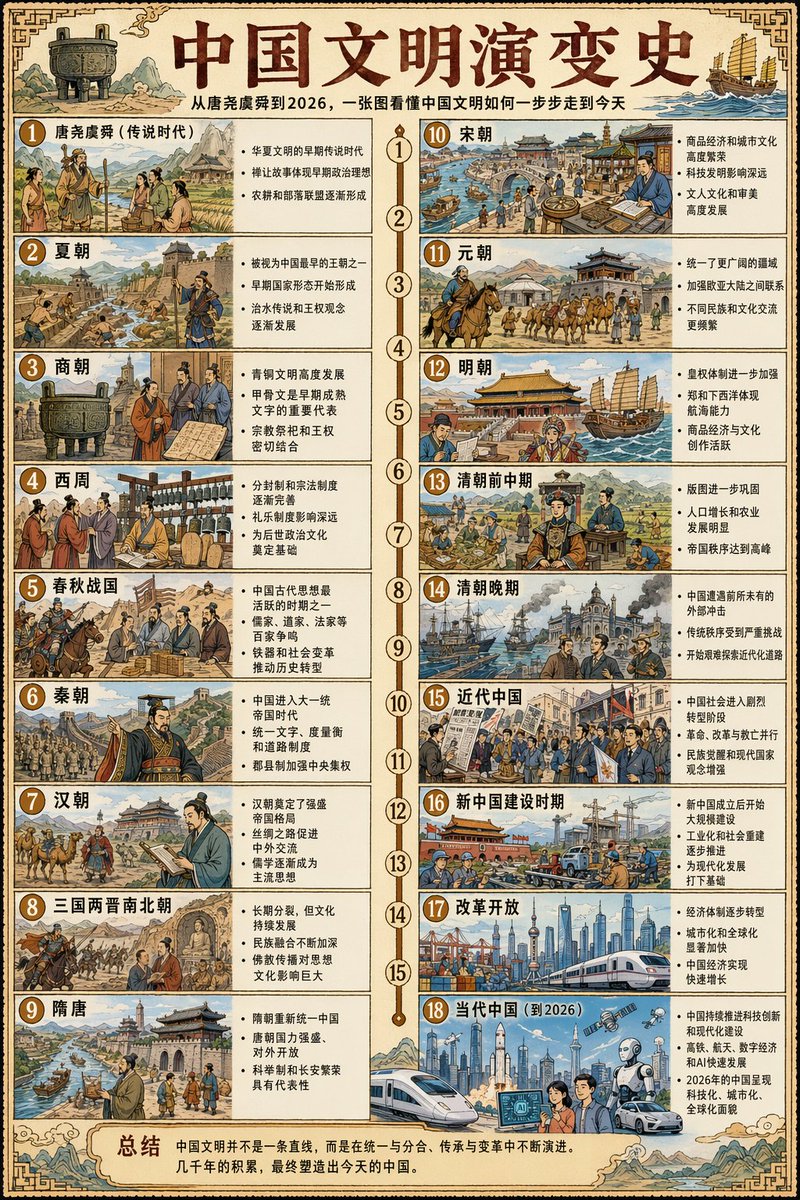
Full Prompt
Please generate a vertical long image poster suitable for a "historical popular science book", themed "History of Chinese Civilization Evolution". Overall content: Using a timeline approach, systematically display the evolution process of Chinese civilization from the "Tang Yao and Yu Shun Era", through various important historical periods, all the way to "Contemporary China in 2026". The entire image should look like an illustration page in a high-quality historical popular science book, combining informativeness, readability, and visual appeal. Art style: Adopt the classic European clear-line comic style, similar to "The Adventures of Tintin" with clean and clear lines, flat coloring, bright and retro colors, and exquisite and orderly composition. The overall look should be a combination of "historical encyclopedia + comic panel layout + timeline scroll". The art style should be unified, with a retro knowledge book and adventure comic feel. Image format: - Vertical long image - Clear central or side timeline - Each historical period presented in independent small panels / small scenes - Each panel includes: 1) Period name 2) Corresponding representative scene 3) 2 to 3 concise Chinese knowledge point explanations - Neat and clear layout, like an interior page of a historical popular science book - Text should be concise, clear, and easy to read, without excessive long paragraphs of text - There should be clear distinctions between each historical stage, but the overall transition should be natural and coherent Title and descriptive text: Main title: History of Chinese Civilization Evolution Subtitle: From Tang Yao and Yu Shun to 2026, understand in one image how Chinese civilization step by step reached today Please include the following historical periods, and for each period provide representative scenes and concise knowledge points: 1. Tang Yao and Yu Shun (Legendary Era) Scene elements: Tribal alliance, sacrifices, farming, rivers, mountains and rivers, early settlements Knowledge points: - The early legendary era of Huaxia civilization - The story of abdication reflects early political ideals - Farming and tribal alliances gradually formed 2. Xia Dynasty Scene elements: Early dynasty, flood control, embryonic ritual system, primitive cities Knowledge points: - Considered one of the earliest dynasties in China - Early state forms began to emerge - Flood control legends and kingship concepts gradually developed 3. Shang Dynasty Scene elements: Bronze ding vessels, oracle bone inscriptions, sacrifices, royal capital Knowledge points: - Bronze civilization highly developed - Oracle bone inscriptions are an important representative of early mature writing - Religious sacrifices and kingship closely combined 4. Western Zhou Scene elements: Enfeoffment of feudal lords, rites and music system, patriarchal order Knowledge points: - The enfeoffment system and patriarchal system gradually perfected - The rites and music system had far-reaching influence - Laid the foundation for later political culture 5. Spring and Autumn and Warring States Periods Scene elements: Hegemony among feudal lords, Hundred Schools of Thought, Confucius, war and scholarship coexisting Knowledge points: - One of the most active periods of ancient Chinese thought - Confucianism, Daoism, Legalism and others contended - Iron tools and social changes drove historical transformation 6. Qin Dynasty Scene elements: Qin Shi Huang, Great Wall, unified writing, commandery and county system, standardized axle lengths Knowledge points: - China entered the era of a unified great empire - Unified writing, weights and measures, and road systems - The commandery and county system strengthened centralization of power 7. Han Dynasty Scene elements: Silk Road, camel caravans, imperial court, Confucianism, foreign exchanges Knowledge points: - The Han Dynasty established the pattern of a powerful empire - The Silk Road promoted exchanges between China and foreign lands - Confucianism gradually became the mainstream ideology 8. Three Kingdoms, Two Jins, and Southern and Northern Dynasties Scene elements: Wartime division, ethnic integration, Buddhist temples, literati demeanor Knowledge points: - Long-term division, but culture continued to develop - Ethnic integration continuously deepened - The spread of Buddhism had a huge impact on thought and culture 9. Sui and Tang Dynasties Scene elements: Grand Canal, Chang'an, imperial examination, prosperous Tang atmosphere, Silk Road merchants Knowledge points: - The Sui Dynasty reunified China - The Tang Dynasty was powerful and open to the outside world - The imperial examination system and the prosperity of Chang'an were representative 10. Song Dynasty Scene elements: Urban commerce, academies, movable type printing, compass, bustling city streets Knowledge points: - Commodity economy and urban culture highly prospered - Technological inventions had far-reaching influence - Literati culture and aesthetics highly developed 11. Yuan Dynasty Scene elements: Vast territory, post stations, merchant travel, Eurasian exchanges Knowledge points: - Unified a broader territory - Strengthened connections across the Eurasian continent - Exchanges between different ethnic groups and cultures became more frequent 12. Ming Dynasty Scene elements: Forbidden City, Zheng He's voyages to the Western Seas, treasure ships, novels and operas, urban society Knowledge points: - The imperial power system was further strengthened - Zheng He's voyages to the Western Seas demonstrated navigational capability - Commodity economy and cultural creation were active 13. Early and Mid-Qing Dynasty Scene elements: Great unified territory, imperial court, agrarian society, prosperous era scenes Knowledge points: - The territory was further consolidated - Population growth and agricultural development were significant - The imperial order reached its peak 14. Late Qing Dynasty Scene elements: Opium War, invasion by foreign powers, Self-Strengthening Movement, modern crisis Knowledge points: - China encountered unprecedented external shocks - The traditional order was severely challenged - Began the difficult exploration of the path to modernization 15. Modern China Scene elements: Xinhai Revolution, Republican cities, newspapers, students, War of Resistance Against Japan, national awakening Knowledge points: - Chinese society entered a period of intense transformation - Revolution, reform, and national salvation proceeded simultaneously - National awakening and modern state concepts strengthened 16. New China Construction Period Scene elements: Founding scene, factories, workers, farmland, infrastructure construction Knowledge points: - After the founding of New China, large-scale construction began - Industrialization and social reconstruction gradually advanced - Laid the foundation for modernization development 17. Reform and Opening Up Scene elements: High-rise buildings, factories, market economy, coastal cities, rapid development Knowledge points: - The economic system gradually transformed - Urbanization and globalization significantly accelerated - China's economy achieved rapid growth 18. Contemporary China (up to 2026) Scene elements: High-speed rail, aerospace rockets, modern cities, internet, AI, chips, new energy vehicles, robots, young people Knowledge points: - China continues to advance technological innovation and modernization - High-speed rail, aerospace, digital economy, and AI develop rapidly - China in 2026 presents a technological, urbanized, and globalized appearance Bottom summary section: Add a concise summary module, writing: "Chinese civilization is not a straight line, but continuously evolves amidst unification and division, inheritance and change. Thousands of years of accumulation have ultimately shaped today's China." Visual requirements: - The clothing, architecture, utensils, and vehicles of each period must have era-specific recognizability - The image should be exquisite and detailed, but maintain clarity and simplicity, not cluttered - The overall image should have a sense of historical weight, knowledge illustration feel, and adventure comic feel - Chinese text must be clear, correct, and easy to read - The layout should be like an illustration page of a high-quality historical popular science book - Overall unified, professional, and aesthetically pleasing, suitable for a historical popular science long image poster