Case Media

Case Notes
This page keeps the media, full prompt, and original source together so you can inspect the result first and decide whether the prompt is worth copying, saving, or comparing.
Case Insights
To make this page easier to search, cite, and reuse later, the case is also broken down into practical guidance about usage, visual cues, and prompt structure.
Best Fit Scenarios
- Use this as a character design benchmark when you need a fast style baseline before rewriting your own prompt.
- It is especially helpful if your target overlaps with Neon, Illustration, Character and you want to judge the image result before tuning wording.
- Keep it as a control sample when you compare nearby prompt variants one variable at a time.
Visual Signals To Notice
- The clearest style signals here are Neon, Illustration, Character, so those should usually stay in your first rewrite.
- Look at silhouette, costume language, mood styling, and whether the character reads clearly at a glance.
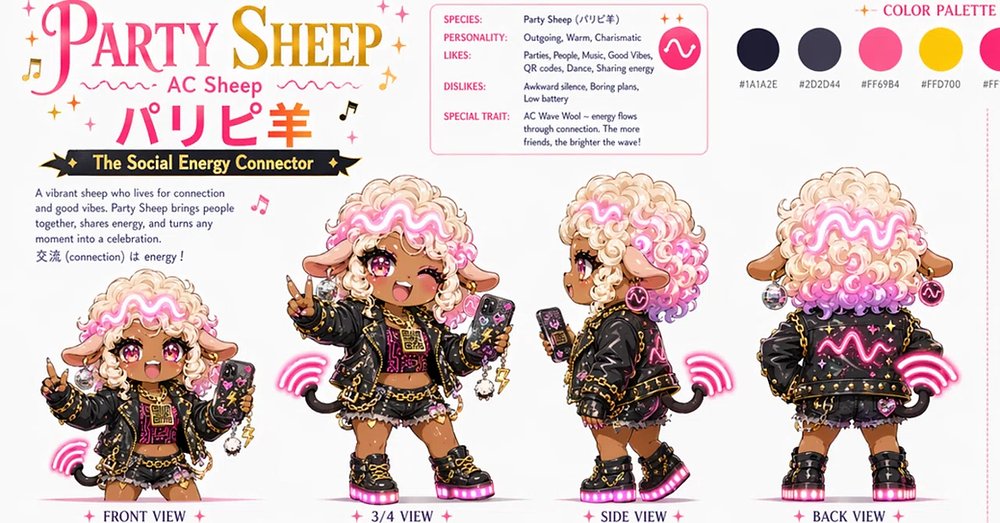
- This case keeps one primary output, so the first image should be treated as the main visual reference.
How The Prompt Is Structured
- The prompt reads as a long, highly specified prompt, which is useful when you want to judge how much specificity this direction needs.
- Its keyword cluster is centered on Neon, Illustration, Character, so you can usually keep that cluster while swapping subject, camera, layout, or copy details.
- A practical rewrite path is: keep the outcome, keep the strongest style cues, then replace only the subject and environment blocks.
Good Follow-up Questions
- What changes first if you keep Neon, Illustration, Character but switch the subject matter?
- Which part of the result comes from section-level structure (Character Design) versus tag-level style cues?
- Which related cases in the same section give you a cleaner or more extreme variation of the same direction?
Full Prompt
Transform the uploaded photo into a whimsical childhood sketchbook illustration, as if lovingly drawn by a creative child using wax crayons, colored pencils, and playful marker doodles. Preserve the original pose, composition, clothing, expressions, and overall scene layout while reimagining everything through a charming handmade art style. Convert the subjects into adorable storybook-style characters with oversized expressive eyes, rosy cheeks, simple facial features, and joyful childlike proportions. Use layered crayon strokes, rough pencil textures, visible scribbles, imperfect outlines, and intentionally uneven coloring on textured sketchbook paper. Recreate the environment with imaginative childlike interpretation: fluffy doodle clouds, colorful rolling hills, playful trees, sparkling lakes, hand-drawn flowers, and whimsical details that feel like pages from a treasured children's art journal. Add small doodles such as stars, hearts, birds, swirls, and smiling suns scattered naturally around the scene. Color palette should be vibrant, cheerful, and nostalgic, featuring rich crayon colors, soft pastel accents, and warm handmade textures. Maintain a clean composition while embracing the imperfect charm of authentic children's artwork. Include a small rounded-corner "memory snapshot" inset of the original photo in the bottom-right corner, framed with a white hand-drawn border, subtle paper shadow, and scrapbook-style placement, making it feel like a keepsake pasted onto the page. Style: luxury children's book illustration, handmade sketchbook aesthetic, premium crayon artwork, playful storytelling, textured paper surface, colorful scribble art, heartwarming nostalgic mood, ultra-detailed handcrafted appearance. Negative Prompt: photorealism, realistic skin textures, digital painting look, smooth vector art, CGI rendering, dark colors, horror elements, messy composition, blurry details, low resolution, harsh shadows, oversaturated neon colors, artificial plastic textures.