Case Media
Case Notes
This page keeps the media, full prompt, and original source together so you can inspect the result first and decide whether the prompt is worth copying, saving, or comparing.
Case Insights
To make this page easier to search, cite, and reuse later, the case is also broken down into practical guidance about usage, visual cues, and prompt structure.
Best Fit Scenarios
- Use this as a character design benchmark when you need a fast style baseline before rewriting your own prompt.
- It is especially helpful if your target overlaps with Poster, Character, Typography and you want to judge the image result before tuning wording.
- Keep it as a control sample when you compare nearby prompt variants one variable at a time.
Visual Signals To Notice
- The clearest style signals here are Poster, Character, Typography, so those should usually stay in your first rewrite.
- Look at silhouette, costume language, mood styling, and whether the character reads clearly at a glance.
- This case keeps 2 media outputs, which makes it easier to check whether the style remains stable across multiple results.
How The Prompt Is Structured
- The prompt reads as a long, highly specified prompt, which is useful when you want to judge how much specificity this direction needs.
- Its keyword cluster is centered on Poster, Character, Typography, so you can usually keep that cluster while swapping subject, camera, layout, or copy details.
- A practical rewrite path is: keep the outcome, keep the strongest style cues, then replace only the subject and environment blocks.
Good Follow-up Questions
- What changes first if you keep Poster, Character, Typography but switch the subject matter?
- Which part of the result comes from section-level structure (Character Design) versus tag-level style cues?
- Which related cases in the same section give you a cleaner or more extreme variation of the same direction?
Full Prompt
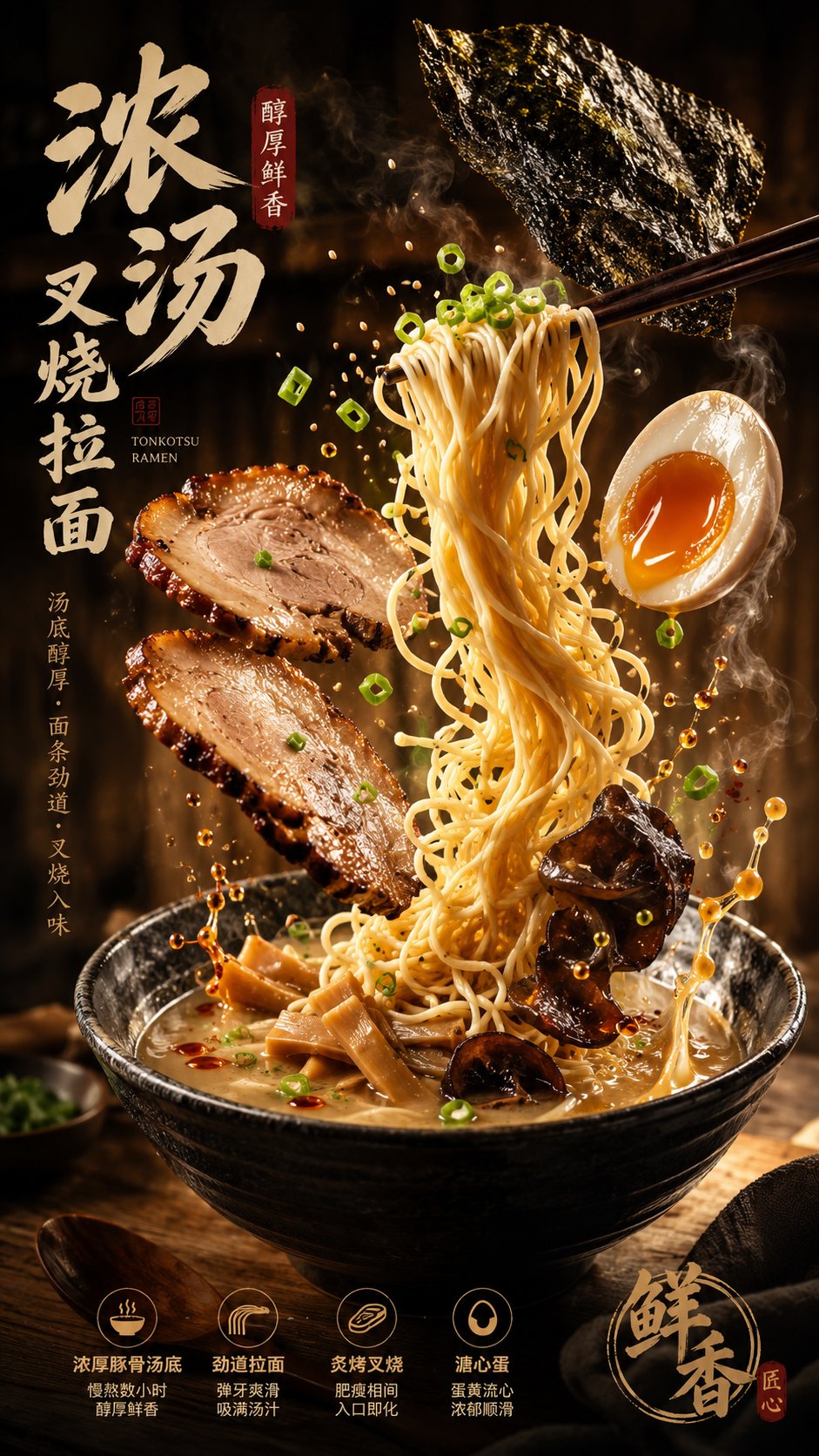
[Dish Information] Dish Name: {Fill in the dish name, for example: Juicy Cheese Double Beef Burger / Rich Soup Char Siu Ramen / Thick Milk Brown Sugar Pearl Milk Tea / Freshly Cut Salmon Sushi Roll} Dish Type: {Fill in the category, for example: Burger / Ramen / Milk Tea / Sushi / Fried Chicken / Dessert / Coffee} Core Ingredients: {Fill in the main ingredients, for example: Beef patty, cheese, lettuce, onion rings, secret sauce, brioche bun} Texture Selling Points: {Fill in 3-5 selling points, for example: Juicy meatiness, cheese pulling, smoky sauce aroma, crispy layers} Visual Atmosphere: {Fill in the style, for example: Warm caramel color, Japanese-style warm wood color, creamy light coffee color, refreshing Japanese food style} [Text Design] Add a design-oriented main title at the top or side: Main Title: {Dish Name} Subtitle: {A short selling point, for example: Double-layer thick meat · Rich cheese aroma · Layers of juice} The bottom can add 3-4 short selling point words. The text needs to be like real catering brand poster layout, with a sense of design, a sense of being a work, and a sense of commercial advertising, rather than instruction-manual-style layout. Fonts can be selected according to the dish style: burgers can use rough and impactful title characters, ramen can use a Japanese calligraphy sense, milk tea can use warm and soft brand characters, and sushi can use exquisite high-end catering fonts with white space. [Image Requirements] Generate a high-end commercial catering poster; the overall is not a common menu image, nor an ingredient explanation image, but a main visual poster for a new catering product with strong visual impact. The image uses a 9:16 vertical composition, with the main food item centered and enlarged, occupying the main visual area of the frame. Ingredients need to be unfolded in an "explosive floating" manner, naturally separating along the layered structure of the dish itself, forming a clear spatial depth, dynamic sense, and appetite impact. Ingredients should not be arranged too rigidly, nor should they be like engineering disassembly diagrams. There needs to be natural high and low offsets, foreground and background layers, slight perspective changes, and a floating sense, like the food has just been pulled apart, disassembled, or burst open in the air. [Food Texture Requirements] Focus on expressing real and enticing food textures. Add appropriate dynamic elements based on the dish type, for example: sauce splashing, cheese pulling, hot steam, soup surging, ice cubes, water droplets, pearl floating, sesame seeds, spice fragments, ingredient scattering, etc. Dynamic elements should enhance appetite and not be messy. [Background and Atmosphere] The background should serve the food flavor. The background can have a slight environmental atmosphere, such as wooden tables, warm light, shallow depth of field, steam, ice fog, and light spots, but it cannot steal from the main subject. The overall should be high-end, clean, and have a commercial main visual feel. [Overall Style] High-end commercial food photography, catering new product main KV, vertical store poster, short video cover, delivery platform main image, real photography texture, strong appetite impact, dynamic floating ingredients, exquisite text layout, soft shadows, movie-level light and shadow. The final effect should be like a high-impact food main visual poster that can be directly used for catering new product launches, store posters, social media promotion, and delivery platform main images.