Case Media
Case Notes
This page keeps the media, full prompt, and original source together so you can inspect the result first and decide whether the prompt is worth copying, saving, or comparing.
Case Insights
To make this page easier to search, cite, and reuse later, the case is also broken down into practical guidance about usage, visual cues, and prompt structure.
Best Fit Scenarios
- Use this as a character design benchmark when you need a fast style baseline before rewriting your own prompt.
- It is especially helpful if your target overlaps with Character, Typography, Infographic and you want to judge the image result before tuning wording.
- Keep it as a control sample when you compare nearby prompt variants one variable at a time.
Visual Signals To Notice
- The clearest style signals here are Character, Typography, Infographic, so those should usually stay in your first rewrite.
- Look at silhouette, costume language, mood styling, and whether the character reads clearly at a glance.
- This case keeps 2 media outputs, which makes it easier to check whether the style remains stable across multiple results.
How The Prompt Is Structured
- The prompt reads as a long, highly specified prompt, which is useful when you want to judge how much specificity this direction needs.
- Its keyword cluster is centered on Character, Typography, Infographic, so you can usually keep that cluster while swapping subject, camera, layout, or copy details.
- A practical rewrite path is: keep the outcome, keep the strongest style cues, then replace only the subject and environment blocks.
Good Follow-up Questions
- What changes first if you keep Character, Typography, Infographic but switch the subject matter?
- Which part of the result comes from section-level structure (Character Design) versus tag-level style cues?
- Which related cases in the same section give you a cleaner or more extreme variation of the same direction?
Full Prompt
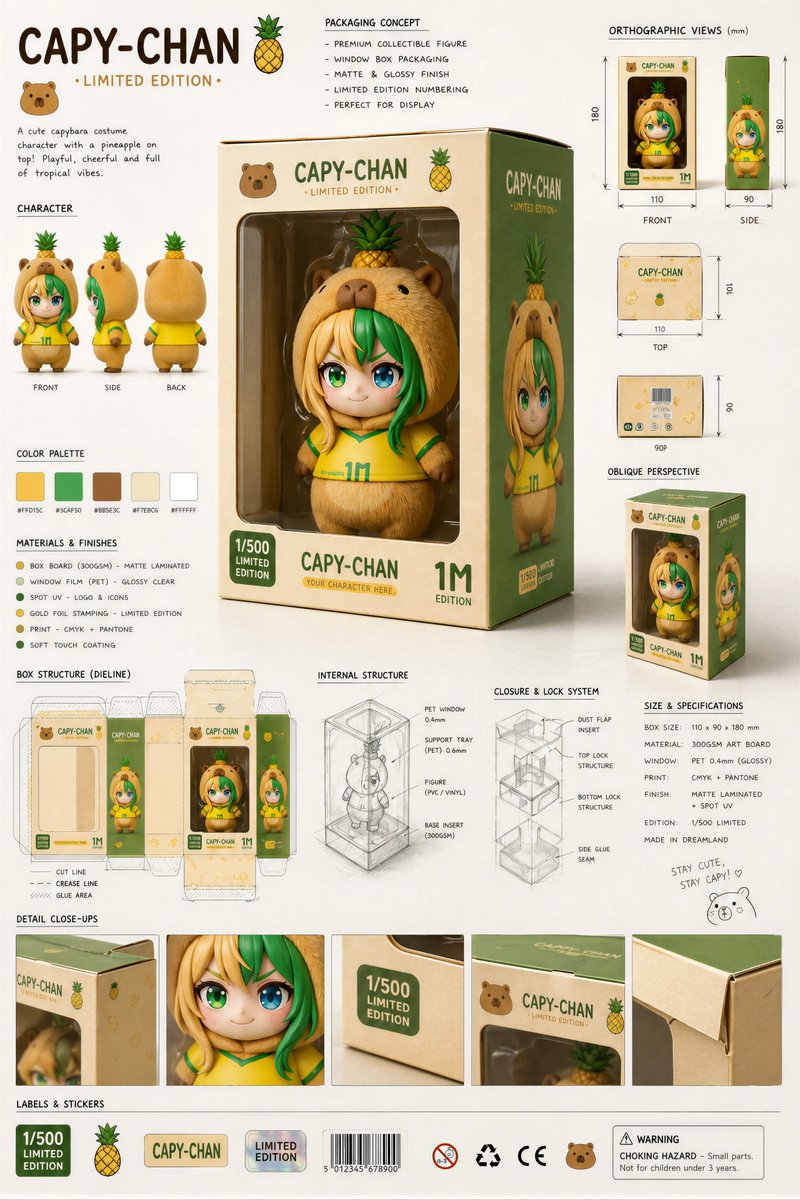
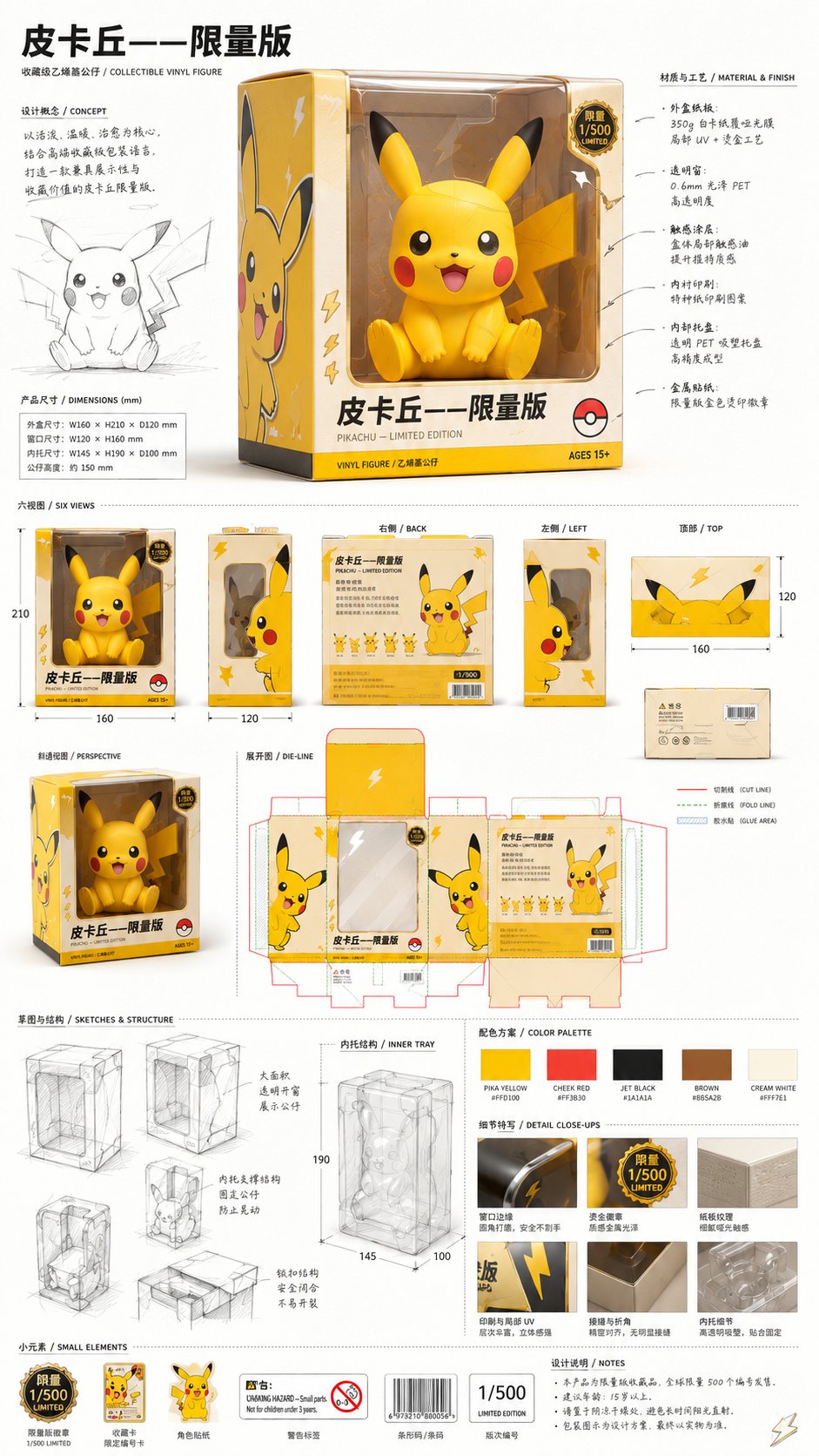
Using the uploaded character as a reference, create an ultra-detailed professional collector's toy packaging display for a character named [Pikachu / Snivy / Squirtle - Limited Edition]. The image must look like a high-end industrial design portfolio board, not just a simple product box photo. Create a complete packaging concept including: 1. A large hero 3D render in the center showing the final retail box. 2. The character displayed inside a transparent plastic window box. 3. Front view, side view, back view, top view, bottom view, and isometric perspective view of the packaging. 4. Flat die-line layout of the unfolded box with fold lines, cut lines, glue tabs, seams, flaps, locks, and crease marks. 5. Pencil sketch diagrams showing internal framing, plastic window structure, support tray, inner lining structure, and closure system. 6. Dimension arrows and measurements in millimeters. 7. Handwritten annotations regarding materials and surface finishes. 8. A color palette swatch based on the character's colors. 9. Close-up detail panels showing plastic window, cardboard texture, printed logo, barcode, edition number, seams, corners, and internal tray. 10. Small product stickers, warning icons, barcode, collection icons, limited edition badge, and "1/500" numbering. Packaging Style: Premium Japanese collector toy packaging, cute yet professional, clean, modern, highly attractive, commercial-ready. Character: Maintain a completely consistent identity, proportions, colors, and personality of Pikachu / Snivy / Squirtle. Materials: Matte laminated cardboard, glossy transparent PET plastic window, tactile coating, spot UV logo, metallic foil accents, printed paper lining, molded internal tray. Composition: Clean sketchbook or industrial design presentation background, realistic 3D renders mixed with pencil sketch annotations, organized like a professional product design board, rich in micro-details but clear and readable. Lighting: Soft studio lighting, realistic shadows, subtle reflections on plastic, premium product photography quality. Final Result: Ultra-detailed, portfolio quality, professional packaging design sheet, collector toy concept board, viral potential, highly shareable, 9:16 vertical format.