Case Media
Case Notes
This page keeps the media, full prompt, and original source together so you can inspect the result first and decide whether the prompt is worth copying, saving, or comparing.
Case Insights
To make this page easier to search, cite, and reuse later, the case is also broken down into practical guidance about usage, visual cues, and prompt structure.
Best Fit Scenarios
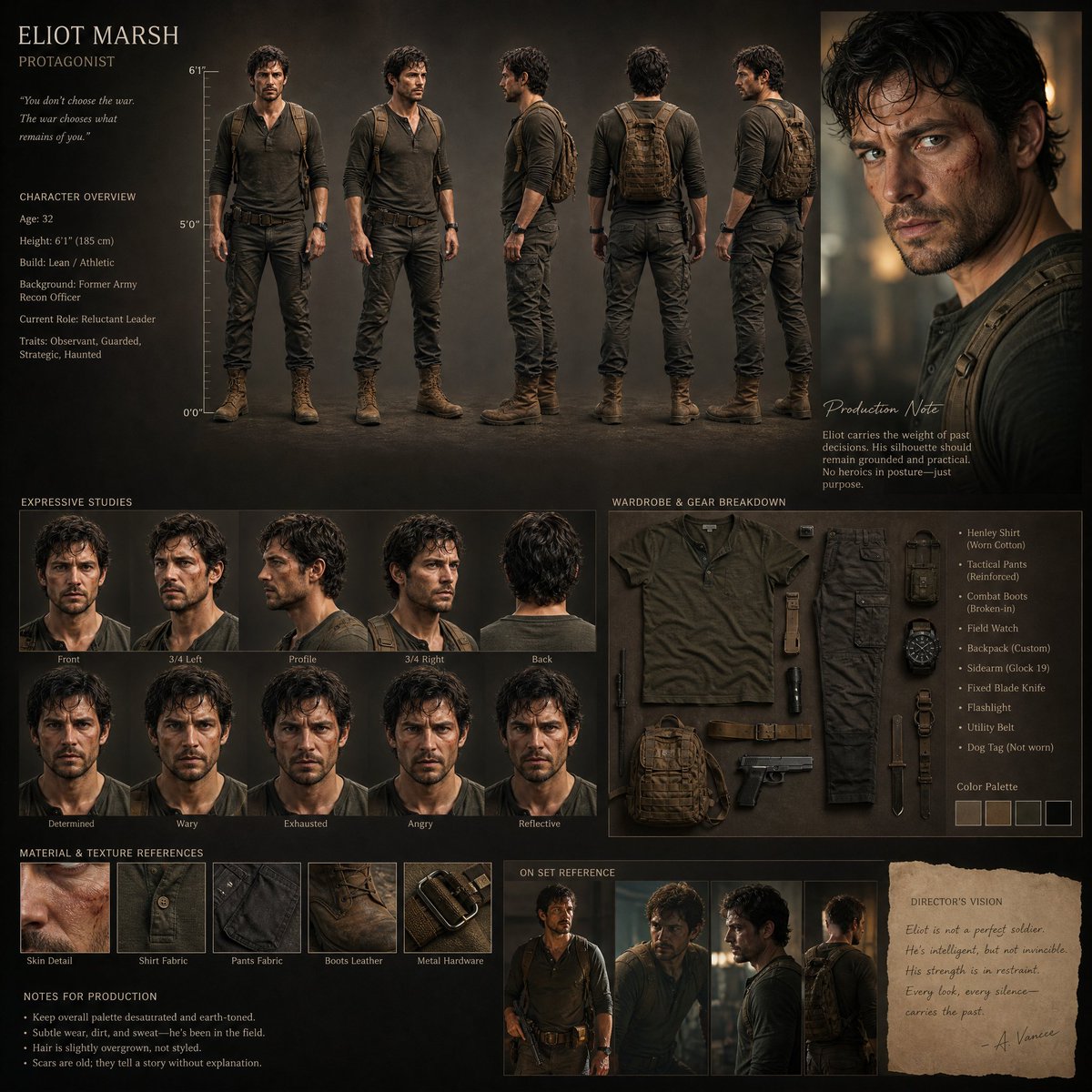
- Use this as a character design benchmark when you need a fast style baseline before rewriting your own prompt.
- It is especially helpful if your target overlaps with 35mm, Portrait, Cinematic and you want to judge the image result before tuning wording.
- Keep it as a control sample when you compare nearby prompt variants one variable at a time.
Visual Signals To Notice
- The clearest style signals here are 35mm, Portrait, Cinematic, so those should usually stay in your first rewrite.
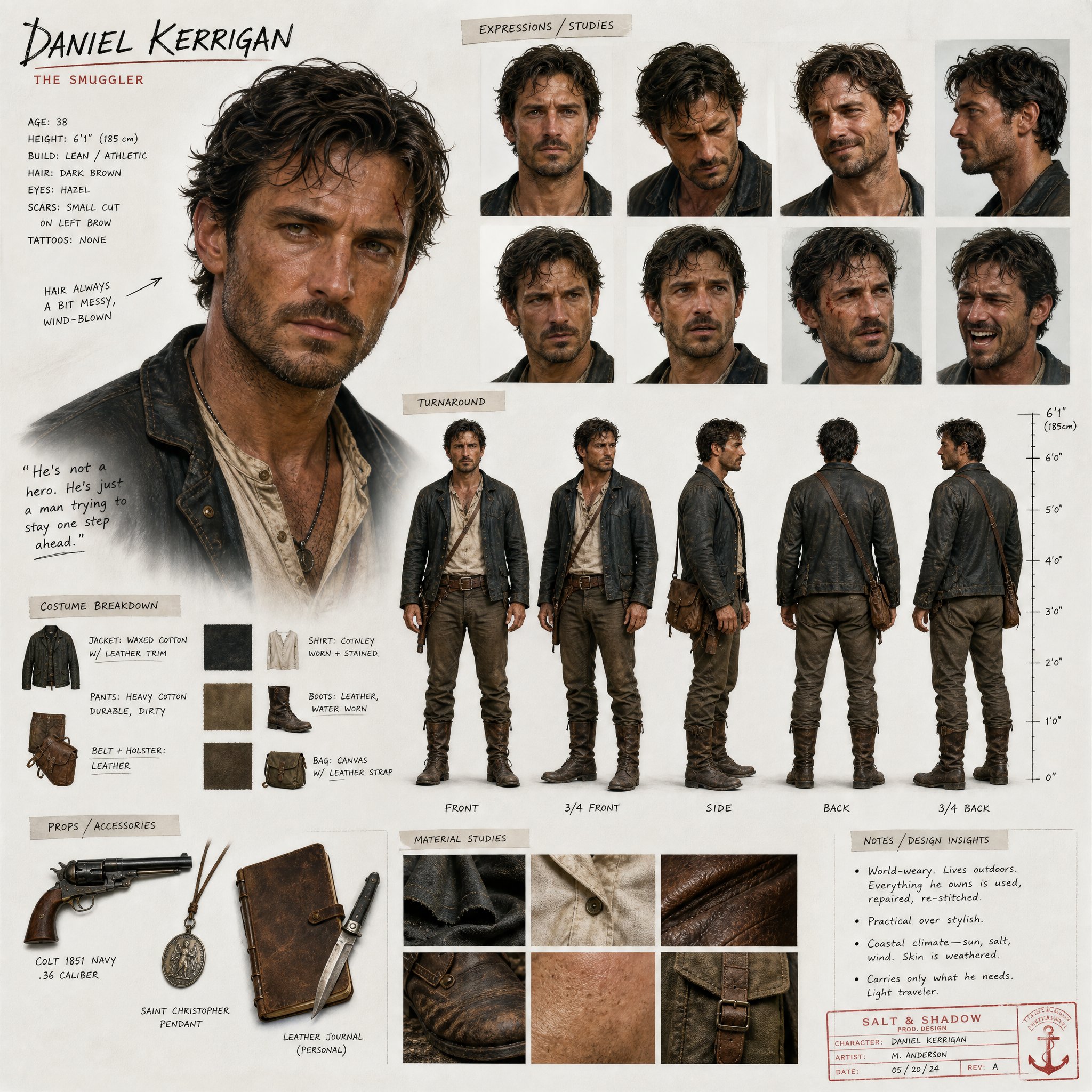
- Look at silhouette, costume language, mood styling, and whether the character reads clearly at a glance.
- This case keeps one primary output, so the first image should be treated as the main visual reference.
How The Prompt Is Structured
- The prompt reads as a long, highly specified prompt, which is useful when you want to judge how much specificity this direction needs.
- Its keyword cluster is centered on 35mm, Portrait, Cinematic, so you can usually keep that cluster while swapping subject, camera, layout, or copy details.
- A practical rewrite path is: keep the outcome, keep the strongest style cues, then replace only the subject and environment blocks.
Good Follow-up Questions
- What changes first if you keep 35mm, Portrait, Cinematic but switch the subject matter?
- Which part of the result comes from section-level structure (Character Design) versus tag-level style cues?
- Which related cases in the same section give you a cleaner or more extreme variation of the same direction?
Full Prompt
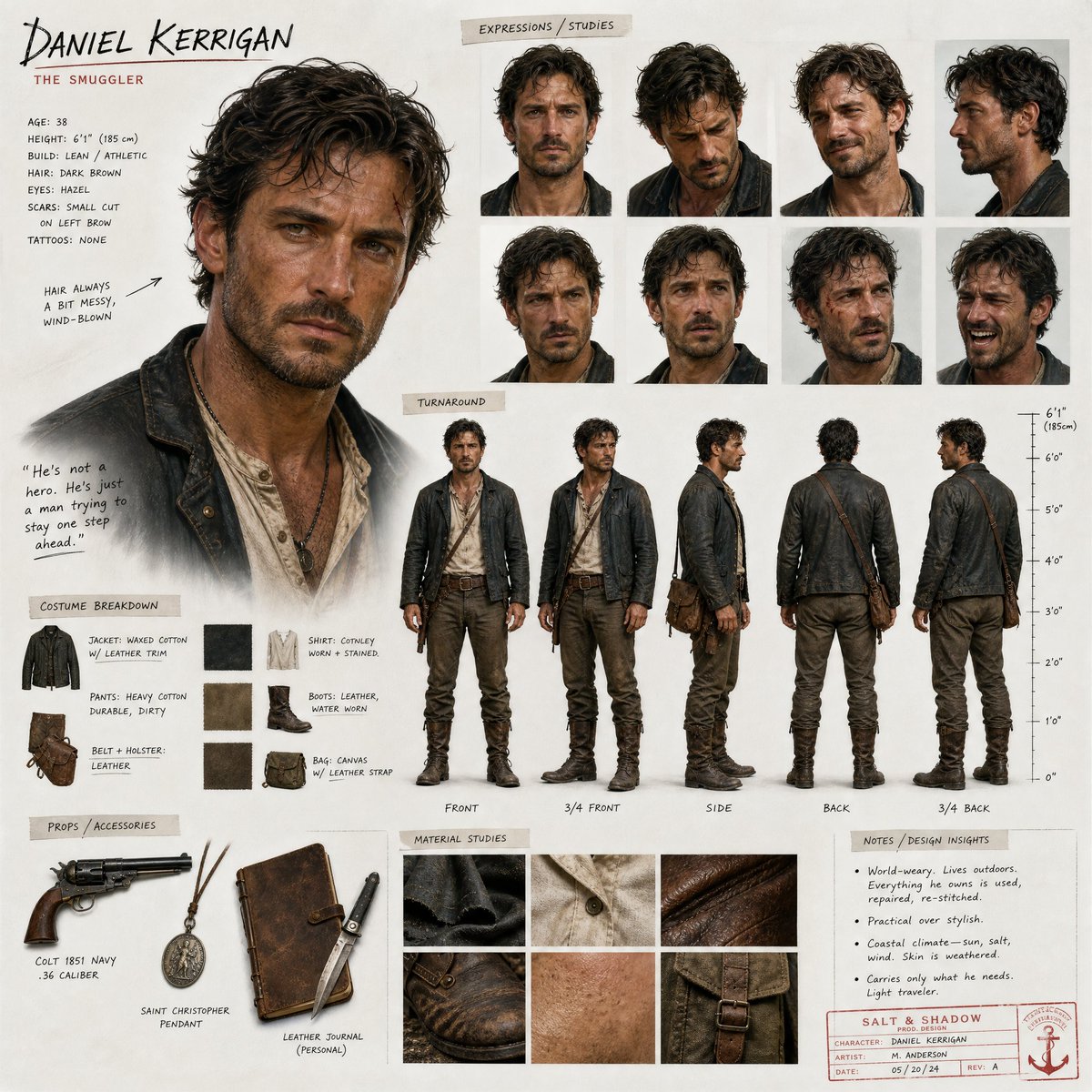
Create a high-end cinematic character design sheet intended for a premium film production. The layout should feel like a curated art direction board rather than a rigid template. Avoid symmetrical grids, uniform spacing, or overly structured presentation. Instead, the composition should feel organic, slightly asymmetrical, and thoughtfully arranged like a real Hollywood concept pitch. Design a grounded, realistic human character with believable body proportions, natural imperfections, and expressive performance-driven presence—like a professional actor captured during emotional and physical performance moments rather than a posed mannequin. Use a bright, clean, and well-lit background that enhances clarity and gives the sheet a fresh, modern studio feel. Include: • Full-body turnaround views (front, 3/4 front, side, back, 3/4 back) • Multiple expressive facial studies from different angles showing emotional range • A cinematic hero portrait with strong character focus • Detailed breakdown of costume, accessories, and key props • Close-up studies of materials such as fabric texture, skin detail, and surface realism • Handwritten-style annotation notes, production markings, and design insights •A clear height reference scale integrated naturally into the composition The character should feel like a real person existing in a film world—authentic, grounded, and emotionally alive rather than stylized or overly idealized. Art direction style: Semi-realistic cinematic design, high-budget film production quality, soft natural studio lighting with a bright tone, subtle depth of field, realistic material rendering, and emotionally readable expressions. Presentation should feel like a professional concept art portfolio used in major film pre-production. Consistency requirement: Maintain perfect continuity in facial identity, body proportions, hairstyle, outfit design, and material details across all angles and studies.