Case Media
Case Notes
This page keeps the media, full prompt, and original source together so you can inspect the result first and decide whether the prompt is worth copying, saving, or comparing.
Case Insights
To make this page easier to search, cite, and reuse later, the case is also broken down into practical guidance about usage, visual cues, and prompt structure.
Best Fit Scenarios
- Use this as a character design benchmark when you need a fast style baseline before rewriting your own prompt.
- It is especially helpful if your target overlaps with 35mm, Portrait, Cinematic and you want to judge the image result before tuning wording.
- Keep it as a control sample when you compare nearby prompt variants one variable at a time.
Visual Signals To Notice
- The clearest style signals here are 35mm, Portrait, Cinematic, so those should usually stay in your first rewrite.
- Look at silhouette, costume language, mood styling, and whether the character reads clearly at a glance.
- This case keeps 2 media outputs, which makes it easier to check whether the style remains stable across multiple results.
How The Prompt Is Structured
- The prompt reads as a long, highly specified prompt, which is useful when you want to judge how much specificity this direction needs.
- Its keyword cluster is centered on 35mm, Portrait, Cinematic, so you can usually keep that cluster while swapping subject, camera, layout, or copy details.
- A practical rewrite path is: keep the outcome, keep the strongest style cues, then replace only the subject and environment blocks.
Good Follow-up Questions
- What changes first if you keep 35mm, Portrait, Cinematic but switch the subject matter?
- Which part of the result comes from section-level structure (Character Design) versus tag-level style cues?
- Which related cases in the same section give you a cleaner or more extreme variation of the same direction?
Full Prompt
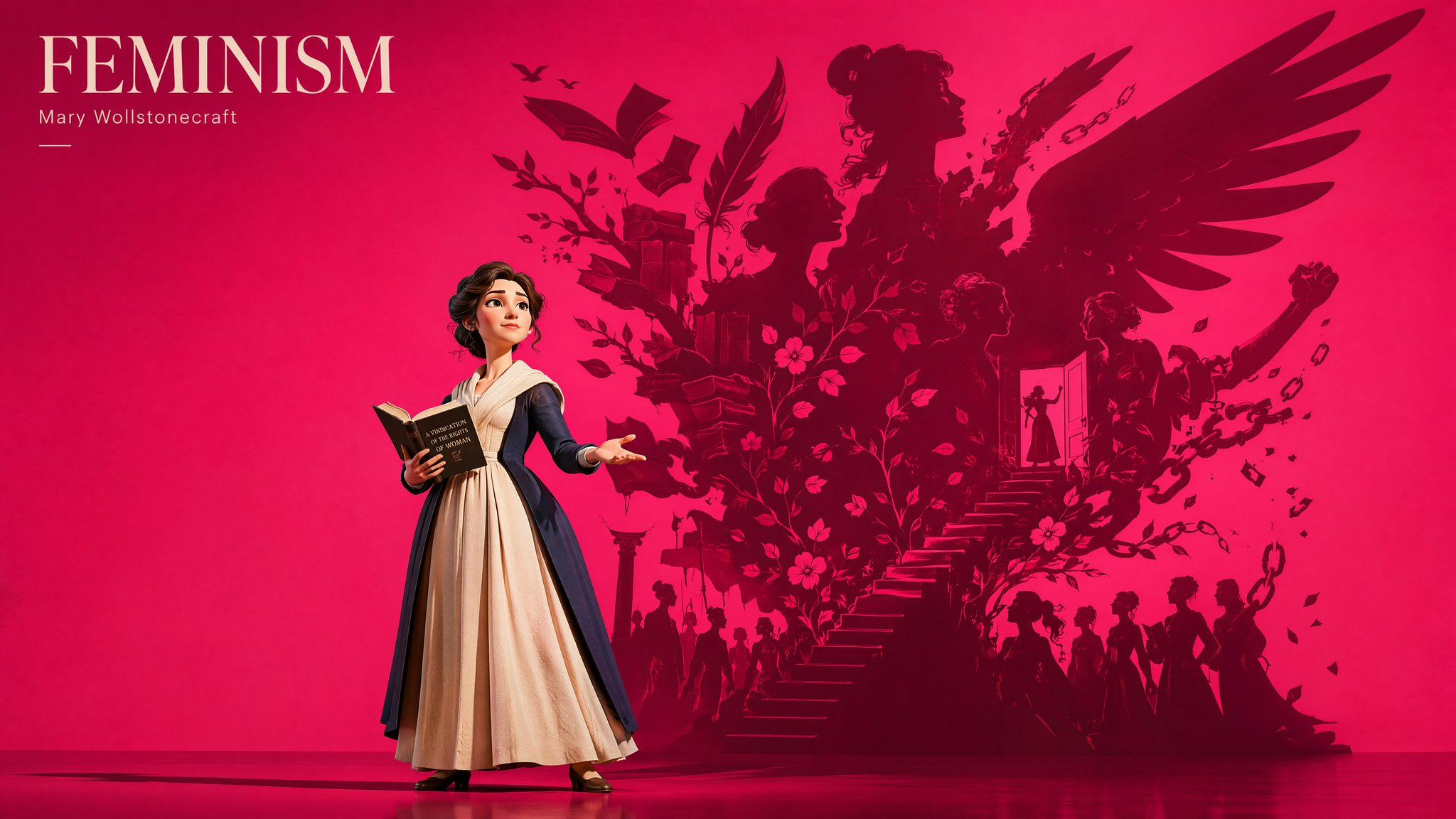
Create a high-resolution vertical 3D character illustration in a stylized Pixar-meets-designer-toy aesthetic. Main character: Absurdism — Albert Camus — depicted as a tall, slim, slightly exaggerated Pixar-style 3D character. Maintain Albert Camus’ iconic facial features: sharp contemplative eyes, slicked-back dark hair, cigarette-era French intellectual aura, calm detached facial expression, minimalist trench coat, and understated existential elegance — translated into clean, simplified designer-toy proportions with refined geometric stylization. The figure must remain instantly recognizable in full-body view, embodying philosophical isolation, quiet rebellion, and existential intelligence. Pose: Albert Camus stands alone in a subtly theatrical pose, one hand inside his trench coat pocket while the other loosely holds a cigarette near his side. His posture is relaxed yet emotionally distant, head tilted slightly downward as if observing the absurdity of existence itself. The pose should communicate detachment, introspection, rebellion against meaninglessness, and calm acceptance of chaos. Background: Use a bold, high-saturation sun-scorched amber-orange background inspired by the harsh Algerian sun, existential heat, emotional emptiness, and the surreal beauty of absurd existence. The atmosphere should feel psychologically warm yet spiritually isolating. The wall is flat vivid burnt amber-orange with a slightly darker rust-orange reflective floor. No gradients. No realistic scenery. No dull cinematic gray. The environment should feel infinite, minimal, graphic, and philosophically theatrical — like a conceptual existentialist gallery poster. Lighting: Use one strong directional spotlight from the upper-left side. The light creates a massive sharp-edged symbolic shadow stretching dramatically across both the wall and floor. Lighting should feel graphic, sculptural, cinematic, and psychologically symbolic. Key Concept – Shadow as spiritual projection: The shadow behind Albert Camus must NOT resemble his human silhouette. Instead, the shadow transforms into a monumental symbolic projection of Absurdism itself. The shadow becomes: A gigantic endless looping staircase spiraling upward into nothingness, merging with floating boulders, fragmented suns, repeating doorways, collapsing clocks without hands, and infinite geometric corridors dissolving into empty space. The shadow should feel surreal, philosophical, poetic, emotionally infinite, and existentially unsettling — symbolizing humanity’s endless search for meaning in an indifferent universe. Subtle visual echoes of Sisyphus pushing a boulder uphill may emerge abstractly within the shadow composition. The symbolic projection dominates the entire composition and acts as the emotional and conceptual soul of the poster. Typography: Render the main title text: ABSURDISM Use a refined elegant serif font in uppercase with clean spacing and gallery-style hierarchy. Place the typography in the top-left corner with strong poster composition. Smaller secondary text beneath may read: “Albert Camus” in understated minimalist typography. Rendering: Pixar-style 3D rendering with designer-toy influence: soft sculpted forms, matte textures, simplified geometry, cinematic clarity, premium visual polish, and subtle artistic film grain. Keep the character stylized yet unmistakably recognizable as Albert Camus. Avoid unnecessary props or visual clutter. Composition: Strong conceptual poster composition with dramatic negative space. Albert Camus occupies one grounded visual anchor point while the overwhelming symbolic shadow expands across most of the frame. The contrast between the quiet human figure and the infinite existential projection should immediately communicate: “this is not simply a portrait of a philosopher, but a portrait of the human condition projected outward.” Mood: Existential, poetic, philosophical, surreal, melancholic, symbolic, intellectually powerful, emotionally infinite, and visually unforgettable.