案例媒体
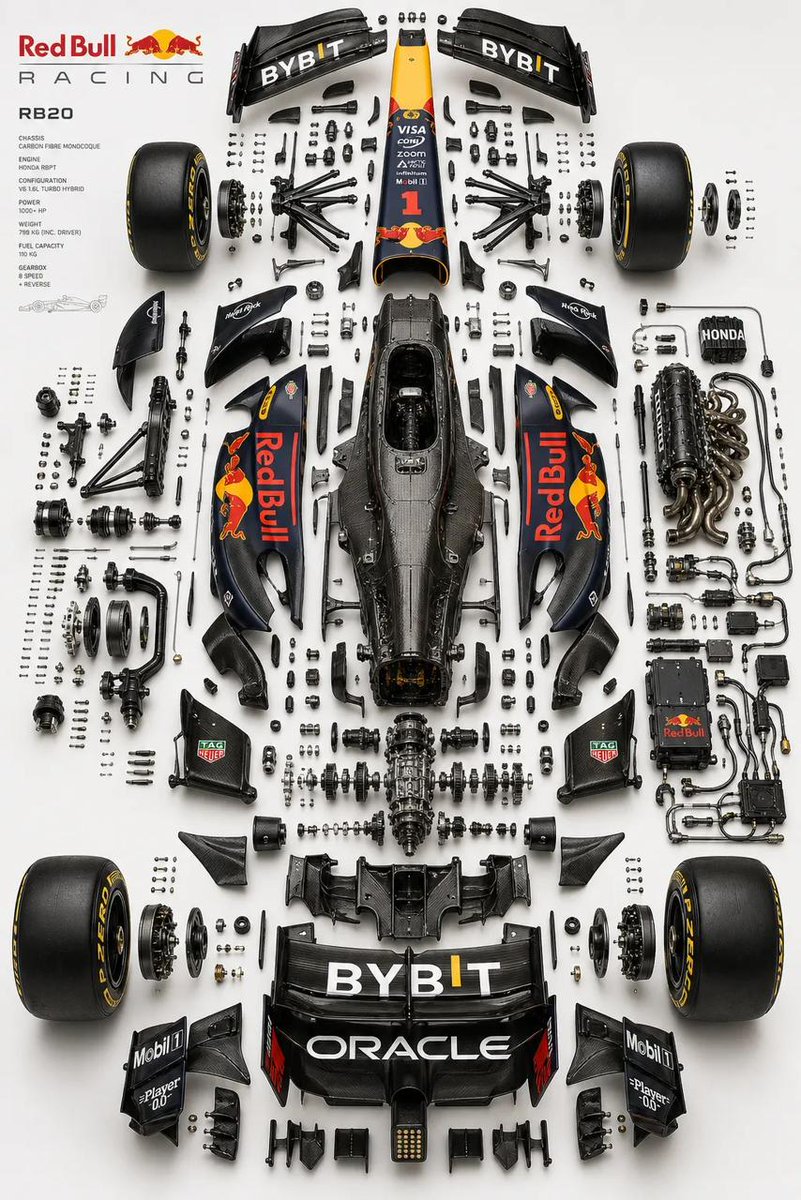
案例说明
这个页面把案例媒体、完整 Prompt 和出处放在一起,方便你先看结果,再判断这条 Prompt 是否值得复制、收藏或加入对比。
案例解读
为了方便搜索、引用和后续复用,这里会把案例的适用场景、画面重点和 Prompt 结构拆成更容易浏览的说明。
这类案例适合用在什么场景
- 把它当作 海报与插画 的基准案例最合适,先看成片方向,再决定自己的 Prompt 要往哪边改。
- 如果你的目标也落在 海报、插画、排版 这些方向,这条案例特别适合先看图判断风格,再回头微调描述。
- 做 Prompt 对比时,也很适合作为控制组,只改一个变量去看结果变化。
画面重点与风格信号
- 这条案例最明显的风格信号集中在 海报、插画、排版,所以第一次改写时最好先保留这些关键词。
- 重点多半在版式节奏、标题层级、插画材质和信息在画面里的摆放方式。
- 当前保留了 2 份媒体输出,适合顺手观察同一方向在多张结果里的稳定性。
Prompt 结构可以怎么理解
- 这条 Prompt 整体属于一条比较长、约束条件很多的 Prompt,很适合拿来判断这类方向到底需要写到多细。
- 关键词簇主要围绕 海报、插画、排版 展开,所以复用时可以先保留这组风格词,再替换主体、镜头、环境或文案信息。
- 最稳的改写方式通常是先保留结果方向和最强风格信号,只替换主体设定与场景块。
如果你是带着问题来的,可以先看这些角度
- 如果保留 海报、插画、排版,只换主体题材,结果最先变化的会是哪一部分?
- 这条结果里,哪些特征更像是 海报与插画 的结构特征,哪些又是标签风格本身带来的?
- 同分类的相关案例里,哪几条能给你更克制或更极致的相邻变体?
完整 Prompt
Place the primary chassis or structural platform perfectly centered as the core spine, and position the main body shell separately (left or top), aligned parallel as a reference form while preserving accurate proportions, stance, and geometry of the real vehicle. Design a multi-layered exploded system with components separated across depth (Z-axis) as well as planar spacing, using clear hierarchy: micro hardware (bolts, screws, washers) tightly grouped, functional assemblies moderately spaced, and major systems widely separated. Organize parts into realistic subsystems depending on the {argument name="vehicle type" default="vehicle"} type, including front assembly (suspension, steering, brakes), rear assembly (suspension, drivetrain, differential), chassis/structure (frame, monocoque, subframes), powertrain (engine or motor with slight internal exposure, transmission, intake, exhaust, cooling), electronics (battery, ECU, wiring harness with clean routing), and wheel systems (4 wheels symmetrically placed with tire, rim, and hub separation). Ensure engineering realism by preserving mechanical relationships, aligning shafts and rotational axes, maintaining symmetry across left/right systems, and grouping micro components logically near their assembly points in precise micro-grid arrangements. Avoid random placement. Use a refined, high-end aesthetic: soft {argument name="background gradient" default="neutral gradient"} background (white to light grey or warm beige), studio-grade product lighting with soft top illumination, subtle directional shadows, and controlled reflections. Apply realistic materials such as brushed metal, carbon fiber, rubber, and glass with slight wear—avoid toy-like finishes. Maintain strong horizontal symmetry with controlled depth asymmetry for visual complexity, and ensure balanced negative space to avoid overcrowding. Render in ultra-realistic quality with razor-sharp edges, macro-level detail, subtle ambient occlusion, and ray-traced shadows. Output in 2K or 4K resolution, 4:5 aspect ratio.  No text, no labels, no arrows, no branding overlays, no stylization, no perspective distortion. Style keywords: F1 engineering exploded diagram, luxury automotive technical poster, industrial design breakdown, Apple-style product visualization, ultra-precision mechanical layout, museum-grade presentation.