案例媒体
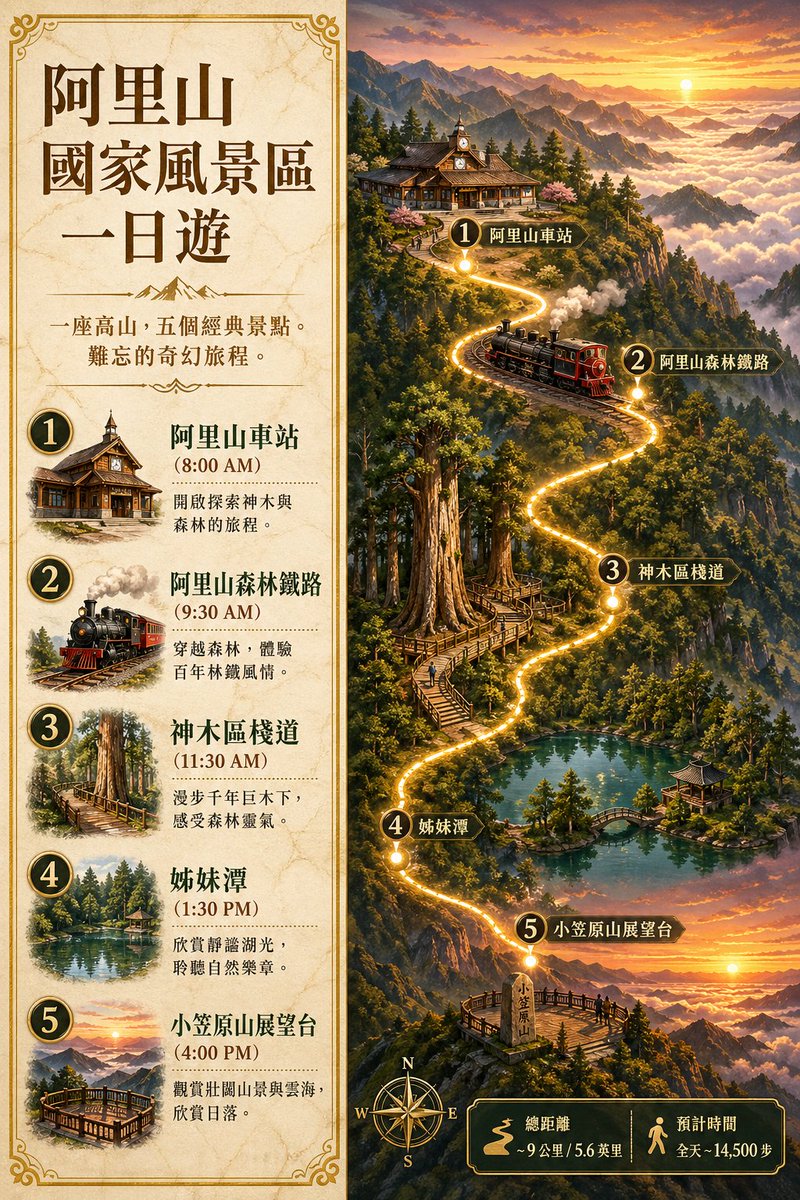
案例说明
这个页面把案例媒体、完整 Prompt 和出处放在一起,方便你先看结果,再判断这条 Prompt 是否值得复制、收藏或加入对比。
案例解读
为了方便搜索、引用和后续复用,这里会把案例的适用场景、画面重点和 Prompt 结构拆成更容易浏览的说明。
这类案例适合用在什么场景
- 把它当作 海报与插画 的基准案例最合适,先看成片方向,再决定自己的 Prompt 要往哪边改。
- 如果你的目标也落在 海报、插画、城市视觉 这些方向,这条案例特别适合先看图判断风格,再回头微调描述。
- 做 Prompt 对比时,也很适合作为控制组,只改一个变量去看结果变化。
画面重点与风格信号
- 这条案例最明显的风格信号集中在 海报、插画、城市视觉,所以第一次改写时最好先保留这些关键词。
- 重点多半在版式节奏、标题层级、插画材质和信息在画面里的摆放方式。
- 当前保留了 2 份媒体输出,适合顺手观察同一方向在多张结果里的稳定性。
Prompt 结构可以怎么理解
- 这条 Prompt 整体属于一条比较长、约束条件很多的 Prompt,很适合拿来判断这类方向到底需要写到多细。
- 关键词簇主要围绕 海报、插画、城市视觉 展开,所以复用时可以先保留这组风格词,再替换主体、镜头、环境或文案信息。
- 最稳的改写方式通常是先保留结果方向和最强风格信号,只替换主体设定与场景块。
如果你是带着问题来的,可以先看这些角度
- 如果保留 海报、插画、城市视觉,只换主体题材,结果最先变化的会是哪一部分?
- 这条结果里,哪些特征更像是 海报与插画 的结构特征,哪些又是标签风格本身带来的?
- 同分类的相关案例里,哪几条能给你更克制或更极致的相邻变体?
完整 Prompt
Create a vintage illustrated travel poster in traditional Chinese for {argument name="destination name" default="阿里山國家風景區"}, designed as a one-day itinerary infographic with a split vertical layout. The left panel is a parchment-textured itinerary card in warm beige with ornate gold Art Nouveau borders and dark brown typography, and the right panel is a dramatic painted fantasy-realism map scene of a mountain journey at sunrise and sunset tones. At the top of the left panel, large headline text reads {argument name="headline text" default="阿里山國家風景區一日遊"}. Beneath it, include a short centered tagline in traditional Chinese: 「一座高山,五個經典景點。難忘的奇幻旅程。」 with a small decorative mountain divider. The left panel must contain exactly 5 numbered itinerary stops stacked vertically, each with a circular black-and-gold number badge, a small vignette illustration, a bold location name, a time in parentheses, and a short Chinese description. The 5 stops are: 1. 「阿里山車站」 at 「(8:00 AM)」 with a wooden mountain railway station illustration and description 「開啟探索神木與森林的旅程。」 2. 「阿里山森林鐵路」 at 「(9:30 AM)」 with a red-and-black steam train illustration and description 「穿越森林,體驗百年林鐵風情。」 3. 「神木區棧道」 at 「(11:30 AM)」 with giant cedar trees and elevated wooden boardwalk illustration and description 「漫步千年巨木下,感受森林靈氣。」 4. 「姊妹潭」 at 「(1:30 PM)」 with a tranquil forest lake and pavilion illustration and description 「欣賞靜謐湖光,聆聽自然樂章。」 5. 「小笠原山展望台」 at 「(4:00 PM)」 with a wooden observation deck above clouds at sunset illustration and description 「觀賞壯闊山景與雲海,欣賞日落。」 The right panel should depict a continuous glowing golden path winding through exactly 5 numbered map markers that match the left panel labels in order, with black-and-gold marker plaques reading: 1 「阿里山車站」, 2 「阿里山森林鐵路」, 3 「神木區棧道」, 4 「姊妹潭」, 5 「小笠原山展望台」. Show stop 1 as a rustic alpine wooden station perched on a cliff among pine forests; stop 2 as a small steam locomotive traveling on a curved mountain railway with smoke drifting upward; stop 3 as towering ancient red cypress trees with a spiral and zigzag wooden walkway around the trunks; stop 4 as an emerald lake surrounded by dense forest with a small pavilion and arched bridge; stop 5 as a lookout deck on a peak above a sea of clouds, facing a glowing sunset. The environment should feature layered mountain ranges, mist-filled valleys, evergreen forests, golden-hour light, luminous cloud seas, and a romantic painterly atmosphere with rich detail. At the bottom right, add a decorative compass rose labeled N, E, S, W, plus a dark green and gold information box with exactly 2 stats in traditional Chinese: 「總距離 ~9公里 / 5.6英里」 and 「預計時間 全天 - 14,500步」. Overall style: premium tourism poster, painterly digital illustration, nostalgic national-park brochure aesthetic, highly detailed, warm sepia and gold accents, elegant composition, readable Chinese text, vertical 2:3 poster.