案例媒体
案例说明
这个页面把案例媒体、完整 Prompt 和出处放在一起,方便你先看结果,再判断这条 Prompt 是否值得复制、收藏或加入对比。
案例解读
为了方便搜索、引用和后续复用,这里会把案例的适用场景、画面重点和 Prompt 结构拆成更容易浏览的说明。
这类案例适合用在什么场景
- 把它当作 人像与摄影 的基准案例最合适,先看成片方向,再决定自己的 Prompt 要往哪边改。
- 如果你的目标也落在 人像、海报、人像与摄影 这些方向,这条案例特别适合先看图判断风格,再回头微调描述。
- 做 Prompt 对比时,也很适合作为控制组,只改一个变量去看结果变化。
画面重点与风格信号
- 这条案例最明显的风格信号集中在 人像、海报、人像与摄影,所以第一次改写时最好先保留这些关键词。
- 重点先看构图、光线方向、人物姿态,以及主体和镜头之间的距离感。
- 当前只有一张主图,所以第一张结果图就是最核心的参考基准。
Prompt 结构可以怎么理解
- 这条 Prompt 整体属于一条比较长、约束条件很多的 Prompt,很适合拿来判断这类方向到底需要写到多细。
- 关键词簇主要围绕 人像、海报、人像与摄影 展开,所以复用时可以先保留这组风格词,再替换主体、镜头、环境或文案信息。
- 最稳的改写方式通常是先保留结果方向和最强风格信号,只替换主体设定与场景块。
如果你是带着问题来的,可以先看这些角度
- 如果保留 人像、海报、人像与摄影,只换主体题材,结果最先变化的会是哪一部分?
- 这条结果里,哪些特征更像是 人像与摄影 的结构特征,哪些又是标签风格本身带来的?
- 同分类的相关案例里,哪几条能给你更克制或更极致的相邻变体?
完整 Prompt
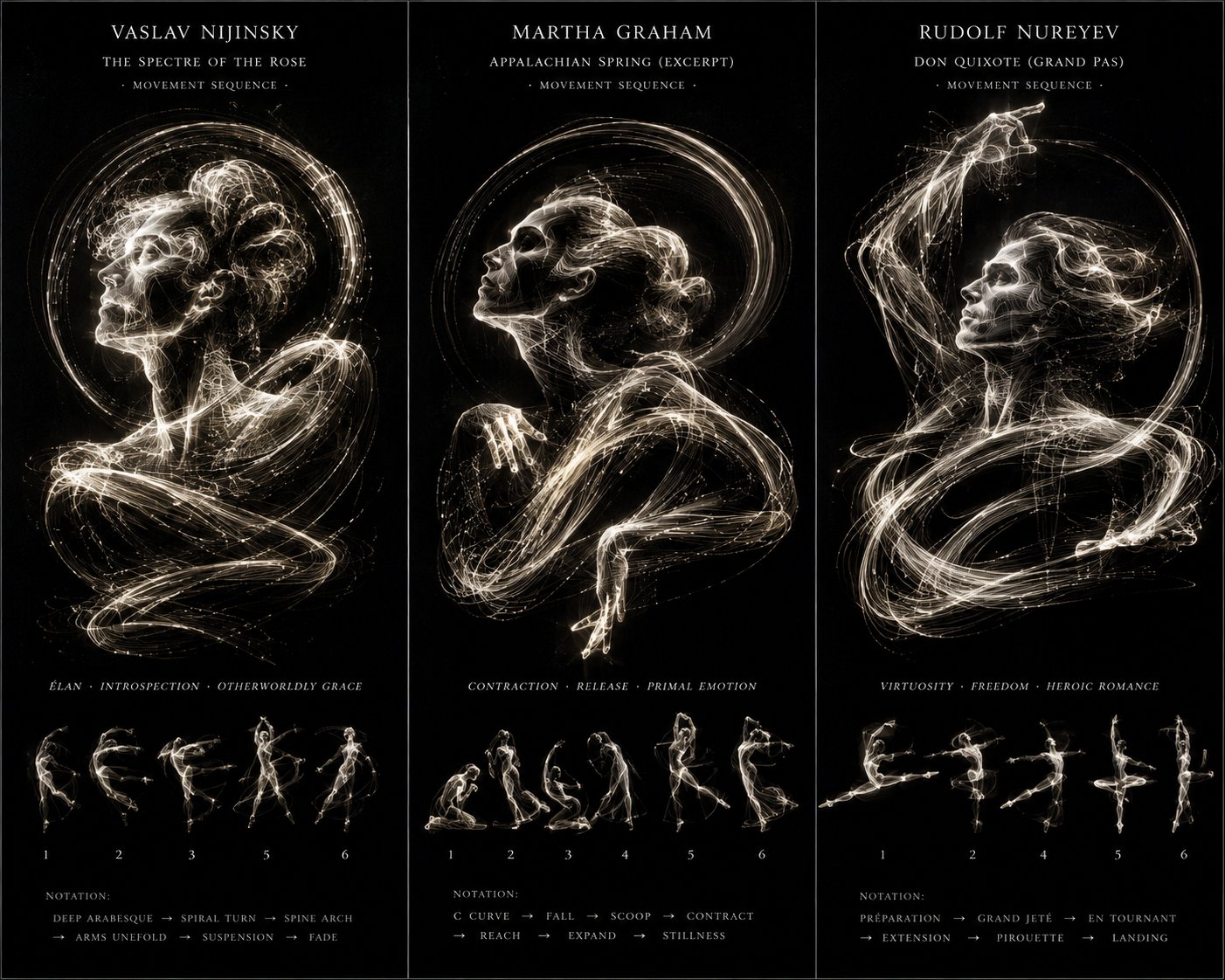
<instructions> input = 3 legendary dancer/choreographer input = ai inferred signature movement sequence function render_kinesphere ($ dancer, $ movement) anchor: [figure composed entirely of motion trails] :: [the $ movement sequence traced as continuous luminous bands that coalesce into a portrait of $ dancer]::5 morphology: the arabesque trails weave the skull, a grand jeté arc forms the cheekbone, the arms' sweep creates the jaw, stillness is implied by negative spaces::4 material physics: blackened silver gelatin print, faint chemical residue, slight motion blur, glowing filament traces like a Marey wheel photograph::3 illumination: complete darkness with bioluminescent-like light trails, no external light sources, high contrast::2 render stack: chronophotography, fine art dance study, 8k, kinetic sculpture concept::1 negative: [still body parts, studio lights, solid silhouettes]::-1 </instructions>