案例媒体
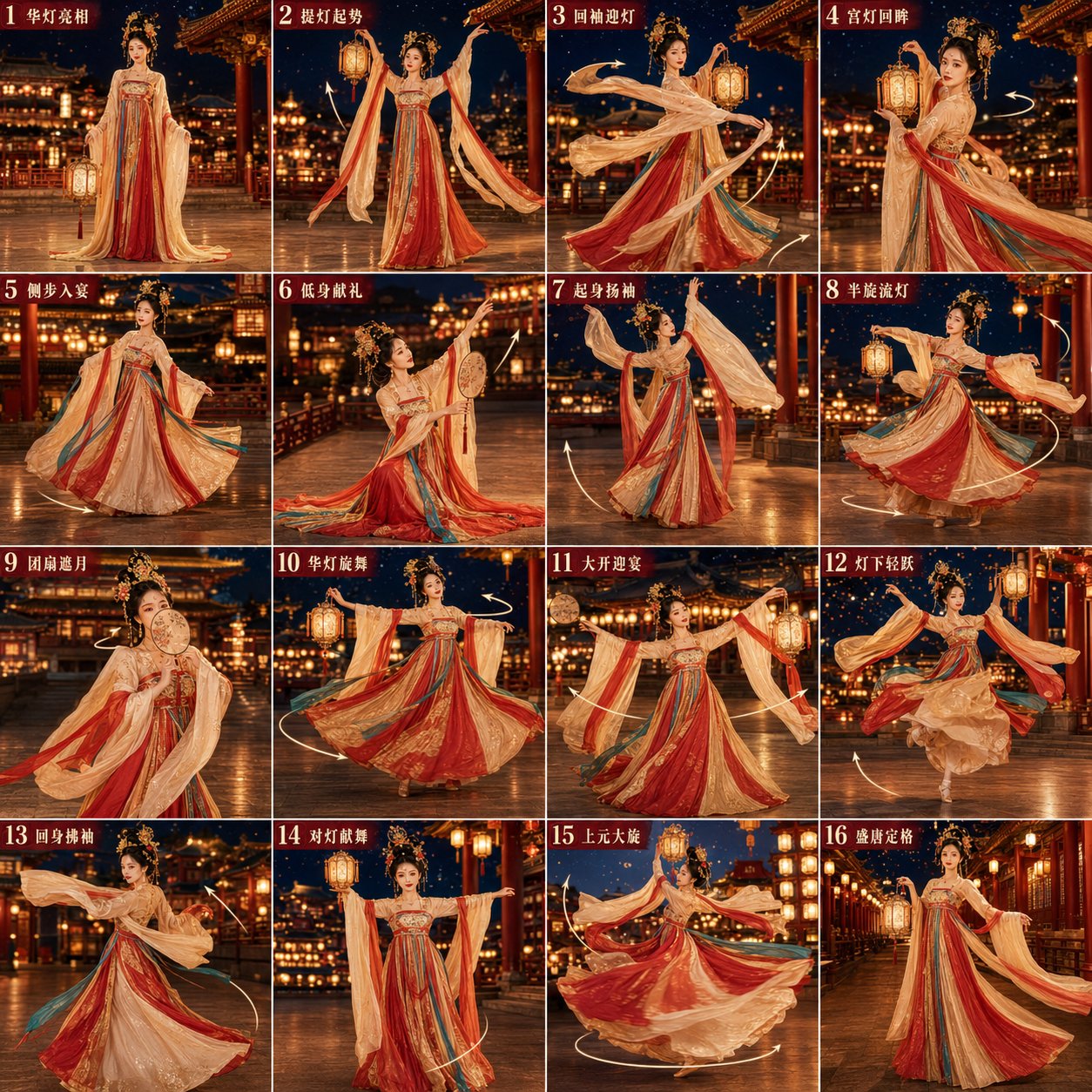
案例说明
这个页面把案例媒体、完整 Prompt 和出处放在一起,方便你先看结果,再判断这条 Prompt 是否值得复制、收藏或加入对比。
案例解读
为了方便搜索、引用和后续复用,这里会把案例的适用场景、画面重点和 Prompt 结构拆成更容易浏览的说明。
这类案例适合用在什么场景
- 把它当作 模型对比与社区 的基准案例最合适,先看成片方向,再决定自己的 Prompt 要往哪边改。
- 如果你的目标也落在 人像、电影感、海报 这些方向,这条案例特别适合先看图判断风格,再回头微调描述。
- 做 Prompt 对比时,也很适合作为控制组,只改一个变量去看结果变化。
画面重点与风格信号
- 这条案例最明显的风格信号集中在 人像、电影感、海报,所以第一次改写时最好先保留这些关键词。
- 这类案例最有价值的地方通常是看差异:到底改了什么、哪里崩了、是哪段 Prompt 造成的变化。
- 当前只有一张主图,所以第一张结果图就是最核心的参考基准。
Prompt 结构可以怎么理解
- 这条 Prompt 整体属于一条比较长、约束条件很多的 Prompt,很适合拿来判断这类方向到底需要写到多细。
- 关键词簇主要围绕 人像、电影感、海报 展开,所以复用时可以先保留这组风格词,再替换主体、镜头、环境或文案信息。
- 最稳的改写方式通常是先保留结果方向和最强风格信号,只替换主体设定与场景块。
如果你是带着问题来的,可以先看这些角度
- 如果保留 人像、电影感、海报,只换主体题材,结果最先变化的会是哪一部分?
- 这条结果里,哪些特征更像是 模型对比与社区 的结构特征,哪些又是标签风格本身带来的?
- 同分类的相关案例里,哪几条能给你更克制或更极致的相邻变体?
完整 Prompt
Create a high-completion, ultra-HD, realistic, and magnificent 'Tang Dynasty Shangyuan Lantern Festival Court Dance 16-Grid Storyboard.' This is not a simple portrait but a storyboard poster integrating Tang court banquet dance, the Lantern Festival atmosphere, and cinematic shot design. The image should depict a complete sequence of 16 key movements, each grid being independent yet logically continuous, suitable for video generation reference. [Scene] An authentic, multi-dimensional Tang Dynasty court courtyard during a festival; clear and transparent lighting; no modern stages or studio backgrounds. [Character] A young adult Chinese female dancer with an elegant, noble, and radiant temperament. [Costume & Makeup] High-waisted Tang Dynasty banquet dance attire with long sleeves and silk ribbons; exquisite hair buns with gold hairpins and floral decals; color palette of crimson, rouge, ivory, and champagne gold; realistic fluid dynamics for the fabric. [Style] Ritualistic beauty of Tang music and dance; cinematic lighting (warm lantern glow vs. cool night sky); realistic motion without fantasy or magic effects. [Layout] A 4x4 grid numbered 1-16; each grid includes a Chinese title and brief description; cinematic shot composition for each frame; clear and high-resolution details. [Sequence of 16 Steps] 1. Lantern Debut: Standing in the courtyard holding a lantern. 2. Lifting Pose: Elegant start. 3. Returning Sleeve: Opening sleeves in the lantern sea. 4. Lantern Glance: Looking back with emotion. 5. Side Step: Light steps along the corridor. 6. Low Bow: A low-posture tribute. 7. Rising Sleeve: Sweeping upward movement. 8. Half-Turn: Rhythmic rotation with the lantern. 9. Fan/Lantern Moon: Graceful hiding of the face. 10. Rotating Dance: Full rotation opening the skirt. 11. Grand Opening: Full extension of arms and body. 12. Light Leap: A realistic small jump. 13. Brushed Sleeve: Turning with tension in the ribbons. 14. Dedicated Dance: Presenting the dance to the throne. 15. Grand Shangyuan Spin: The ultimate climax with full motion of lights and silk. 16. Tang Finale: Final dignified pose in the courtyard. Key Requirements: Maintain character consistency; emphasize the fluidity of sleeves and ribbons; ensure distinct and realistic dance movements in every frame.