案例媒体
案例说明
这个页面把案例媒体、完整 Prompt 和出处放在一起,方便你先看结果,再判断这条 Prompt 是否值得复制、收藏或加入对比。
案例解读
为了方便搜索、引用和后续复用,这里会把案例的适用场景、画面重点和 Prompt 结构拆成更容易浏览的说明。
这类案例适合用在什么场景
- 把它当作 角色设计 的基准案例最合适,先看成片方向,再决定自己的 Prompt 要往哪边改。
- 如果你的目标也落在 电影感、插画、角色 这些方向,这条案例特别适合先看图判断风格,再回头微调描述。
- 做 Prompt 对比时,也很适合作为控制组,只改一个变量去看结果变化。
画面重点与风格信号
- 这条案例最明显的风格信号集中在 电影感、插画、角色,所以第一次改写时最好先保留这些关键词。
- 重点可以先看轮廓、服饰语言、情绪气质,以及角色是否一眼就能立住。
- 当前只有一张主图,所以第一张结果图就是最核心的参考基准。
Prompt 结构可以怎么理解
- 这条 Prompt 整体属于一条比较长、约束条件很多的 Prompt,很适合拿来判断这类方向到底需要写到多细。
- 关键词簇主要围绕 电影感、插画、角色 展开,所以复用时可以先保留这组风格词,再替换主体、镜头、环境或文案信息。
- 最稳的改写方式通常是先保留结果方向和最强风格信号,只替换主体设定与场景块。
如果你是带着问题来的,可以先看这些角度
- 如果保留 电影感、插画、角色,只换主体题材,结果最先变化的会是哪一部分?
- 这条结果里,哪些特征更像是 角色设计 的结构特征,哪些又是标签风格本身带来的?
- 同分类的相关案例里,哪几条能给你更克制或更极致的相邻变体?
完整 Prompt
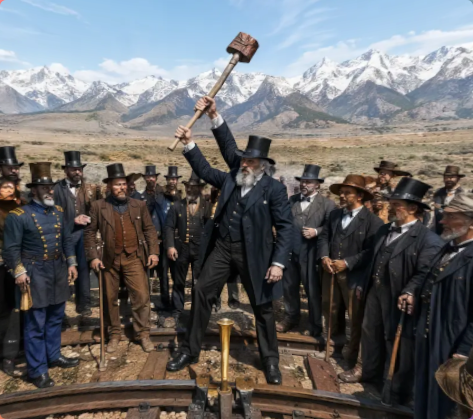
Create a photorealistic historical scene in a wide, cinematic 19th-century style: {argument name="central figure" default="an elderly bearded man in a black frock coat and tall top hat"} stands dramatically at the center on a rough wooden railroad track, legs spread in a triumphant pose, raising {argument name="raised object" default="an oversized sledgehammer"} high above his head with both hands as if about to drive the final railroad spike. Around him are exactly 22 visible onlookers, mostly men in Victorian-era suits, waistcoats, bowler hats, top hats, cowboy hats, and one blue military officer uniform, arranged in a semicircle on both sides of the track; several hold canes or walking sticks, and some faces are partly obscured at the edges. In the foreground, steel rails curve inward toward a bright golden ceremonial spike or coupling fixture positioned between the rails. The setting is an open, arid plain with sparse scrub, backed by a majestic range of snow-covered mountains under a clear pale-blue sky with wispy clouds. Use realistic lighting, crisp documentary detail, slightly humorous surreal scale for the raised hammer, natural earth tones, black and brown period clothing, and a sharp focus on the central pose, resembling a staged commemorative photograph of the transcontinental railroad ceremony in {argument name="historical era" default="the late 1800s"}.