案例媒体
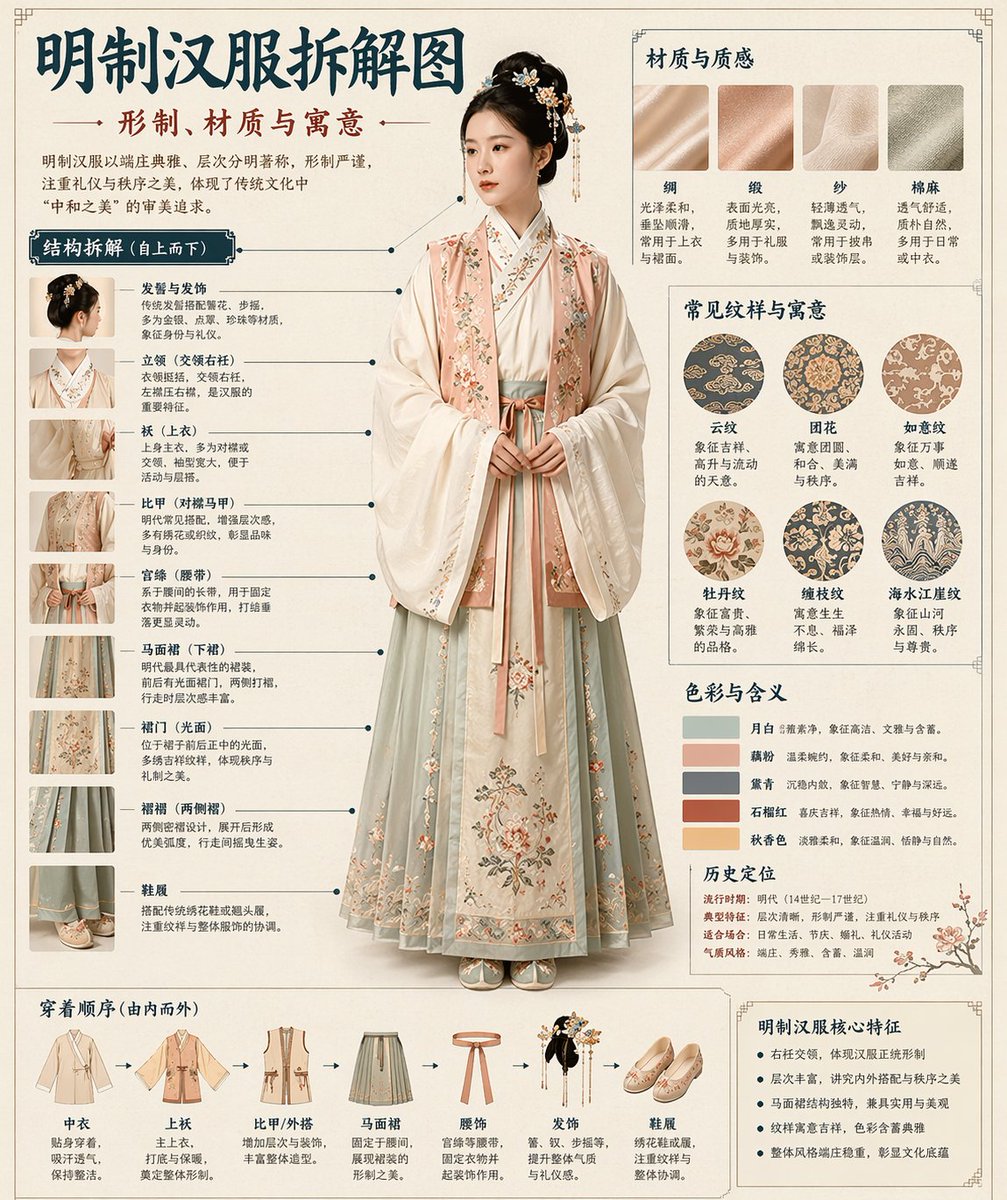
案例说明
这个页面把案例媒体、完整 Prompt 和出处放在一起,方便你先看结果,再判断这条 Prompt 是否值得复制、收藏或加入对比。
案例解读
为了方便搜索、引用和后续复用,这里会把案例的适用场景、画面重点和 Prompt 结构拆成更容易浏览的说明。
这类案例适合用在什么场景
- 把它当作 角色设计 的基准案例最合适,先看成片方向,再决定自己的 Prompt 要往哪边改。
- 如果你的目标也落在 人像、海报、插画 这些方向,这条案例特别适合先看图判断风格,再回头微调描述。
- 做 Prompt 对比时,也很适合作为控制组,只改一个变量去看结果变化。
画面重点与风格信号
- 这条案例最明显的风格信号集中在 人像、海报、插画,所以第一次改写时最好先保留这些关键词。
- 重点可以先看轮廓、服饰语言、情绪气质,以及角色是否一眼就能立住。
- 当前只有一张主图,所以第一张结果图就是最核心的参考基准。
Prompt 结构可以怎么理解
- 这条 Prompt 整体属于一条比较长、约束条件很多的 Prompt,很适合拿来判断这类方向到底需要写到多细。
- 关键词簇主要围绕 人像、海报、插画 展开,所以复用时可以先保留这组风格词,再替换主体、镜头、环境或文案信息。
- 最稳的改写方式通常是先保留结果方向和最强风格信号,只替换主体设定与场景块。
如果你是带着问题来的,可以先看这些角度
- 如果保留 人像、海报、插画,只换主体题材,结果最先变化的会是哪一部分?
- 这条结果里,哪些特征更像是 角色设计 的结构特征,哪些又是标签风格本身带来的?
- 同分类的相关案例里,哪几条能给你更克制或更极致的相邻变体?
完整 Prompt
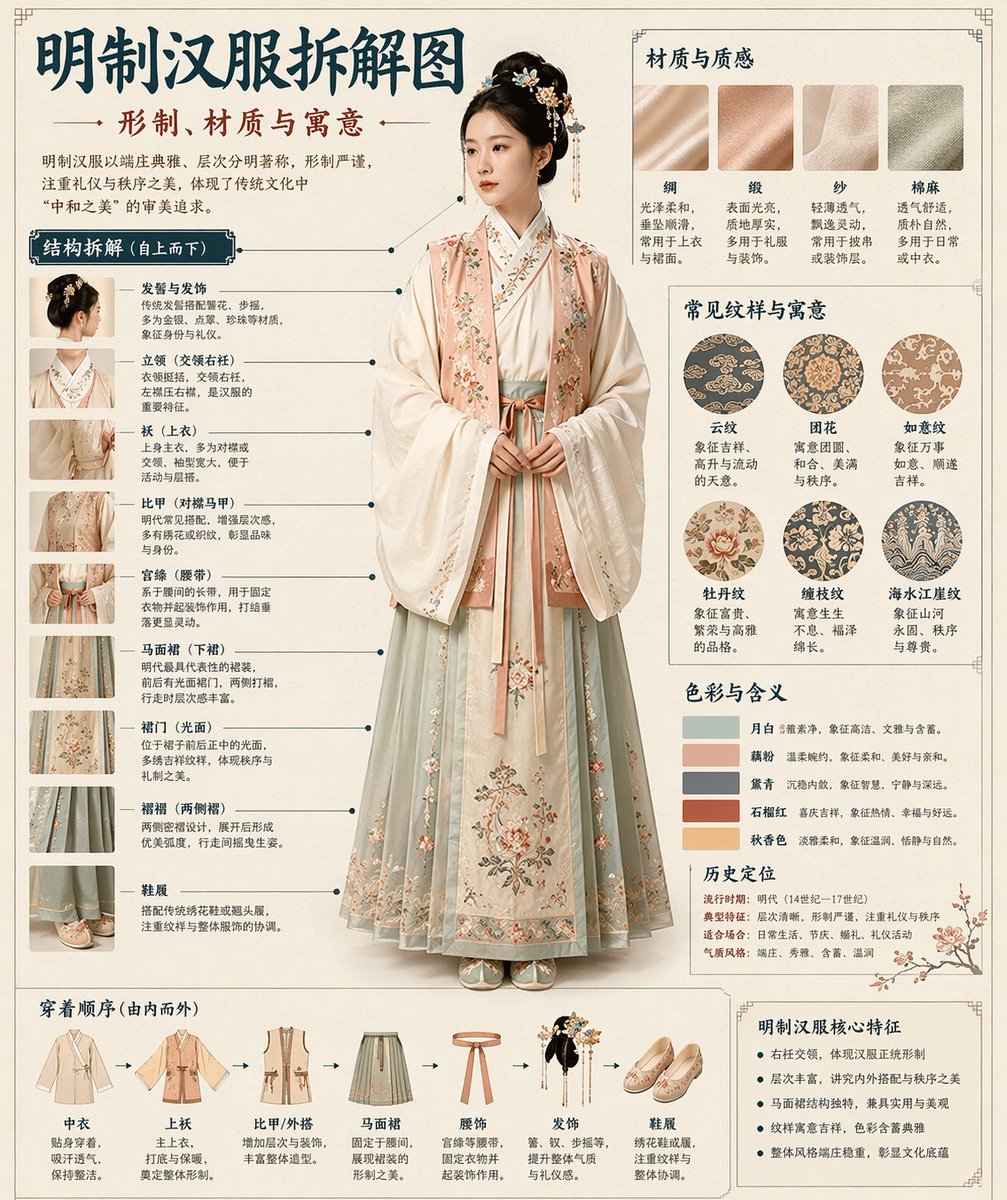
[中文] 请根据【主题】自动生成一张“博物馆图鉴式中文拆解信息图”。 要求整张图兼具真实写实主视觉、结构拆解、中文标注、材质说明、纹样寓意、色彩含义和核心特征总结。你需要根据【主题】自动判断最合适的主体对象、服饰体系、器物结构、时代风格、关键部件、材质工艺、颜色方案与版式结构,用户无需再提供其他信息。 整体风格应为:国家博物馆展板、历史服饰图鉴、文博专题信息图,而不是普通海报、古风写真、电商详情页或动漫插画。背景采用米白、绢纸白、浅茶色等纸张质感,整体高级、克制、专业、可收藏。 版式固定为: - 顶部:中文主标题 + 副标题 + 导语 - 左侧:结构拆解区,中文引线标注关键部件,并配局部特写 - 右上:材质 / 工艺 / 质感区,展示真实纹理小样并附说明 - 右中:纹样 / 色彩 / 寓意区,展示主色板、纹样样本和文化解释 - 底部:穿着顺序 / 构成流程图 + 核心特征总结 若主题适合人物展示,则以真实人物全身站姿为中央主体;若更适合器物或单体结构,则改为中心主体拆解图,但整体仍保持完整中文信息图形式。所有文字必须为简体中文,清晰、规整、可读,不要乱码、错字、英文或拼音。重点突出真实结构、材质差异、文化说明与图鉴气质。 避免:海报感、影楼感、电商感、动漫感、cosplay感、乱标注、错结构、糊字、假材质、过度装饰。 [English] Please automatically generate a "museum catalog-style Chinese disassembly infographic" based on the [Subject]. The entire image is required to combine a realistic main visual, structural disassembly, Chinese annotations, material descriptions, pattern meanings, color meanings, and core feature summaries. You need to automatically determine the most appropriate main subject, clothing system, artifact structure, era style, key components, material craftsmanship, color scheme, and layout structure based on the [Subject], and the user does not need to provide any other information. The overall style should be: national museum exhibition boards, historical clothing catalogs, and cultural/museum thematic infographics, rather than ordinary posters, ancient-style portraits, e-commerce detail pages, or anime illustrations. The background uses paper textures such as off-white, silk white, and light tea color, making the overall look premium, restrained, professional, and collectible. The layout is fixed as: - Top: Chinese main title + subtitle + introduction - Left: Structural disassembly area, with Chinese lead lines annotating key components, accompanied by close-up details - Upper right: Material / craftsmanship / texture area, displaying real texture samples with descriptions - Middle right: Pattern / color / meaning area, displaying the main color palette, pattern samples, and cultural explanations - Bottom: Dressing order / composition flowchart + core feature summary If the subject is suitable for character display, use a full-body standing posture of a real person as the central subject; if it is more suitable for artifacts or single structures, change it to a central subject disassembly diagram, but the overall form remains a complete Chinese infographic. All text must be in Simplified Chinese, clear, neat, and readable, without garbled characters, typos, English, or pinyin. The focus is on highlighting real structures, material differences, cultural explanations, and a catalog atmosphere. Avoid: poster feel, studio portrait feel, e-commerce feel, anime feel, cosplay feel, random annotations, incorrect structures, blurry text, fake materials, excessive decoration.