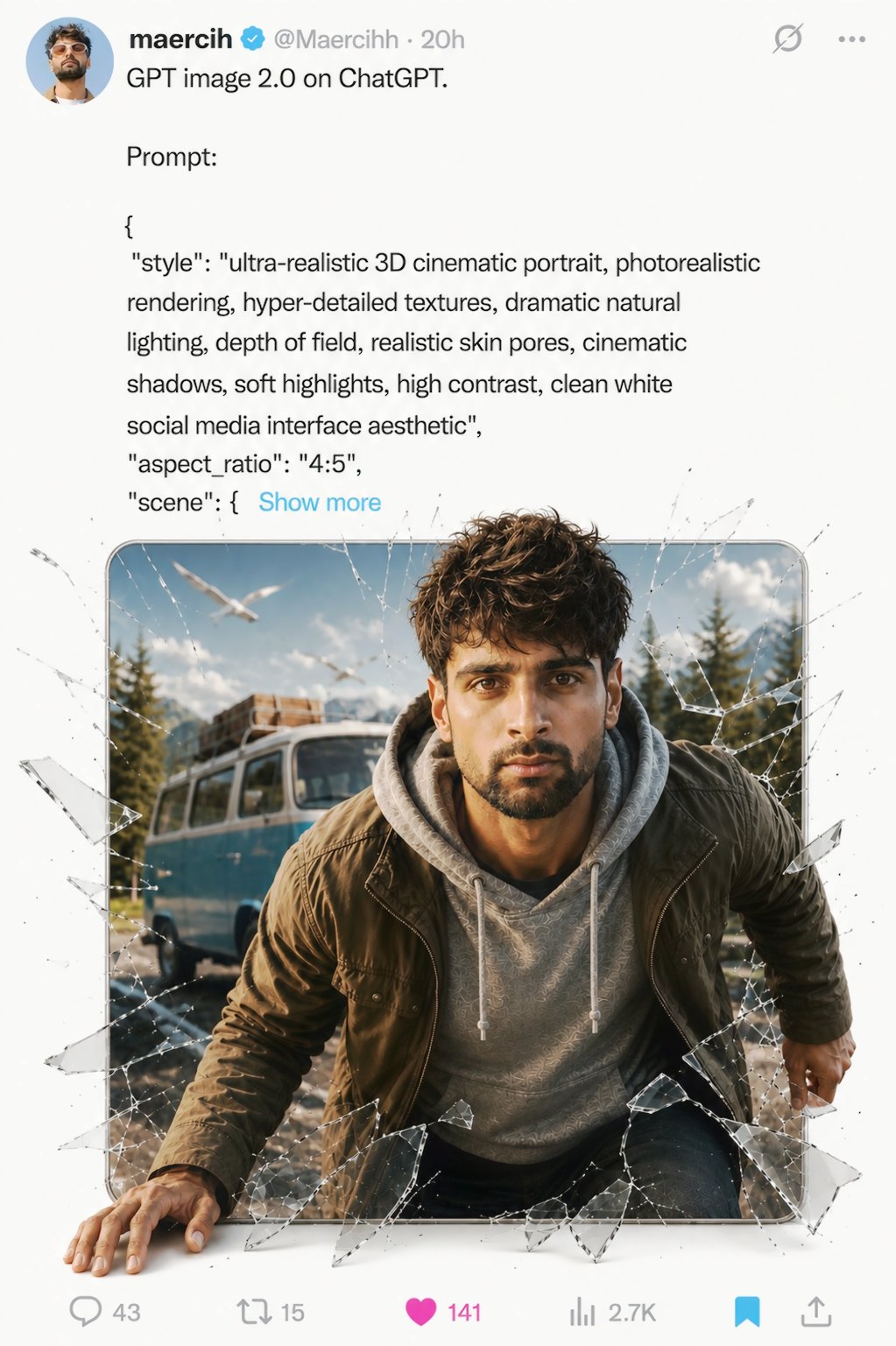
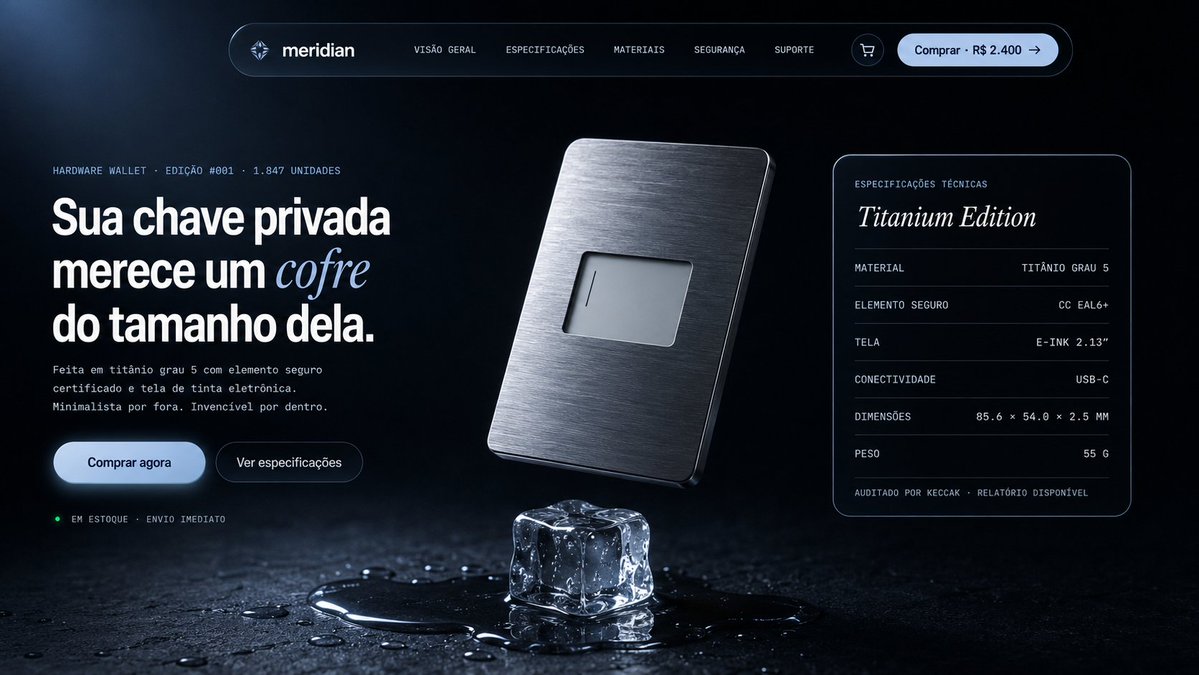
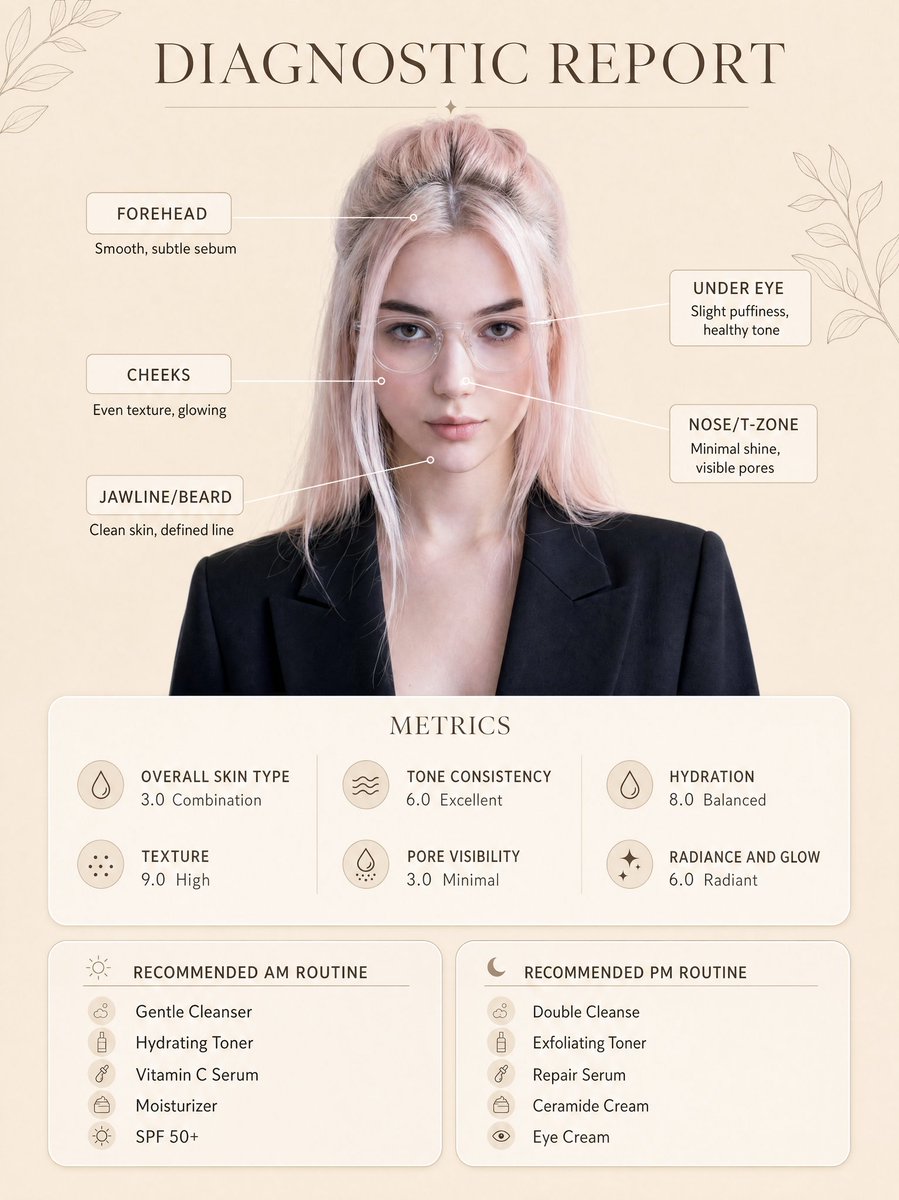
Case Media
Case Notes
This page keeps the media, full prompt, and original source together so you can inspect the result first and decide whether the prompt is worth copying, saving, or comparing.
Case Insights
To make this page easier to search, cite, and reuse later, the case is also broken down into practical guidance about usage, visual cues, and prompt structure.
Best Fit Scenarios
- Use this as a ui & social screens benchmark when you need a fast style baseline before rewriting your own prompt.
- It is especially helpful if your target overlaps with Portrait, UI, Screenshot and you want to judge the image result before tuning wording.
- Keep it as a control sample when you compare nearby prompt variants one variable at a time.
Visual Signals To Notice
- The clearest style signals here are Portrait, UI, Screenshot, so those should usually stay in your first rewrite.
- The important layer is usually interface density, card hierarchy, and how the screen tells the story before you read small text.
- This case keeps 2 media outputs, which makes it easier to check whether the style remains stable across multiple results.
How The Prompt Is Structured
- The prompt reads as a long, highly specified prompt, which is useful when you want to judge how much specificity this direction needs.
- Its keyword cluster is centered on Portrait, UI, Screenshot, so you can usually keep that cluster while swapping subject, camera, layout, or copy details.
- A practical rewrite path is: keep the outcome, keep the strongest style cues, then replace only the subject and environment blocks.
Good Follow-up Questions
- What changes first if you keep Portrait, UI, Screenshot but switch the subject matter?
- Which part of the result comes from section-level structure (UI & Social Screens) versus tag-level style cues?
- Which related cases in the same section give you a cleaner or more extreme variation of the same direction?
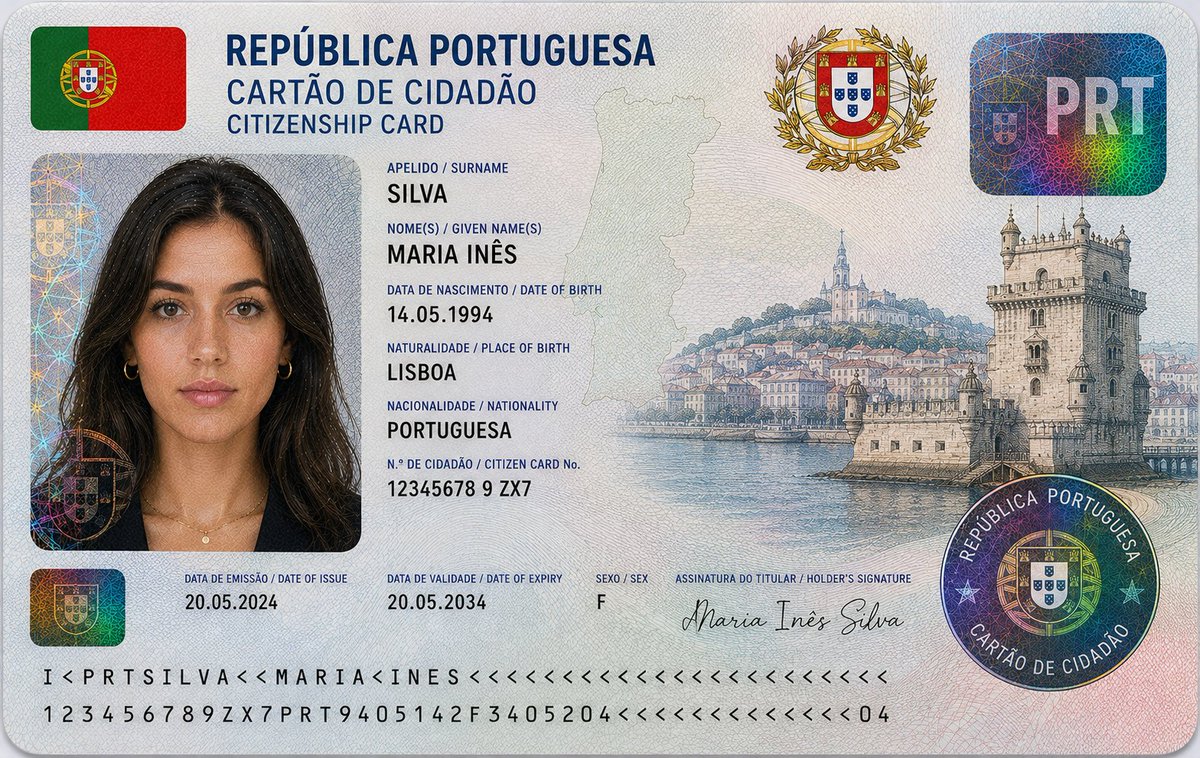
Full Prompt
Ultra-realistic 16:9 close-up studio photograph of a {argument name="nationality" default="Nigerian"} citizenship identity card placed on a clean light grey or neutral background. The card is horizontally aligned, centered in frame, captured in sharp macro focus with soft diffused studio lighting. The design follows an official government-issued identity document aesthetic with structured multilingual typography, engraved security artwork, and advanced anti-counterfeit detailing. Large bold header at top reads: “FEDERAL REPUBLIC OF NIGERIA” with secondary title “CITIZENSHIP CARD” and subtitle “NATIONAL IDENTITY MANAGEMENT COMMISSION.” Top-left corner features the national flag. Upper-right includes the coat of arms with eagle crest and shield emblem. The card contains a passport-style portrait of a {argument name="subject" default="young Nigerian woman"}: – Deep warm brown skin tone with realistic natural texture – Long braided black hair neatly styled back – Dark brown eyes, neutral expression, direct gaze – Minimal makeup with documentary realism – Wearing a dark blazer or black formal top with subtle gold jewelry Personal identity information displayed in English and Hausa-inspired formatting: – Surname: {argument name="surname" default="ADEBAYO"} – First Name: CHIAMAKA BLESSING – Date of Birth: 24 MAR 1992. Security and design features include: Intricate guilloche security line patterns, Fine microprinted anti-counterfeit textures, Holographic foil patches, Circular holographic security seal, Machine-readable identity strip along bottom edge. Lighting is soft and evenly diffused, emphasizing holographic effects and engraved textures. Style: ultra-detailed, photorealistic, 8K resolution, macro clarity, professional product photography, documentary realism.