Case Media
Case Notes
This page keeps the media, full prompt, and original source together so you can inspect the result first and decide whether the prompt is worth copying, saving, or comparing.
Case Insights
To make this page easier to search, cite, and reuse later, the case is also broken down into practical guidance about usage, visual cues, and prompt structure.
Best Fit Scenarios
- Use this as a ui & social screens benchmark when you need a fast style baseline before rewriting your own prompt.
- It is especially helpful if your target overlaps with Cinematic, Fashion, Poster and you want to judge the image result before tuning wording.
- Keep it as a control sample when you compare nearby prompt variants one variable at a time.
Visual Signals To Notice
- The clearest style signals here are Cinematic, Fashion, Poster, so those should usually stay in your first rewrite.
- The important layer is usually interface density, card hierarchy, and how the screen tells the story before you read small text.
- This case keeps one primary output, so the first image should be treated as the main visual reference.
How The Prompt Is Structured
- The prompt reads as a long, highly specified prompt, which is useful when you want to judge how much specificity this direction needs.
- Its keyword cluster is centered on Cinematic, Fashion, Poster, so you can usually keep that cluster while swapping subject, camera, layout, or copy details.
- A practical rewrite path is: keep the outcome, keep the strongest style cues, then replace only the subject and environment blocks.
Good Follow-up Questions
- What changes first if you keep Cinematic, Fashion, Poster but switch the subject matter?
- Which part of the result comes from section-level structure (UI & Social Screens) versus tag-level style cues?
- Which related cases in the same section give you a cleaner or more extreme variation of the same direction?
Full Prompt
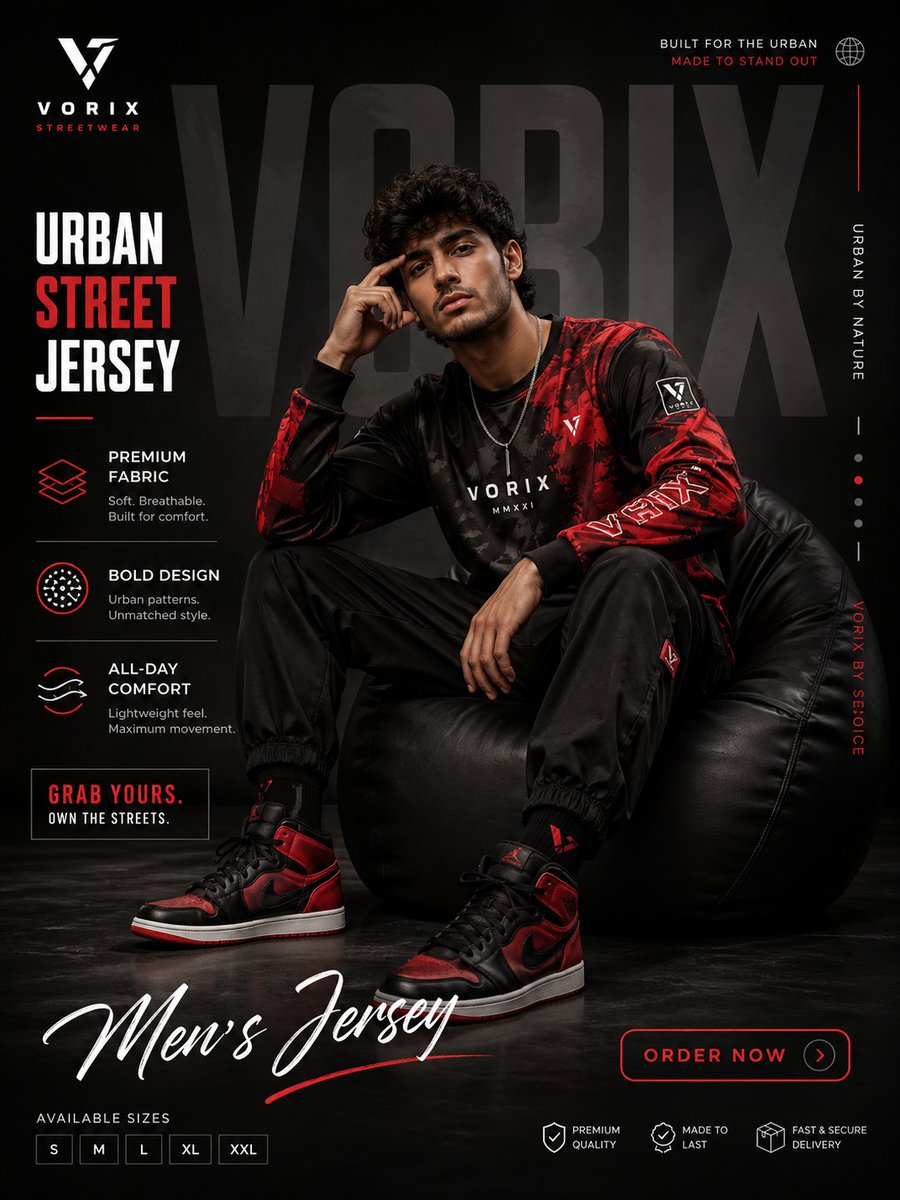
Create a premium high-fashion streetwear promotional poster featuring a confident young male model seated casually on a modern black bean bag chair in a dark luxury studio setting. He wears a stylish long-sleeve urban jersey shirt with bold red and black color blocking, subtle camouflage or abstract textured patterns, paired with black relaxed-fit trousers and matching red-and-black high-top sneakers. The model poses with one elbow resting on his knee and his hand touching his temple, giving a calm, confident expression directly toward the camera. Use dramatic cinematic lighting with soft shadows, glossy highlights, and a moody black gradient background. Behind the model, place oversized semi-transparent bold typography of the model's name or brand name spanning across the backdrop. Add modern minimal UI-inspired design elements and clean branding icons around the composition. Include stylish promotional text such as "Urban Street Jersey," "Premium Fabric," "Grab Yours," and an "Order Now" CTA button with available sizes. At the bottom, add elegant handwritten script typography for the product category like "Men’s Jersey." The overall aesthetic should feel like a luxury fashion campaign ad, sleek, editorial, and Instagram-brand-ready with high contrast, premium detailing, and a polished commercial look.