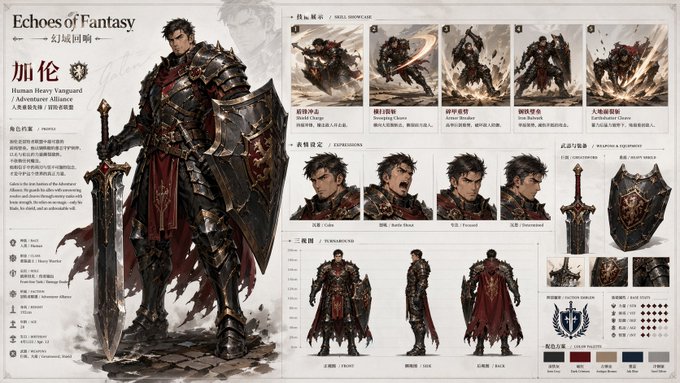
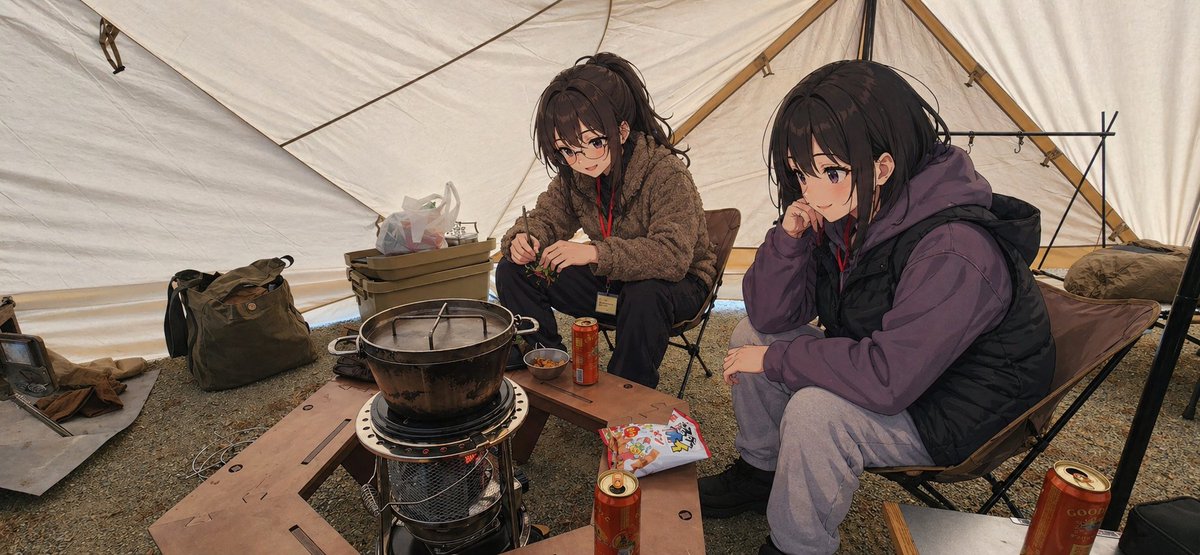
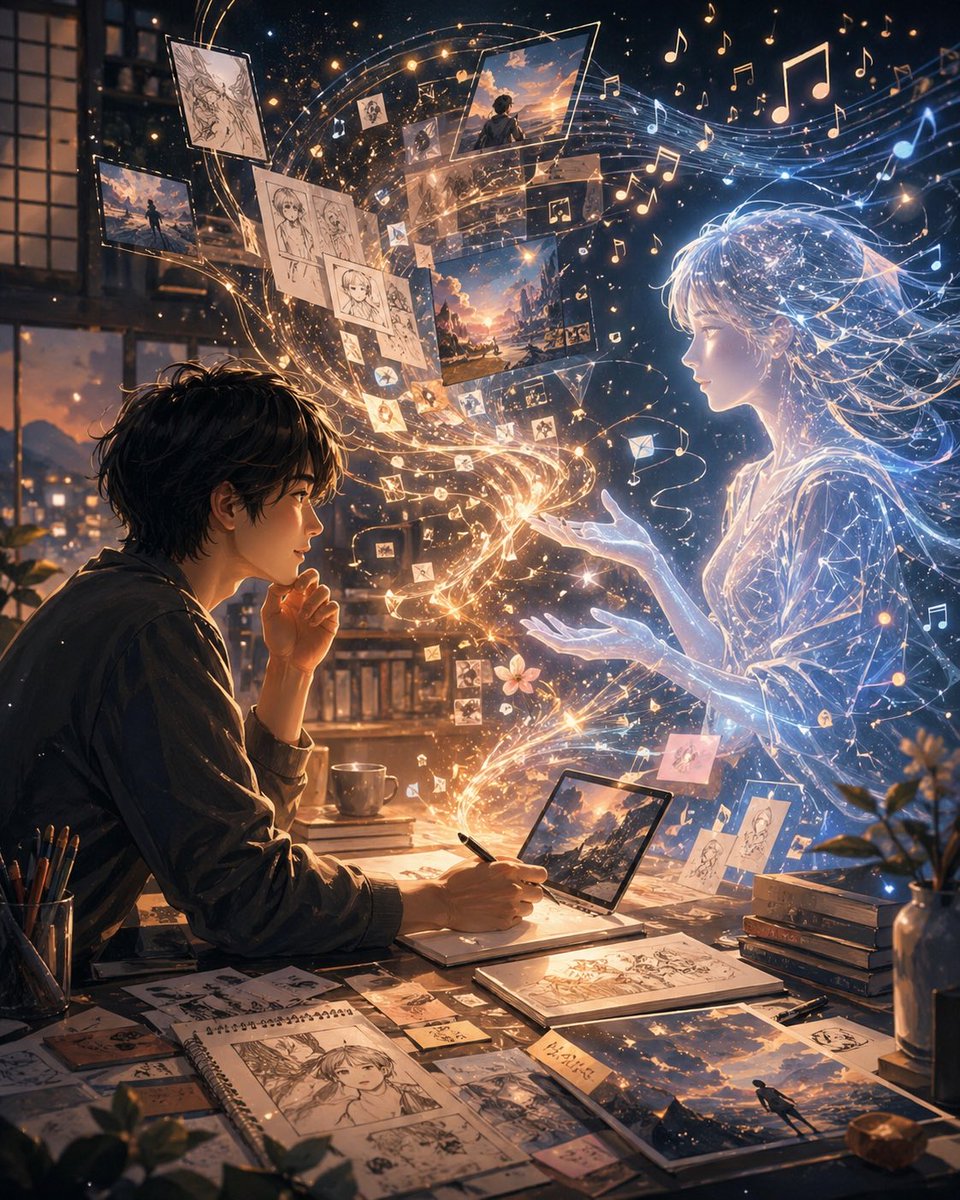
Case Media
Case Notes
This page keeps the media, full prompt, and original source together so you can inspect the result first and decide whether the prompt is worth copying, saving, or comparing.
Case Insights
To make this page easier to search, cite, and reuse later, the case is also broken down into practical guidance about usage, visual cues, and prompt structure.
Best Fit Scenarios
- Use this as a ui & social screens benchmark when you need a fast style baseline before rewriting your own prompt.
- It is especially helpful if your target overlaps with Illustration, UI, Screenshot and you want to judge the image result before tuning wording.
- Keep it as a control sample when you compare nearby prompt variants one variable at a time.
Visual Signals To Notice
- The clearest style signals here are Illustration, UI, Screenshot, so those should usually stay in your first rewrite.
- The important layer is usually interface density, card hierarchy, and how the screen tells the story before you read small text.
- This case keeps 2 media outputs, which makes it easier to check whether the style remains stable across multiple results.
How The Prompt Is Structured
- The prompt reads as a long, highly specified prompt, which is useful when you want to judge how much specificity this direction needs.
- Its keyword cluster is centered on Illustration, UI, Screenshot, so you can usually keep that cluster while swapping subject, camera, layout, or copy details.
- A practical rewrite path is: keep the outcome, keep the strongest style cues, then replace only the subject and environment blocks.
Good Follow-up Questions
- What changes first if you keep Illustration, UI, Screenshot but switch the subject matter?
- Which part of the result comes from section-level structure (UI & Social Screens) versus tag-level style cues?
- Which related cases in the same section give you a cleaner or more extreme variation of the same direction?
Full Prompt
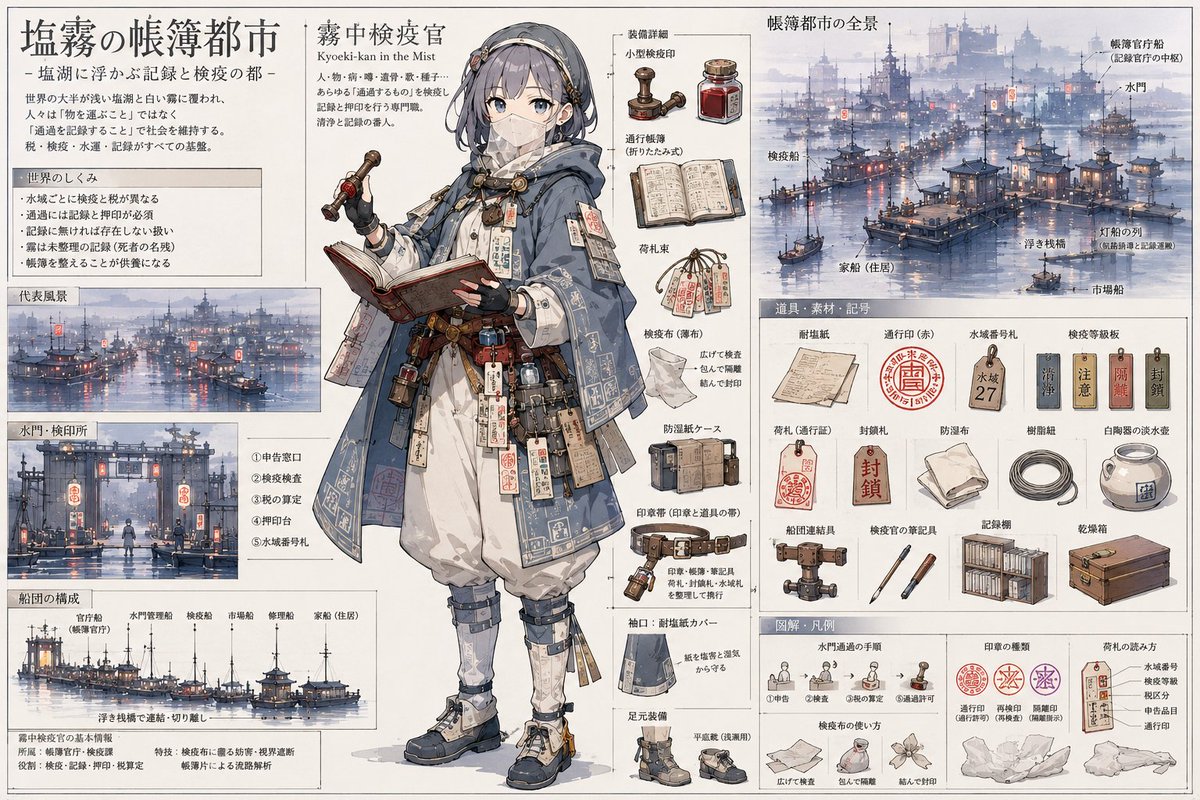
{"type":"information-dense anime fantasy reference sheet and worldbuilding infographic","language_and_text":"Use fine Japanese-style printed typography throughout, but describe all labels in English. Create a parchment-white archival page with thin gray panel borders, dense annotations, arrows, item callouts, and watercolor ink rendering.","main_title":"{argument name=\"main title\" default=\"塩霧の帳簿都市\"}","subtitle":"A salt-lake ledger city and quarantine-record bureaucracy, shown as a detailed character-and-setting design sheet.","central_character":{"position":"center, occupying the full height of the page","role":"{argument name=\"character role\" default=\"mist quarantine officer\"}","name":"{argument name=\"character name\" default=\"Kyoeki-kan in the Mist\"}","appearance":"young anime woman with shoulder-length dark blue-gray hair, hairband and small ornaments, face intentionally covered by a soft rectangular gray blur with no facial features, calm scholarly posture","clothing":"layered blue-gray hooded cloak covered in pale geometric border patterns, white robe and loose white trousers, belts, pouches, document tags, wooden seals, red stamps, straps, protective cuffs, knee guards, gaiters, heavy walking shoes","held_objects":"open ledger book in the left hand and a red-handled inspection stamp or seal tool in the right hand","palette":"{argument name=\"color palette\" default=\"misty blue gray, cream parchment, faded red seals, dark ink, warm brown leather\"}","style":"delicate Japanese anime concept art mixed with historical field-guide illustration, watercolor wash, precise linework, soft fog, high detail"},"layout":{"page_orientation":"wide landscape reference sheet","overall_structure":"one large central character with surrounding labeled diagrams, city views, equipment grids, and process illustrations","sections":[{"title":"City overview and concept text","position":"top left","count":3,"items":["large title block","short explanatory paragraph","boxed rules of the world with 5 bullet-like lines"]},{"title":"Representative scenery","position":"middle left","count":1,"items":["panoramic misty canal harbor filled with boats, lamps, bridges, towers, and floating inspection markers"]},{"title":"Water gate and inspection station","position":"lower left","count":1,"items":["front-view canal checkpoint with lanterns, piers, boats, inspectors, and numbered callouts"]},{"title":"Fleet composition","position":"bottom left","count":6,"items":["official inspection boat","water-gate management boat","inspection boat","market boat","repair boat","residential house boat"]},{"title":"Character tool callouts","position":"upper center-right beside character","count":5,"items":["small wooden inspection stamp","red ink bottle","opened registry ledger","bundle of hanging cargo tags","transparent inspection cloth"]},{"title":"Belt and clothing callouts","position":"center-right beside character","count":5,"items":["waterproof document case","wooden crate-like protective case","belt with stamps and small tools","hem cover fabric sample","footwear and sole-detail samples"]},{"title":"Full city panorama","position":"top right","count":1,"items":["large mist-covered floating city on a salt lake with many docks, canals, lanterns, houseboats, towers, cranes, and distant fortress silhouettes"]},{"title":"Tools, materials, and symbols grid","position":"middle right","count":15,"items":["shipping form document","red circular transit seal","blue-gray water-number tag marked 27","inspection school plaque","cargo tag","red sealing tag","folded waterproof cloth","coiled mooring rope","white saltwater jar","rolled permit belt","inspection officer seal tool","two inspection writing instruments","record shelf filled with ledgers","wooden drying box","small label plaques"]},{"title":"Diagrams and legend","position":"bottom right","count":6,"items":["waterway transit procedure with 5 small steps","three seal types in red and purple","cargo tag reading method","inspection cloth folding and wrapping method","knotted cloth examples","small paper-tag examples"]}]},"environment_details":"The harbor scenes should show a foggy salt-lake metropolis built on docks and floating platforms, with hundreds of tiny boats, red lanterns reflected in water, pagoda-like roofs, bureaucratic signs, numbered markers, and pale blue morning haze.","composition_rules":"Keep the sheet organized and readable: central character dominates, left side explains the city and boats, right side explains equipment and procedures, with fine callout lines connecting objects. Use a handmade illustrated encyclopedia aesthetic rather than a modern UI.","image_quality":"high-resolution concept art, crisp miniature details, soft watercolor shadows, parchment background, balanced margins, no photorealism, no 3D render"}