Case Media
Case Notes
This page keeps the media, full prompt, and original source together so you can inspect the result first and decide whether the prompt is worth copying, saving, or comparing.
Case Insights
To make this page easier to search, cite, and reuse later, the case is also broken down into practical guidance about usage, visual cues, and prompt structure.
Best Fit Scenarios
- Use this as a poster & illustration benchmark when you need a fast style baseline before rewriting your own prompt.
- It is especially helpful if your target overlaps with Poster, Illustration, Watercolor and you want to judge the image result before tuning wording.
- Keep it as a control sample when you compare nearby prompt variants one variable at a time.
Visual Signals To Notice
- The clearest style signals here are Poster, Illustration, Watercolor, so those should usually stay in your first rewrite.
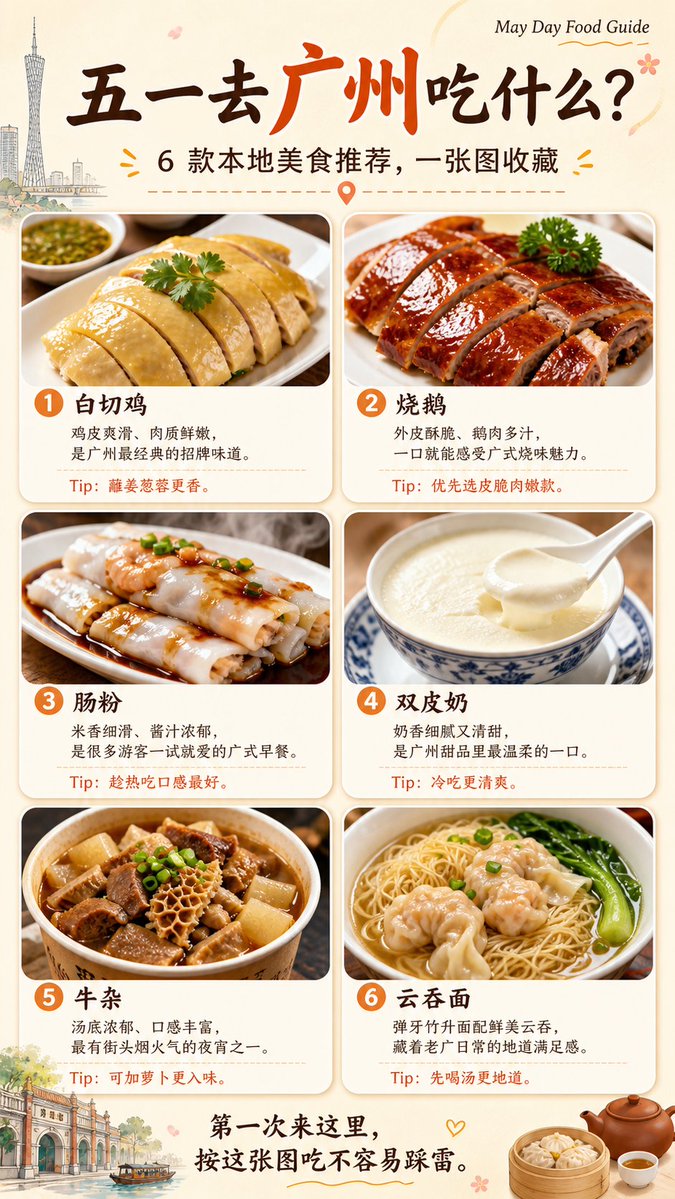
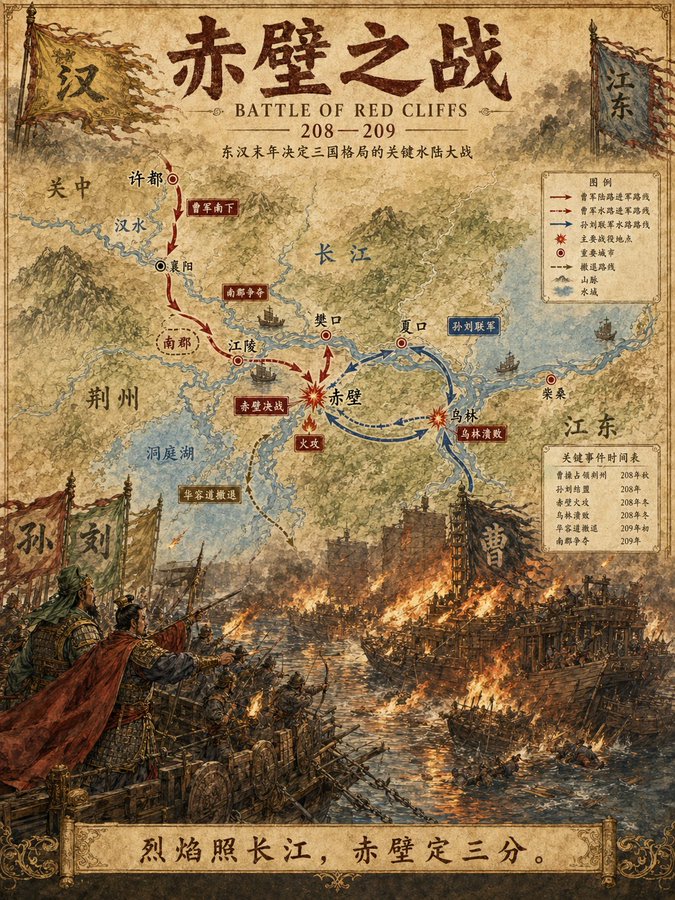
- Pay close attention to layout rhythm, headline hierarchy, illustration texture, and how information is staged in the frame.
- This case keeps one primary output, so the first image should be treated as the main visual reference.
How The Prompt Is Structured
- The prompt reads as a short prompt that relies on a compact set of strong cues, which is useful when you want to judge how much specificity this direction needs.
- Its keyword cluster is centered on Poster, Illustration, Watercolor, so you can usually keep that cluster while swapping subject, camera, layout, or copy details.
- A practical rewrite path is: keep the outcome, keep the strongest style cues, then replace only the subject and environment blocks.
Good Follow-up Questions
- What changes first if you keep Poster, Illustration, Watercolor but switch the subject matter?
- Which part of the result comes from section-level structure (Poster & Illustration) versus tag-level style cues?
- Which related cases in the same section give you a cleaner or more extreme variation of the same direction?
Full Prompt
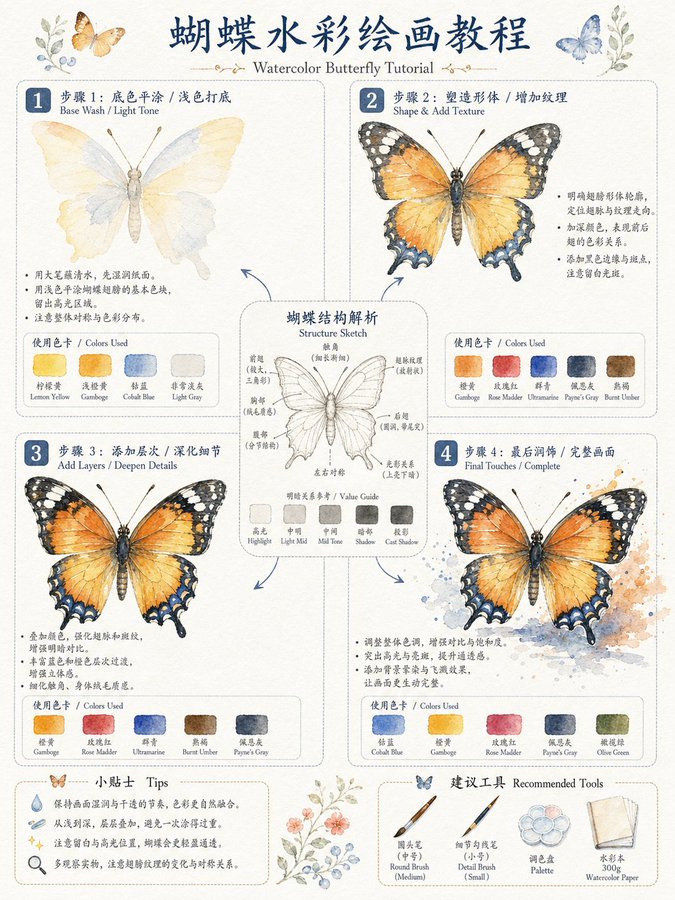
你是一位专业的水彩画家和美术教师。请根据用户指定的玫瑰,生成一份 4 步骤水彩绘画教程指南,并与参考图片的简洁、教学式风格保持一致。 布局: 采用 4 步骤网格布局(2×2) 展示绘画过程: 步骤 1:底色平涂 / 浅色打底 步骤 2:塑造形体 / 增加纹理 步骤 3:添加层次 / 深化细节 步骤 4:最后润饰 / 完整画面 中央添加一张草图示意图,展示关键的形体结构 / 阴影关系。 每个步骤旁配有小型色卡,并标注所使用的颜料名称。 风格: 白色、带纹理的水彩纸背景 柔和的水彩插画效果 清晰的标签和箭头说明 竖版构图 4K 超高清 直接生成图片 主题: 玫瑰水彩绘画教程