Case Media
Case Notes
This page keeps the media, full prompt, and original source together so you can inspect the result first and decide whether the prompt is worth copying, saving, or comparing.
Case Insights
To make this page easier to search, cite, and reuse later, the case is also broken down into practical guidance about usage, visual cues, and prompt structure.
Best Fit Scenarios
- Use this as a poster & illustration benchmark when you need a fast style baseline before rewriting your own prompt.
- It is especially helpful if your target overlaps with Poster, Illustration, City Visual and you want to judge the image result before tuning wording.
- Keep it as a control sample when you compare nearby prompt variants one variable at a time.
Visual Signals To Notice
- The clearest style signals here are Poster, Illustration, City Visual, so those should usually stay in your first rewrite.
- Pay close attention to layout rhythm, headline hierarchy, illustration texture, and how information is staged in the frame.
- This case keeps one primary output, so the first image should be treated as the main visual reference.
How The Prompt Is Structured
- The prompt reads as a long, highly specified prompt, which is useful when you want to judge how much specificity this direction needs.
- Its keyword cluster is centered on Poster, Illustration, City Visual, so you can usually keep that cluster while swapping subject, camera, layout, or copy details.
- A practical rewrite path is: keep the outcome, keep the strongest style cues, then replace only the subject and environment blocks.
Good Follow-up Questions
- What changes first if you keep Poster, Illustration, City Visual but switch the subject matter?
- Which part of the result comes from section-level structure (Poster & Illustration) versus tag-level style cues?
- Which related cases in the same section give you a cleaner or more extreme variation of the same direction?
Full Prompt
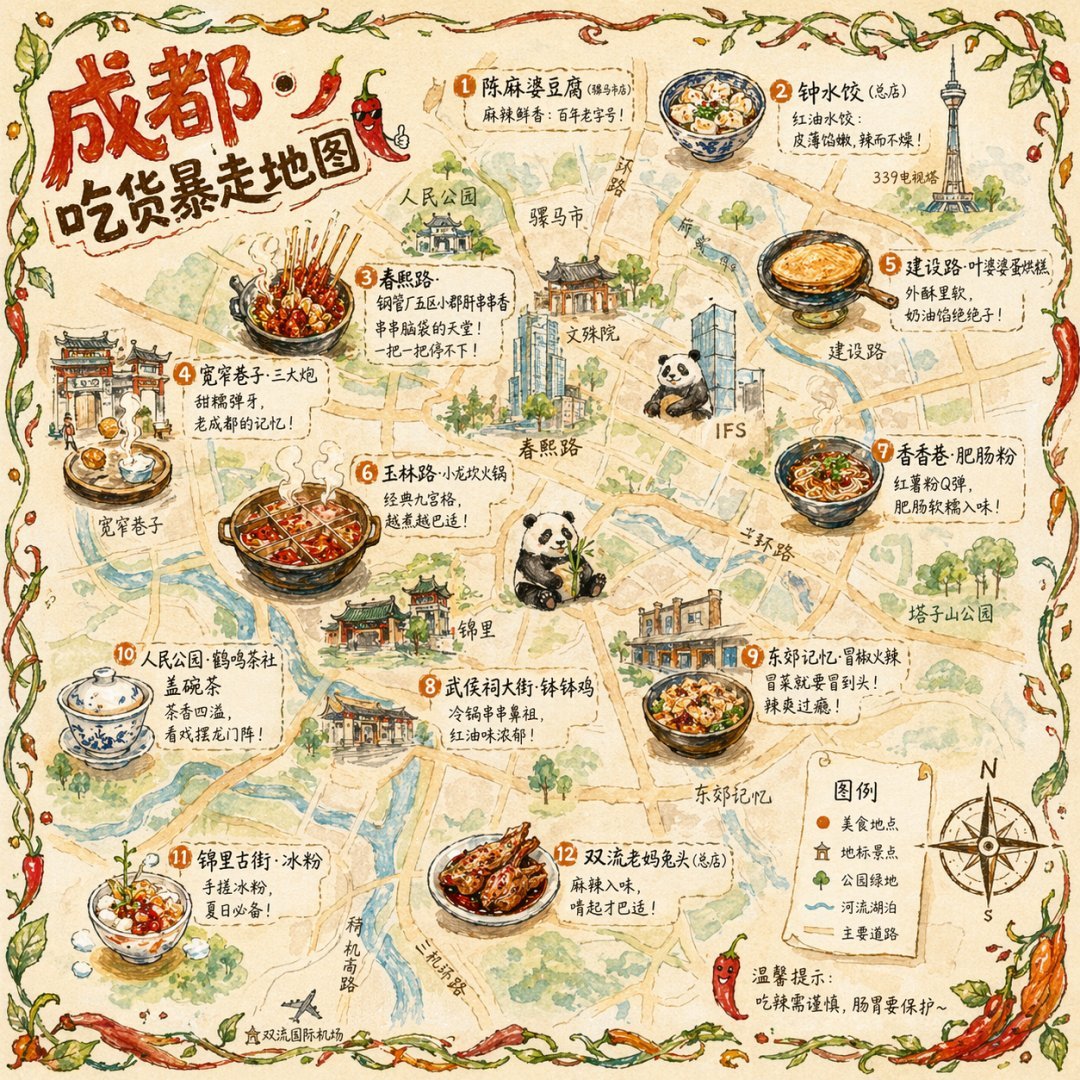
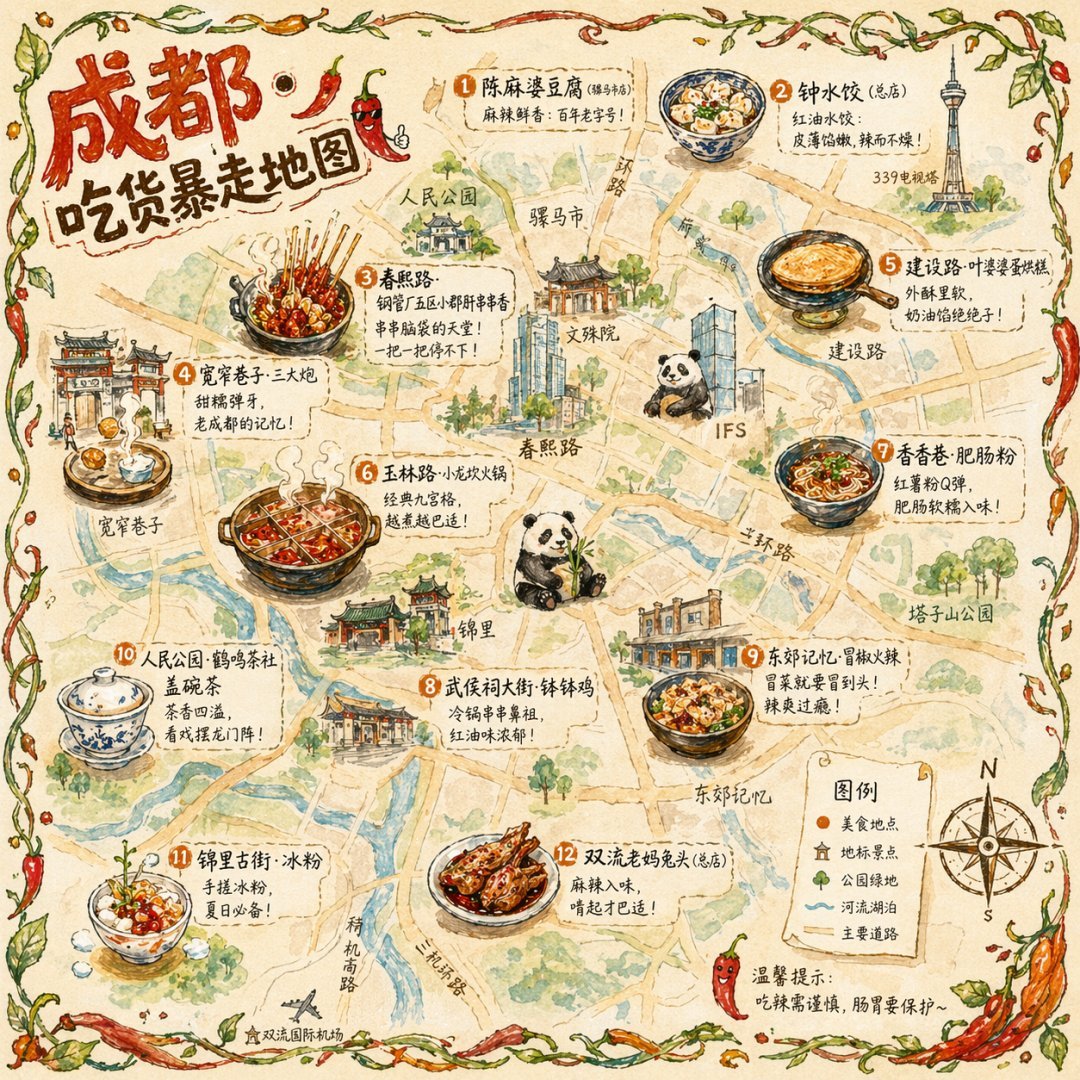
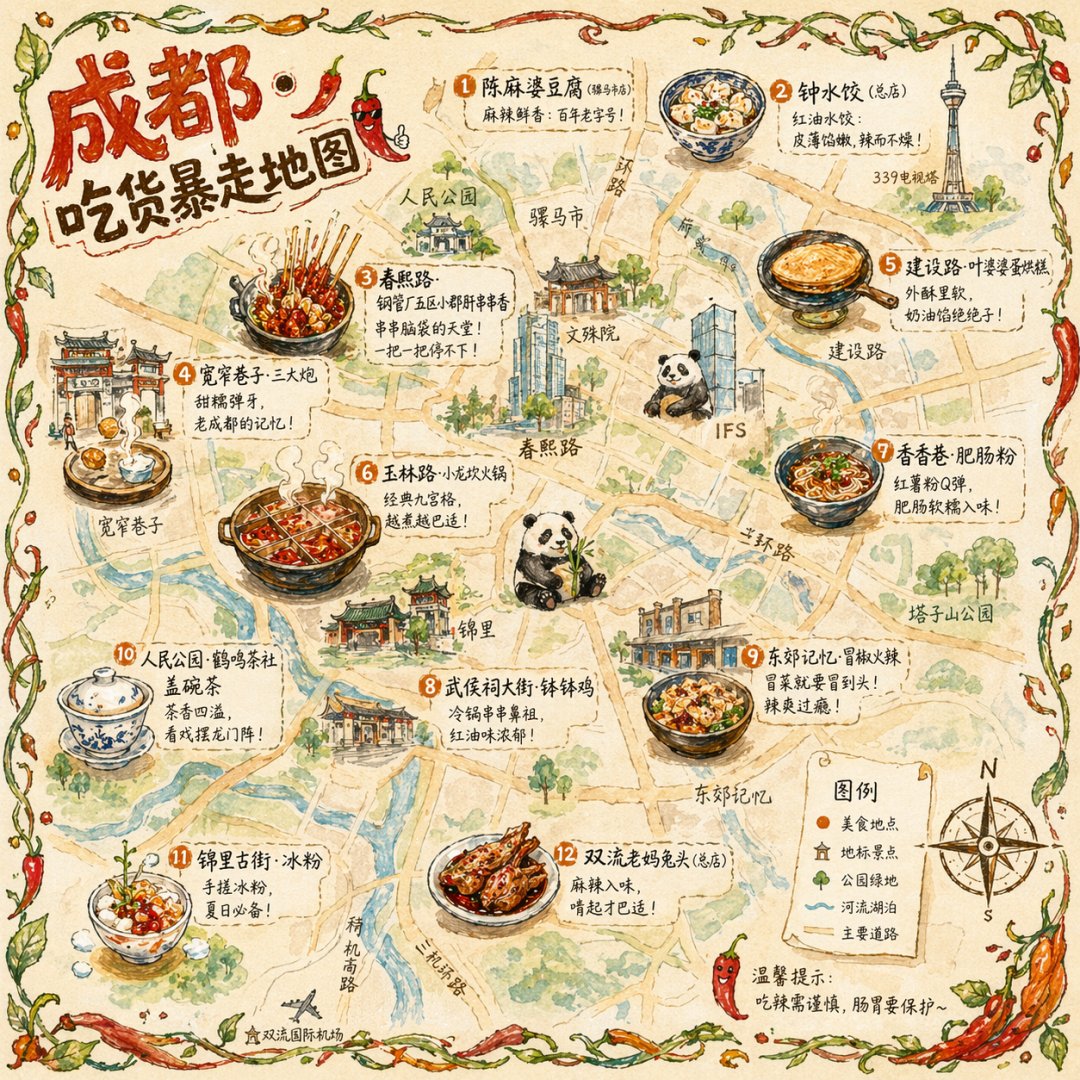
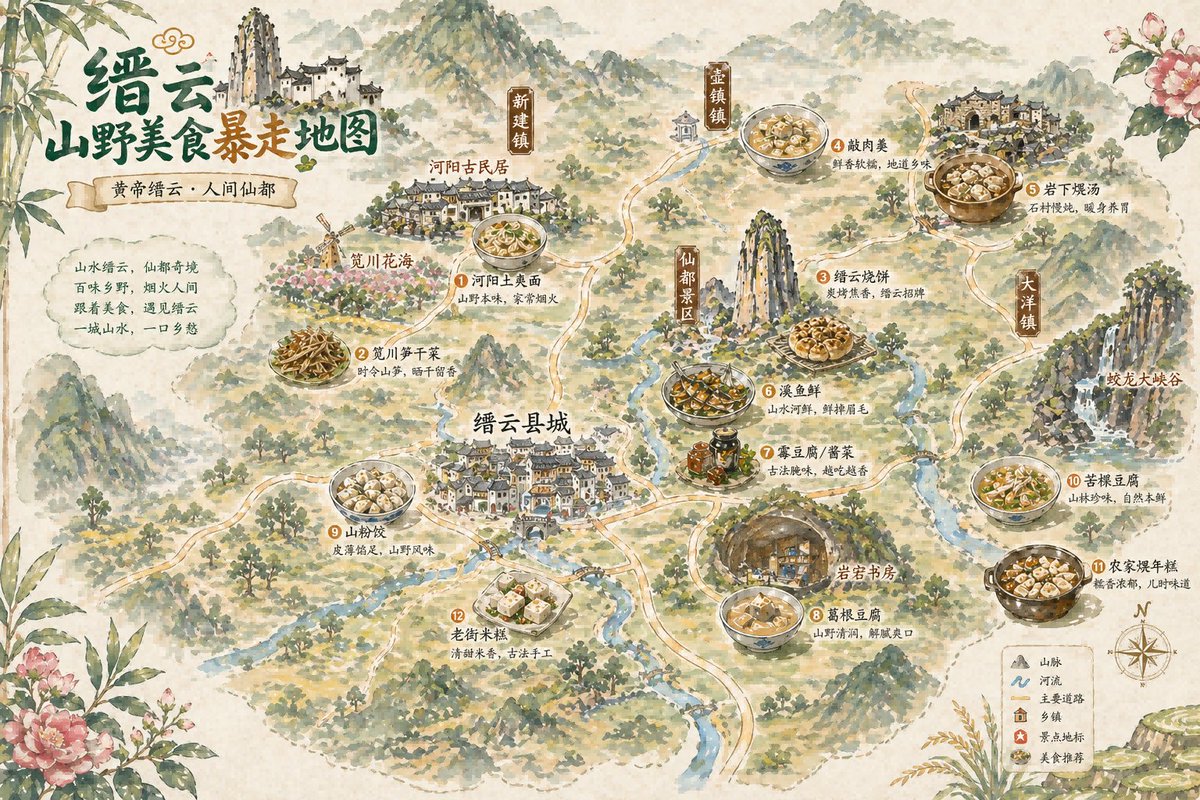
A hand-painted vintage Chinese tourist food map poster in watercolor and ink wash style, shown from a bird’s-eye view over a misty mountainous county landscape. The composition is a stylized illustrated map of {argument name="place name" default="缙云"}, with pale rice-paper texture, soft beige background, green-gray mountains, winding rivers, country roads, old towns, scenic rocks, bamboo leaves, and pink flowers framing the corners. Large artistic Chinese calligraphy title at the upper left reads {argument name="headline text" default="缙云 山野美食暴走地图"}, with a small subtitle ribbon below reading “黄帝缙云·人间仙都”. Add a poetic text block on the left in Chinese: “山水缙云,仙都奇境 百味乡野,烟火人间 跟着美食,遇见缙云 一城山水,一口乡愁”. In the center is the main county town labeled “缙云县城”, surrounded by illustrated routes connecting scenic destinations and local dishes. Include exactly 12 numbered food stops, each with a realistic painted bowl or plate of food placed on the map near its location, with orange circular numbers and Chinese labels plus a short one-line description. The 12 stops are: 1 “河阳土爽面” with description “山野本味,宾客烟火”; 2 “笕川笋干菜” with description “时令山珍,晒干留香”; 3 “缙云烧饼” with description “炭炉焦香,卷云招牌”; 4 “敲肉羹” with description “鲜香软糯,地道乡味”; 5 “岩下炖汤” with description “石材慢炖,暖身养胃”; 6 “溪鱼鲜” with description “山水河鲜,鲜掉眉毛”; 7 “壶镇扁食/落菜” with description “古法胶味,越吃越香”; 8 “葛根豆腐” with description “山野清润,解腻爽口”; 9 “山粉饺” with description “皮薄馅足,山野风味”; 10 “苦槠豆腐” with description “山林珍味,自然本鲜”; 11 “农家焐年糕” with description “糯香浓郁,儿时味道”; 12 “老街米糕” with description “清甜米香,古法手工”. Mark exactly 8 place labels on the map: “新建镇”, “壶镇镇”, “大洋镇”, “仙都景区”, “河阳古民居”, “岩宕书房”, “蛟龙大峡谷”, and “缙云县城”. Paint recognizable scenic clusters with white-walled black-roofed traditional houses, steep karst peaks, bridges, and terraced terrain. Add a small legend box at the lower right with exactly 5 items labeled “山脉”, “河流”, “主要道路”, “乡镇”, and “景点地标”, plus a sixth food icon label “美食推荐”. Include a decorative compass rose nearby. Overall mood is elegant, artisanal, nostalgic, and premium, like a cultural tourism poster combining local cuisine guide and scenic map illustration, with highly polished composition and refined Chinese branding.