Case Media
Case Notes
This page keeps the media, full prompt, and original source together so you can inspect the result first and decide whether the prompt is worth copying, saving, or comparing.
Case Insights
To make this page easier to search, cite, and reuse later, the case is also broken down into practical guidance about usage, visual cues, and prompt structure.
Best Fit Scenarios
- Use this as a portrait & photography benchmark when you need a fast style baseline before rewriting your own prompt.
- It is especially helpful if your target overlaps with Portrait, Cinematic, Product and you want to judge the image result before tuning wording.
- Keep it as a control sample when you compare nearby prompt variants one variable at a time.
Visual Signals To Notice
- The clearest style signals here are Portrait, Cinematic, Product, so those should usually stay in your first rewrite.
- Focus on framing, light direction, pose, and the distance between subject and camera.
- This case keeps one primary output, so the first image should be treated as the main visual reference.
How The Prompt Is Structured
- The prompt reads as a long, highly specified prompt, which is useful when you want to judge how much specificity this direction needs.
- Its keyword cluster is centered on Portrait, Cinematic, Product, so you can usually keep that cluster while swapping subject, camera, layout, or copy details.
- A practical rewrite path is: keep the outcome, keep the strongest style cues, then replace only the subject and environment blocks.
Good Follow-up Questions
- What changes first if you keep Portrait, Cinematic, Product but switch the subject matter?
- Which part of the result comes from section-level structure (Portrait & Photography) versus tag-level style cues?
- Which related cases in the same section give you a cleaner or more extreme variation of the same direction?
Full Prompt
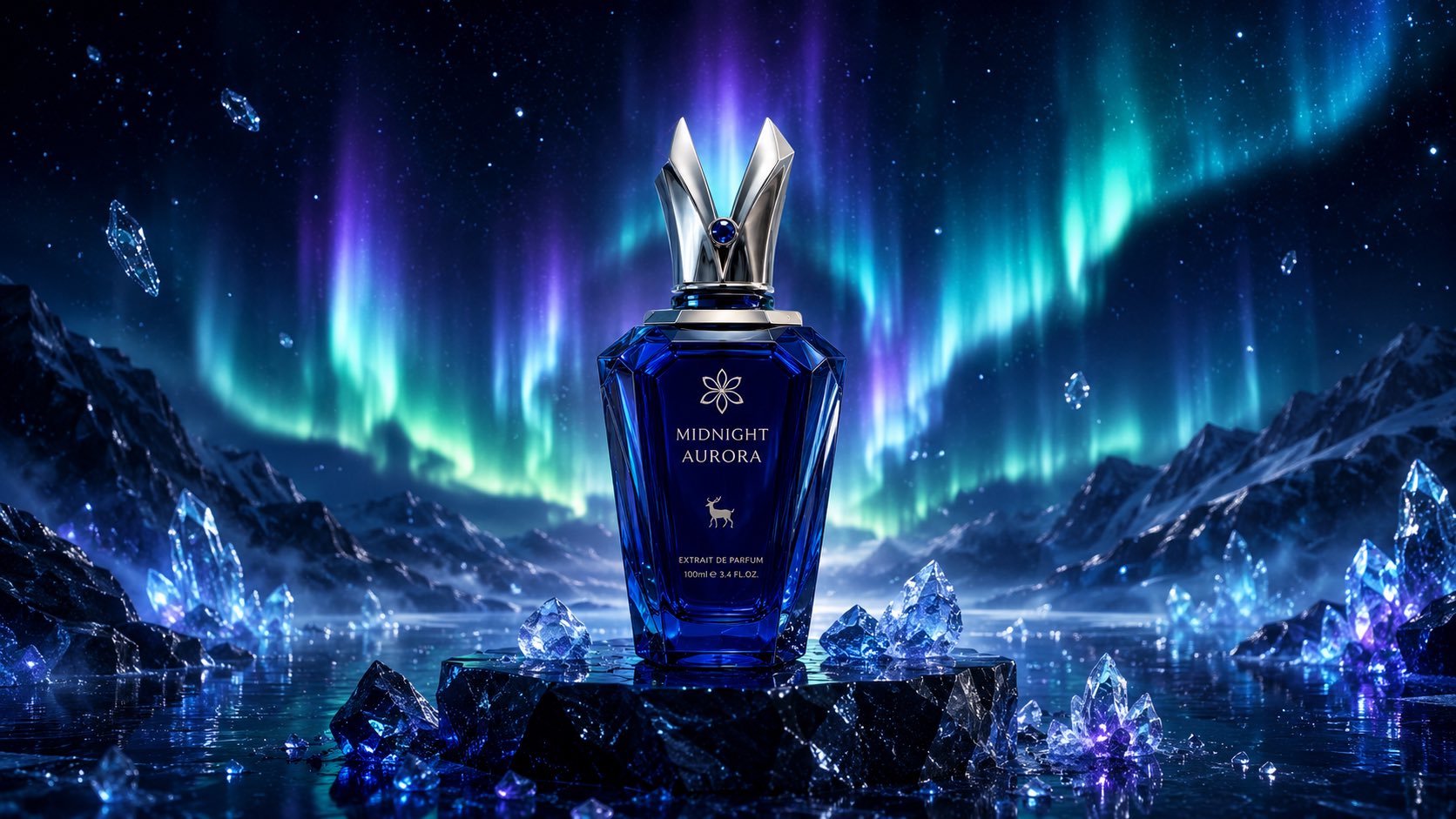
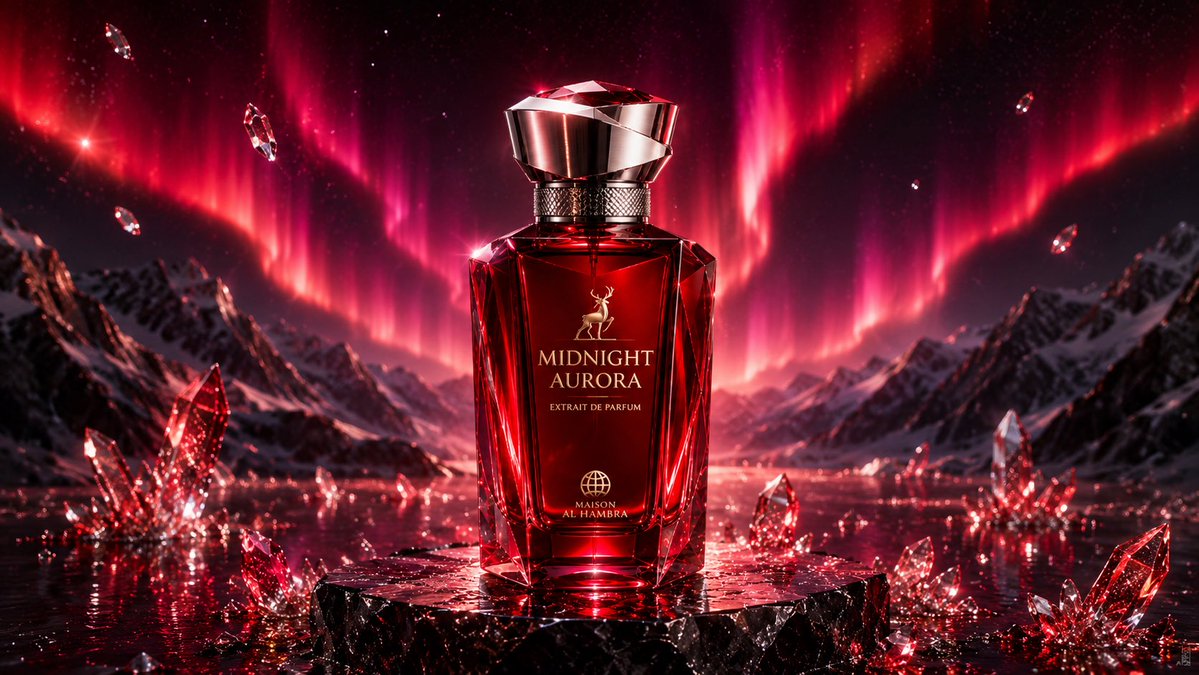
Create an ultra-premium luxury product photography scene in vertical format featuring a fictional niche perfume called “{argument name="product name" default="MIDNIGHT AURORA"}” as the hero product. The perfume bottle has a sleek geometric silhouette crafted from {argument name="material" default="deep sapphire-blue crystal glass"} with brushed platinum accents and a sculptural metallic cap. Place the bottle on a polished black obsidian pedestal surrounded by glowing crystal fragments and subtle mist. The environment evokes a mystical {argument name="environment" default="Arctic night"} under the Northern Lights. In the background, vibrant aurora waves flow across the scene with soft green, blue, and violet light trails. Floating ice crystals, shimmering particles, and translucent frost textures create a magical atmosphere. Lighting: dramatic cinematic rim lighting from behind, cool blue key light from the left, subtle platinum reflections on the bottle, volumetric light rays, luxury commercial lighting setup, high-end fragrance campaign aesthetic. Color palette: midnight blue, emerald green, icy cyan, silver, violet. Camera: Full-frame professional camera, 85mm macro lens, f/2.8 aperture, shallow depth of field, ultra-realistic glass reflections, premium product photography, razor-sharp bottle details, soft creamy bokeh. Composition: clean centered composition, bottle occupying the visual focus, balanced negative space, luxury branding aesthetic, magazine-cover quality, photorealistic, 8K, masterpiece, commercial advertising campaign. Important: Preserve the exact uploaded product shape and label placement while seamlessly integrating it into the luxury Arctic aurora environment.