Case Media
Case Notes
This page keeps the media, full prompt, and original source together so you can inspect the result first and decide whether the prompt is worth copying, saving, or comparing.
Case Insights
To make this page easier to search, cite, and reuse later, the case is also broken down into practical guidance about usage, visual cues, and prompt structure.
Best Fit Scenarios
- Use this as a portrait & photography benchmark when you need a fast style baseline before rewriting your own prompt.
- It is especially helpful if your target overlaps with Portrait, Fashion, Poster and you want to judge the image result before tuning wording.
- Keep it as a control sample when you compare nearby prompt variants one variable at a time.
Visual Signals To Notice
- The clearest style signals here are Portrait, Fashion, Poster, so those should usually stay in your first rewrite.
- Focus on framing, light direction, pose, and the distance between subject and camera.
- This case keeps 2 media outputs, which makes it easier to check whether the style remains stable across multiple results.
How The Prompt Is Structured
- The prompt reads as a long, highly specified prompt, which is useful when you want to judge how much specificity this direction needs.
- Its keyword cluster is centered on Portrait, Fashion, Poster, so you can usually keep that cluster while swapping subject, camera, layout, or copy details.
- A practical rewrite path is: keep the outcome, keep the strongest style cues, then replace only the subject and environment blocks.
Good Follow-up Questions
- What changes first if you keep Portrait, Fashion, Poster but switch the subject matter?
- Which part of the result comes from section-level structure (Portrait & Photography) versus tag-level style cues?
- Which related cases in the same section give you a cleaner or more extreme variation of the same direction?
Full Prompt
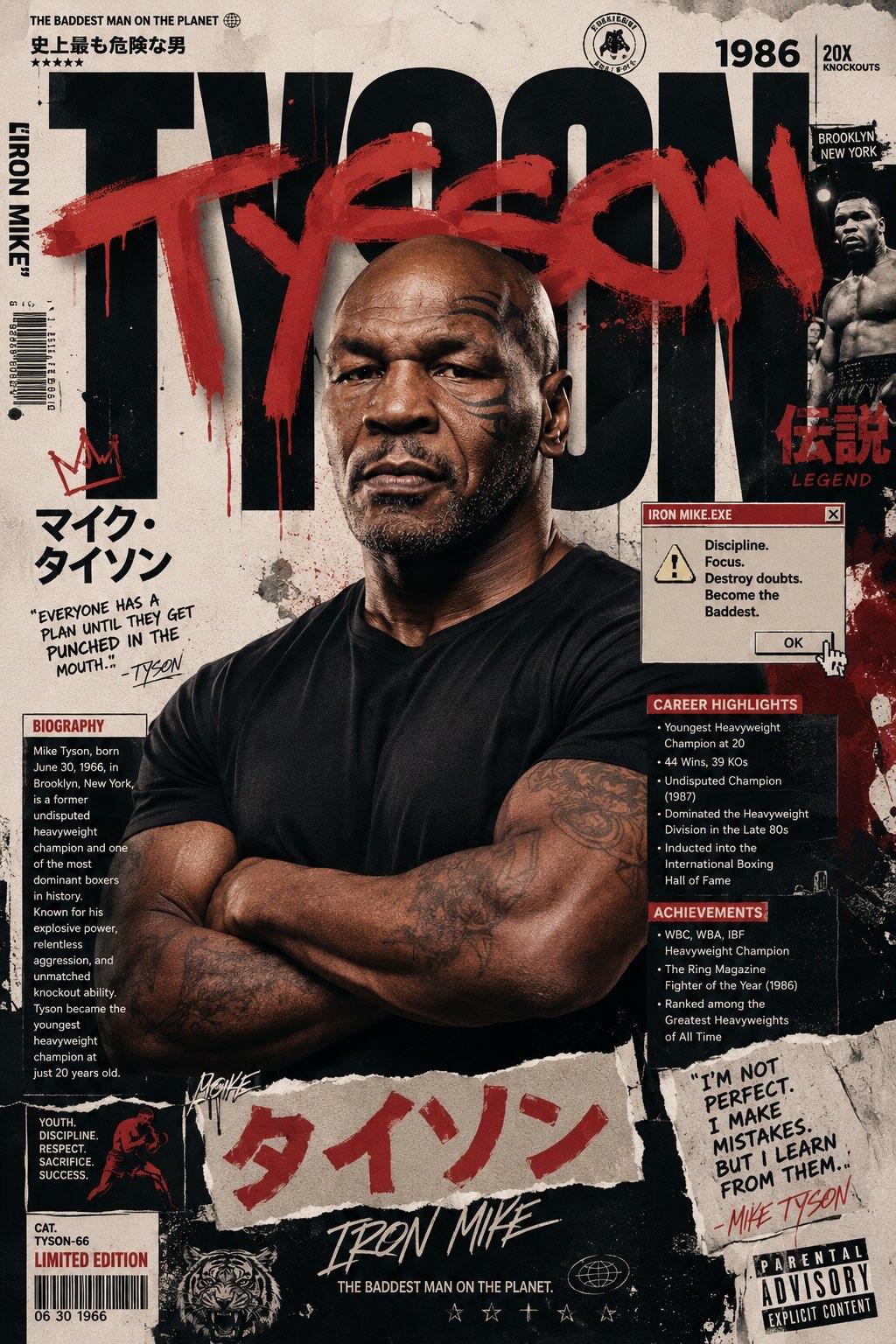
Create an ultra-premium modern Japanese street-art editorial poster featuring [Tyson] as the main subject. Automatically analyze the artist's identity, public image, branding, fashion style, personality, career, fan culture, visual aesthetics, iconic colors, and overall vibe. Generate a unique color palette that perfectly matches the artist. Do not use fixed colors. The entire design, accents, typography highlights, stickers, graffiti, and visual elements must adapt naturally to the artist. Style combines Japanese street culture, Harajuku fashion, Y2K aesthetics, luxury editorial design, collectible idol merchandise, retro internet graphics, magazine cover layouts, modern pop-art, graffiti art, and premium streetwear branding. Background uses clean premium paper texture with subtle print imperfections, vintage editorial details, and modern magazine aesthetics. Place massive oversized black typography behind the subject displaying the artist's first name as the primary graphic element. Overlay the typography with a huge graffiti-style handwritten version of the artist's name using colors derived from the artist's visual identity. Main Subject: High-quality cutout portrait of [ARTIST NAME]. Absolute facial accuracy. Center composition. Natural pose. Professional studio lighting. Fashion campaign quality. Premium magazine-cover presence. Street-Art Elements: Graffiti paint strokes. Sticker graphics. Hand-drawn doodles. Japanese typography. Barcode labels. Magazine clippings. Torn paper effects. Retro web graphics. Pixel-inspired icons. Spray paint textures. Urban design details. Editorial Layout: Large artist name section. Automatically generated biography. Career highlights. Achievements. Interesting facts. Retro computer popup window with a short message inspired by the artist's personality. Decorative Japanese katakana rendering of the artist's name. Professional visual hierarchy. Dynamic asymmetrical composition. Luxury poster balance. No creator credit. No watermark. No official profile text. No unnecessary logos. Visual Quality: Ultra detailed. Highly realistic. Sharp typography. Professional graphic design. Premium collectible merchandise aesthetic. Luxury fashion campaign quality. Japanese street-art energy. Modern Gen-Z aesthetic. Pinterest-worthy. Instagram-ready. Museum-quality graphic design. 4K resolution. Vertical poster format. Aspect ratio 4:5.