Case Media
Case Notes
This page keeps the media, full prompt, and original source together so you can inspect the result first and decide whether the prompt is worth copying, saving, or comparing.
Case Insights
To make this page easier to search, cite, and reuse later, the case is also broken down into practical guidance about usage, visual cues, and prompt structure.
Best Fit Scenarios
- Use this as a portrait & photography benchmark when you need a fast style baseline before rewriting your own prompt.
- It is especially helpful if your target overlaps with Portrait, Fashion, Minimal and you want to judge the image result before tuning wording.
- Keep it as a control sample when you compare nearby prompt variants one variable at a time.
Visual Signals To Notice
- The clearest style signals here are Portrait, Fashion, Minimal, so those should usually stay in your first rewrite.
- Focus on framing, light direction, pose, and the distance between subject and camera.
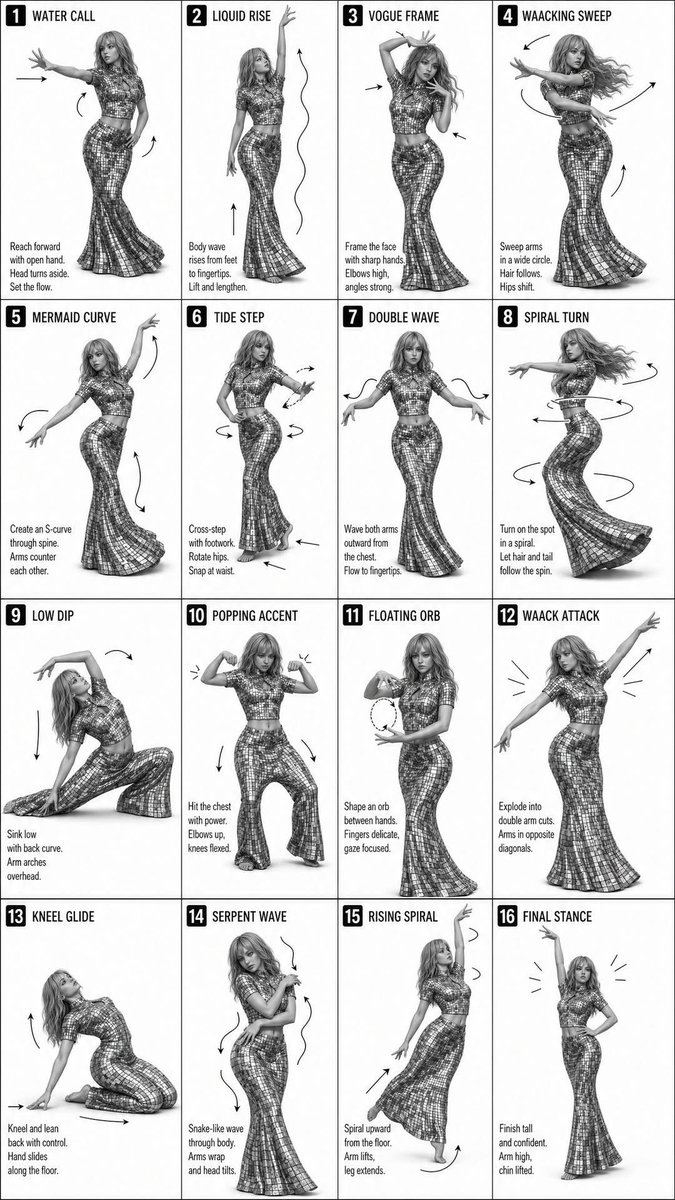
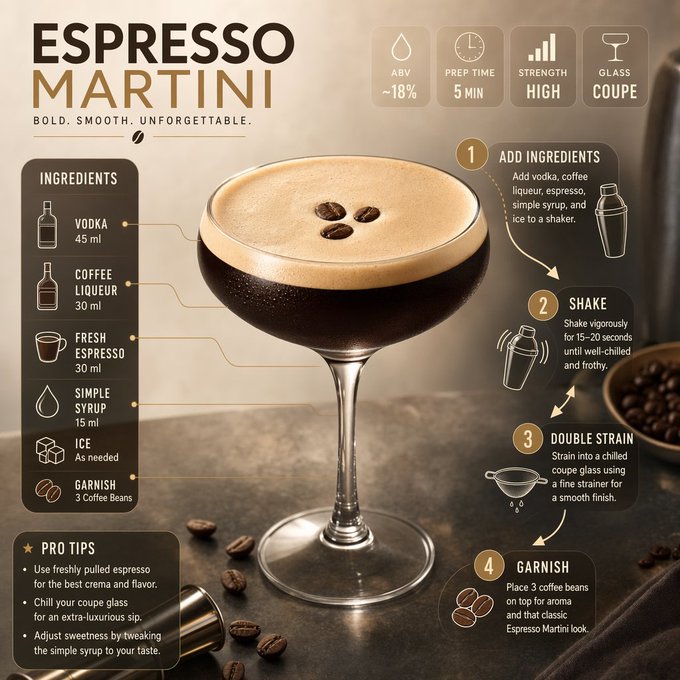
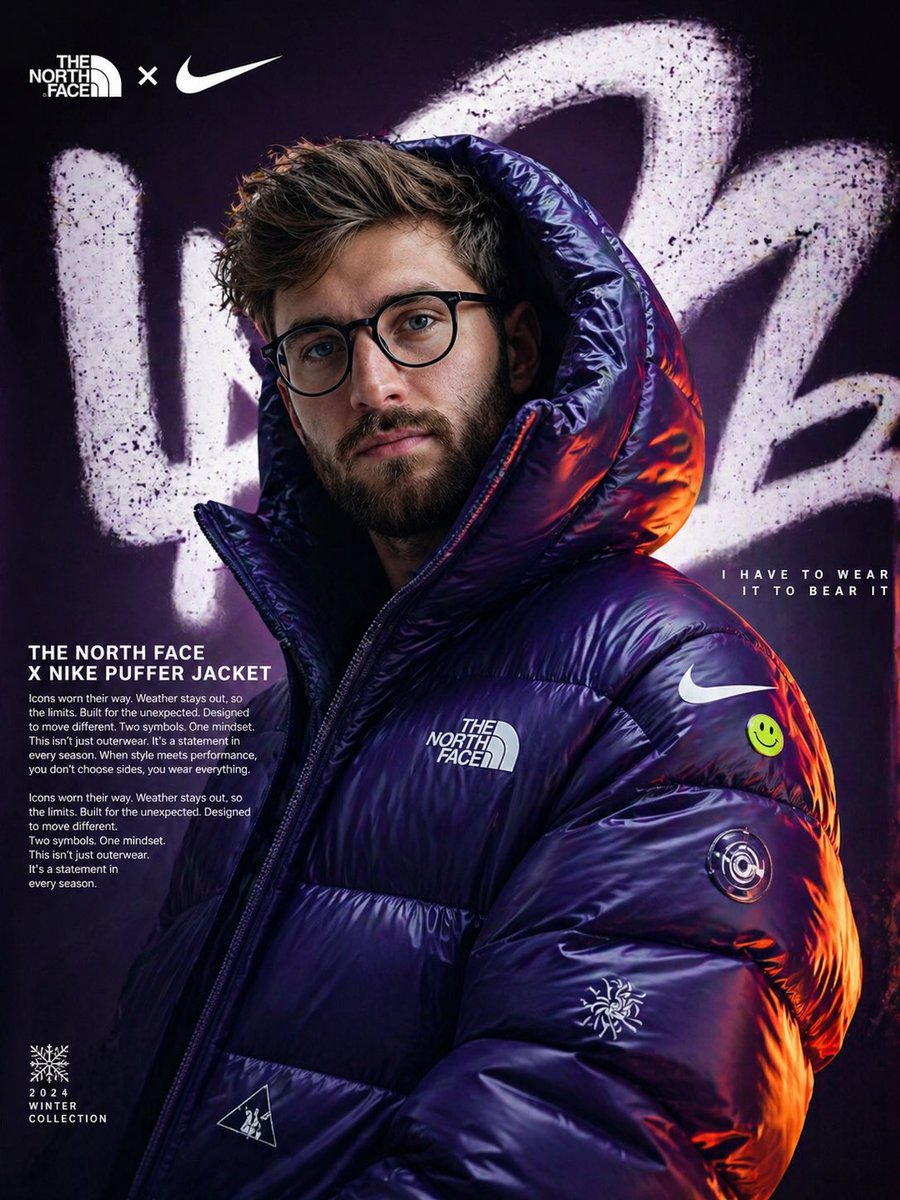
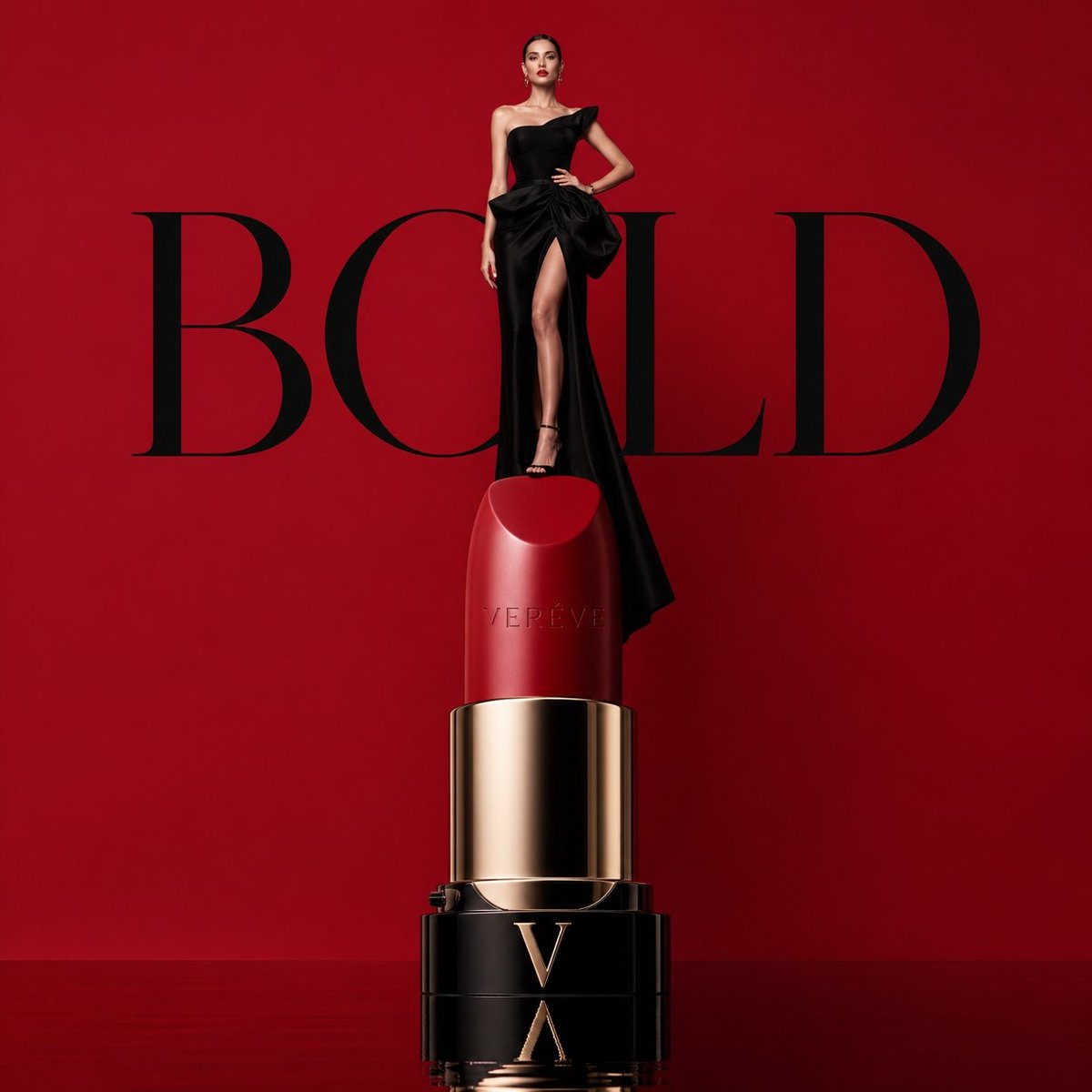
- This case keeps one primary output, so the first image should be treated as the main visual reference.
How The Prompt Is Structured
- The prompt reads as a long, highly specified prompt, which is useful when you want to judge how much specificity this direction needs.
- Its keyword cluster is centered on Portrait, Fashion, Minimal, so you can usually keep that cluster while swapping subject, camera, layout, or copy details.
- A practical rewrite path is: keep the outcome, keep the strongest style cues, then replace only the subject and environment blocks.
Good Follow-up Questions
- What changes first if you keep Portrait, Fashion, Minimal but switch the subject matter?
- Which part of the result comes from section-level structure (Portrait & Photography) versus tag-level style cues?
- Which related cases in the same section give you a cleaner or more extreme variation of the same direction?
Full Prompt
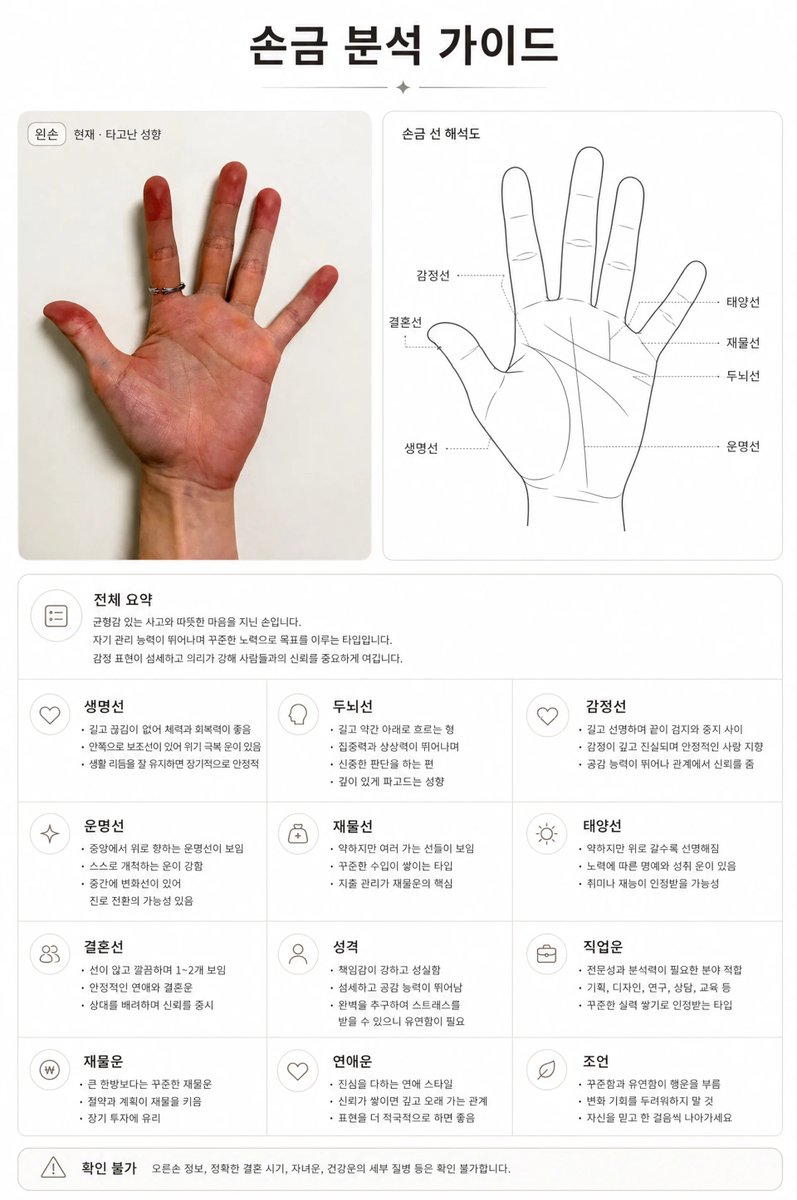
Create a premium Korean palm reading guide image based on the uploaded palm photo. All visible text in the final image must be Korean only. Use clean Korean sans-serif typography. The title must be exactly “손금 분석 가이드”. Create a refined two-panel layout: Left panel: place the uploaded real palm photo inside a clean rounded card. Preserve the original hand shape, palm lines, skin texture, and natural details. Do not distort or redraw the hand. Right panel: create a separate black-and-white palm contour interpretation diagram based on the same hand. Highlight the main palm lines with thin precise lines and label them in Korean. Include Korean labels and sections: “손금 분석 가이드”, “전체 요약”, “생명선”, “두뇌선”, “감정선”, “운명선”, “재물선”, “태양선”, “결혼선”, “성격”, “직업운”, “재물운”, “연애운”, “조언”, “확인 불가”. Analyze palm shape, finger proportions, life line, head line, heart line, fate line, wealth line, sun line, marriage line, line depth, length, direction, breaks, branches, and overlaps. If something is unclear, write “확인 불가”. Keep the Korean interpretation short, realistic, calm, and advisory. Design style: 1:1 square format, white background, black and warm dark gray text, thin hairline dividers, rounded cards, subtle shadows, large margins, generous negative space, precise grid, minimal line pictograms, luxury editorial report, high-end wellness analysis, elegant and expensive-looking. No English text, no roman letters, no broken Korean, no random glyphs, no colorful decoration, no cartoon style, no occult symbols, no tarot imagery, no horror mood, no messy background, no watermark.