Case Media
Case Notes
This page keeps the media, full prompt, and original source together so you can inspect the result first and decide whether the prompt is worth copying, saving, or comparing.
Case Insights
To make this page easier to search, cite, and reuse later, the case is also broken down into practical guidance about usage, visual cues, and prompt structure.
Best Fit Scenarios
- Use this as a portrait & photography benchmark when you need a fast style baseline before rewriting your own prompt.
- It is especially helpful if your target overlaps with Portrait, Character, Watercolor and you want to judge the image result before tuning wording.
- Keep it as a control sample when you compare nearby prompt variants one variable at a time.
Visual Signals To Notice
- The clearest style signals here are Portrait, Character, Watercolor, so those should usually stay in your first rewrite.
- Focus on framing, light direction, pose, and the distance between subject and camera.
- This case keeps one primary output, so the first image should be treated as the main visual reference.
How The Prompt Is Structured
- The prompt reads as a long, highly specified prompt, which is useful when you want to judge how much specificity this direction needs.
- Its keyword cluster is centered on Portrait, Character, Watercolor, so you can usually keep that cluster while swapping subject, camera, layout, or copy details.
- A practical rewrite path is: keep the outcome, keep the strongest style cues, then replace only the subject and environment blocks.
Good Follow-up Questions
- What changes first if you keep Portrait, Character, Watercolor but switch the subject matter?
- Which part of the result comes from section-level structure (Portrait & Photography) versus tag-level style cues?
- Which related cases in the same section give you a cleaner or more extreme variation of the same direction?
Full Prompt
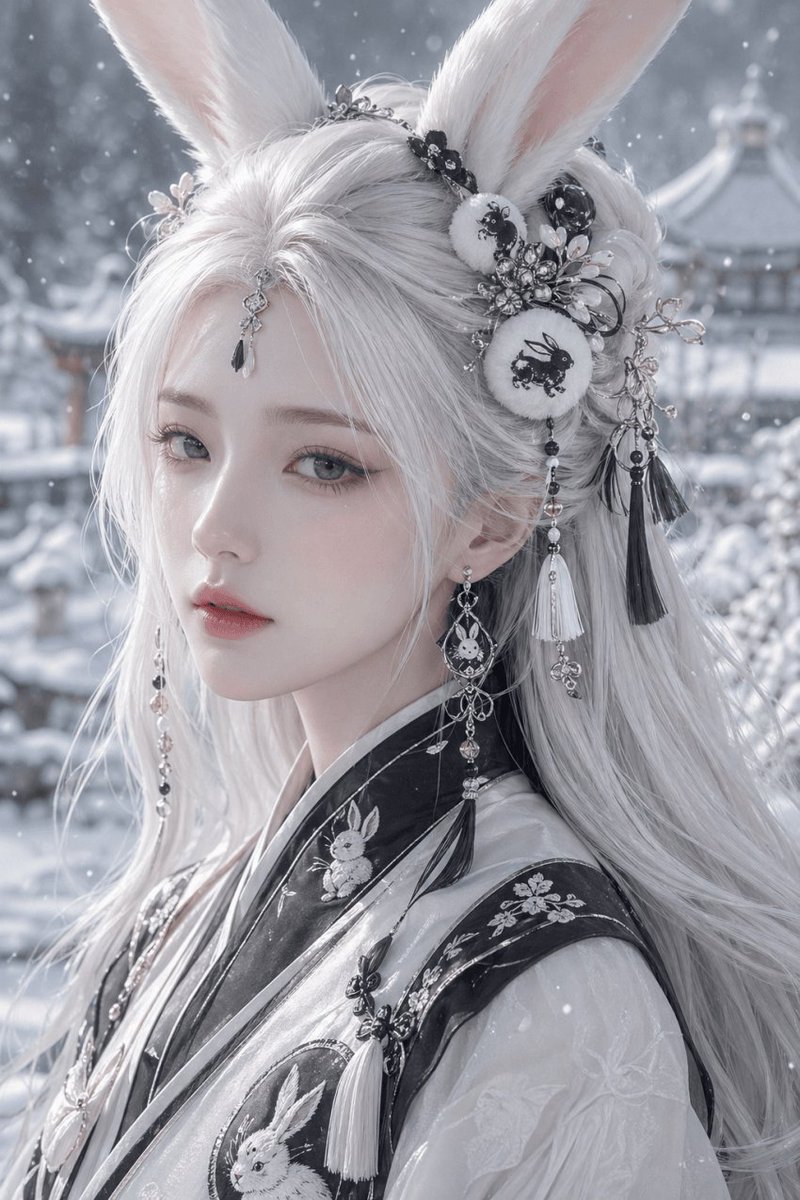
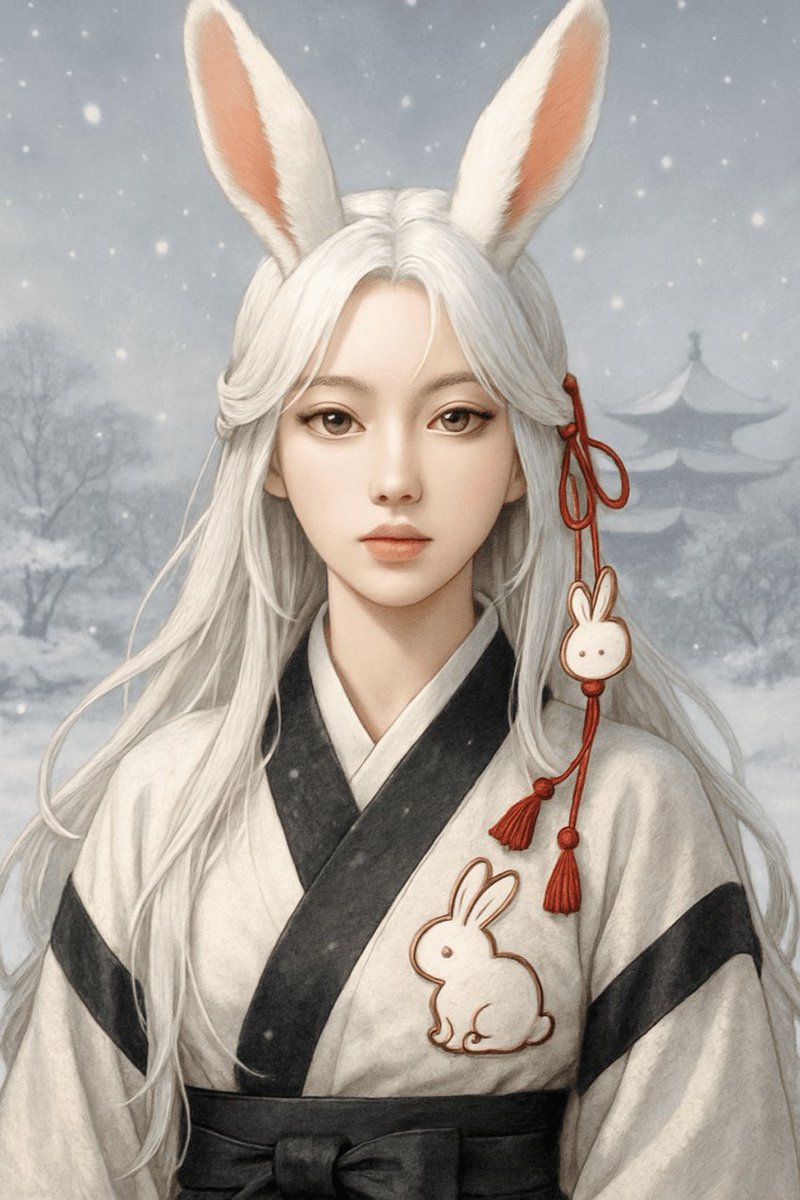
A soft, painterly portrait of a mysterious young woman with {argument name="hair color" default="long white hair"} and 2 tall rabbit ears rising above her head, centered in a vertical composition from chest up. Her face is completely obscured by a flat rectangular censor block in muted beige, creating an anonymous surreal effect. She wears a traditional kimono-inspired robe in warm ivory with bold black trim: 3 visible black sections total, including the wide crossover collar, 2 black sleeve bands, and a black waist sash tied in front. On the left chest is 1 embroidered white rabbit patch outlined in brown. On the right side of her hair hangs 1 red braided cord ornament tied into a bow, decorated with 2 tassels and 1 small rabbit-shaped charm. The hair is long, flowing, slightly windswept, and silky, framing the shoulders. Set her in a quiet snowy landscape with falling snow, pale gray winter atmosphere, bare trees, and a softly blurred traditional pagoda silhouette in the distance on the right. Use a delicate East Asian fantasy aesthetic, muted colors, gentle lighting, subtle texture like watercolor or gouache on paper, highly refined costume details, calm mood, and a centered symmetrical composition.