Case Media
Case Notes
This page keeps the media, full prompt, and original source together so you can inspect the result first and decide whether the prompt is worth copying, saving, or comparing.
Case Insights
To make this page easier to search, cite, and reuse later, the case is also broken down into practical guidance about usage, visual cues, and prompt structure.
Best Fit Scenarios
- Use this as a portrait & photography benchmark when you need a fast style baseline before rewriting your own prompt.
- It is especially helpful if your target overlaps with Portrait, Cinematic, Fashion and you want to judge the image result before tuning wording.
- Keep it as a control sample when you compare nearby prompt variants one variable at a time.
Visual Signals To Notice
- The clearest style signals here are Portrait, Cinematic, Fashion, so those should usually stay in your first rewrite.
- Focus on framing, light direction, pose, and the distance between subject and camera.
- This case keeps 2 media outputs, which makes it easier to check whether the style remains stable across multiple results.
How The Prompt Is Structured
- The prompt reads as a long, highly specified prompt, which is useful when you want to judge how much specificity this direction needs.
- Its keyword cluster is centered on Portrait, Cinematic, Fashion, so you can usually keep that cluster while swapping subject, camera, layout, or copy details.
- A practical rewrite path is: keep the outcome, keep the strongest style cues, then replace only the subject and environment blocks.
Good Follow-up Questions
- What changes first if you keep Portrait, Cinematic, Fashion but switch the subject matter?
- Which part of the result comes from section-level structure (Portrait & Photography) versus tag-level style cues?
- Which related cases in the same section give you a cleaner or more extreme variation of the same direction?
Full Prompt
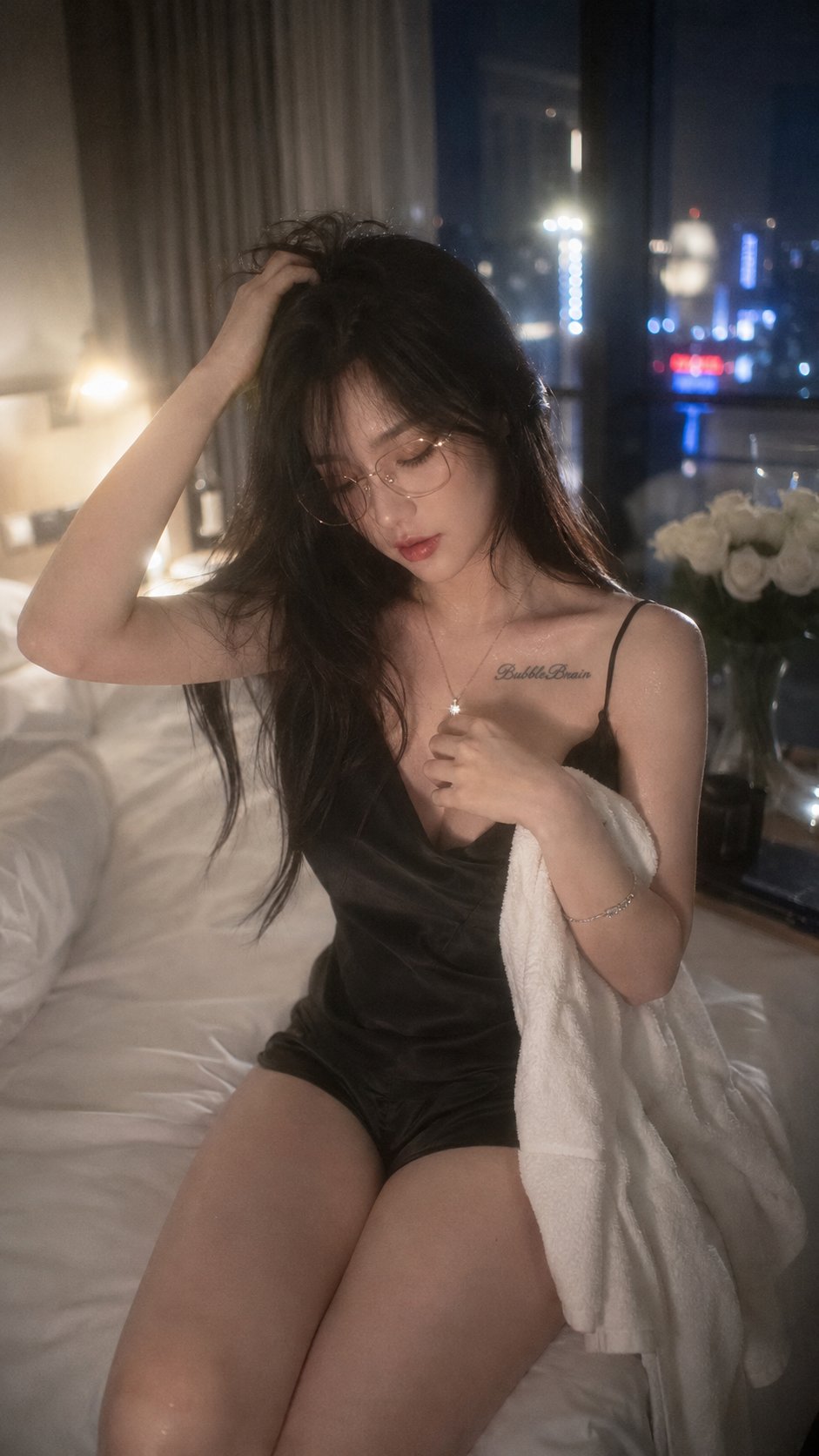
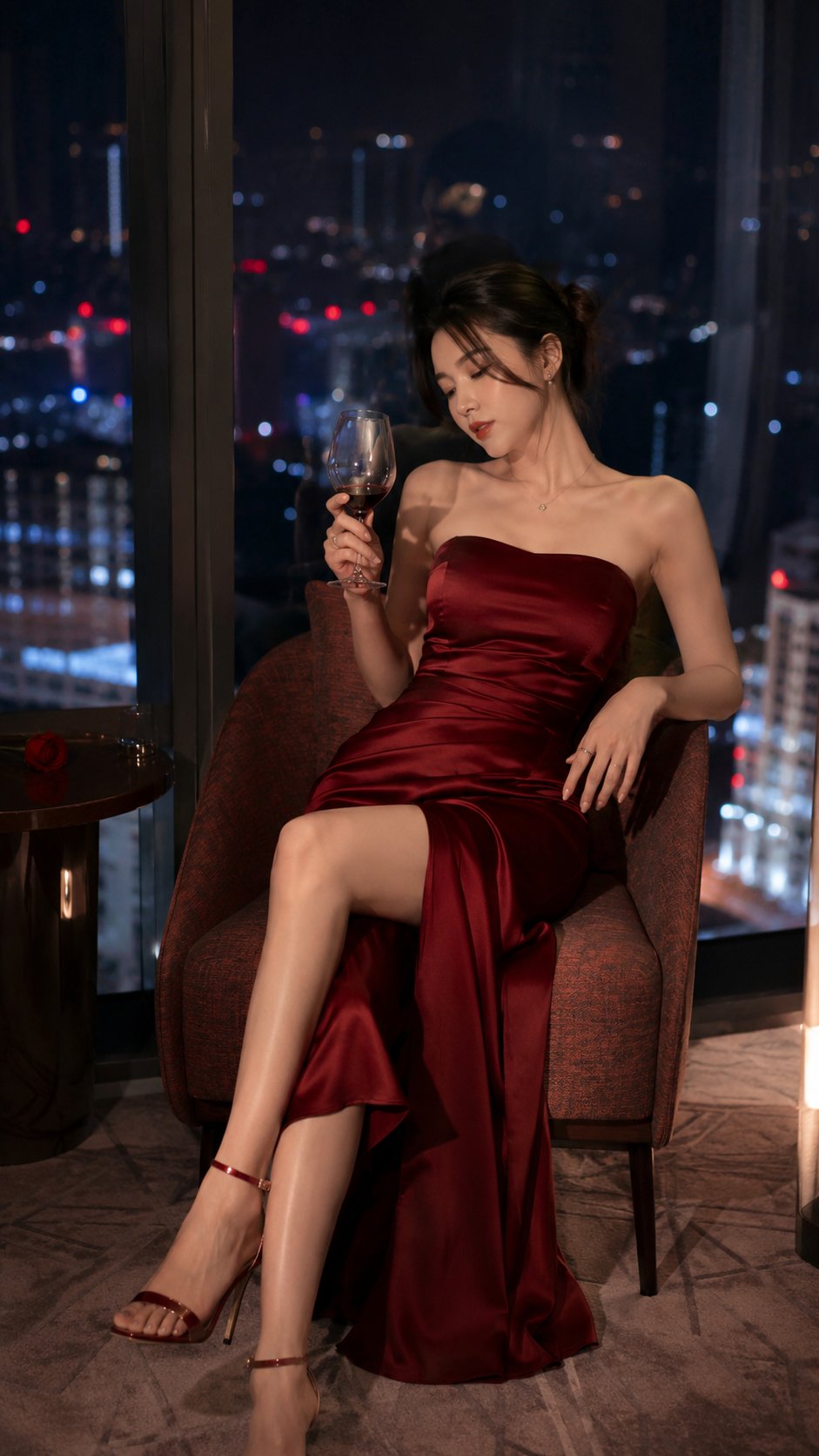
Create a single ultra-realistic vertical 9:16 portrait photo, 4K cinematic quality, no text, no collage. Theme: Luxury high-rise hotel night aesthetic portrait, elegant white aesthetic. Style: Urban mature elegance, quiet luxury, soft fashion editorial, minimalist sophistication, East Asian luxury portrait style. Scene: Inside a modern high-rise hotel room at night. A young adult woman sits gracefully on a comfortable armchair beside a floor-to-ceiling window overlooking a blurred city skyline full of bokeh lights. Outfit: Pearl white satin strapless evening gown, premium silk fabric, elegant drape, smooth silhouette, natural folds, no jacket, no stockings. Pose: Relaxed posture, body slightly leaning sideways, shoulders relaxed, waist gently turned toward the camera. One hand holds a wine glass, the other hand naturally rests on the chair arm or dress. One leg naturally extended, the other slightly bent inward. Legs remain clearly separated from the chair and dress. Expression: Quiet after a slight buzz from wine, soft sleepy eyes, slightly unfocused gaze, calm, thoughtful, gentle and relaxed expression. Lighting: Soft neutral hotel lighting, low-contrast cinematic diffusion, subtle rim lighting, realistic shadows, delicate reflections on glass and satin fabric. Skin: Natural matte makeup, realistic skin texture, detailed pores, authentic skin tones, no excessive shine, no wax figure appearance. Composition: Medium-to-full body portrait, subject occupies about 70% of the frame, very little empty space above the head, fashion magazine editorial framing. Background: Floor-to-ceiling glass window with blurred city night lights, elegant curtains, luxury hotel interior, subtle reflections on glass surfaces. Color palette: Pearl white, ivory, champagne white, beige, silver accents, warm ambient hotel tones. Mood: Expensive, elegant, dreamy, cinematic, peaceful, sophisticated. Avoid: Tourist photo composition, nightclub vibe, overexposed skin, huge empty headspace, extra fingers, deformed wine glass, blurry legs, cartoon look, AI artifacts, cheap hotel aesthetic.