Case Media
Case Notes
This page keeps the media, full prompt, and original source together so you can inspect the result first and decide whether the prompt is worth copying, saving, or comparing.
Case Insights
To make this page easier to search, cite, and reuse later, the case is also broken down into practical guidance about usage, visual cues, and prompt structure.
Best Fit Scenarios
- Use this as a portrait & photography benchmark when you need a fast style baseline before rewriting your own prompt.
- It is especially helpful if your target overlaps with 35mm, Portrait, Fashion and you want to judge the image result before tuning wording.
- Keep it as a control sample when you compare nearby prompt variants one variable at a time.
Visual Signals To Notice
- The clearest style signals here are 35mm, Portrait, Fashion, so those should usually stay in your first rewrite.
- Focus on framing, light direction, pose, and the distance between subject and camera.
- This case keeps one primary output, so the first image should be treated as the main visual reference.
How The Prompt Is Structured
- The prompt reads as a long, highly specified prompt, which is useful when you want to judge how much specificity this direction needs.
- Its keyword cluster is centered on 35mm, Portrait, Fashion, so you can usually keep that cluster while swapping subject, camera, layout, or copy details.
- A practical rewrite path is: keep the outcome, keep the strongest style cues, then replace only the subject and environment blocks.
Good Follow-up Questions
- What changes first if you keep 35mm, Portrait, Fashion but switch the subject matter?
- Which part of the result comes from section-level structure (Portrait & Photography) versus tag-level style cues?
- Which related cases in the same section give you a cleaner or more extreme variation of the same direction?
Full Prompt
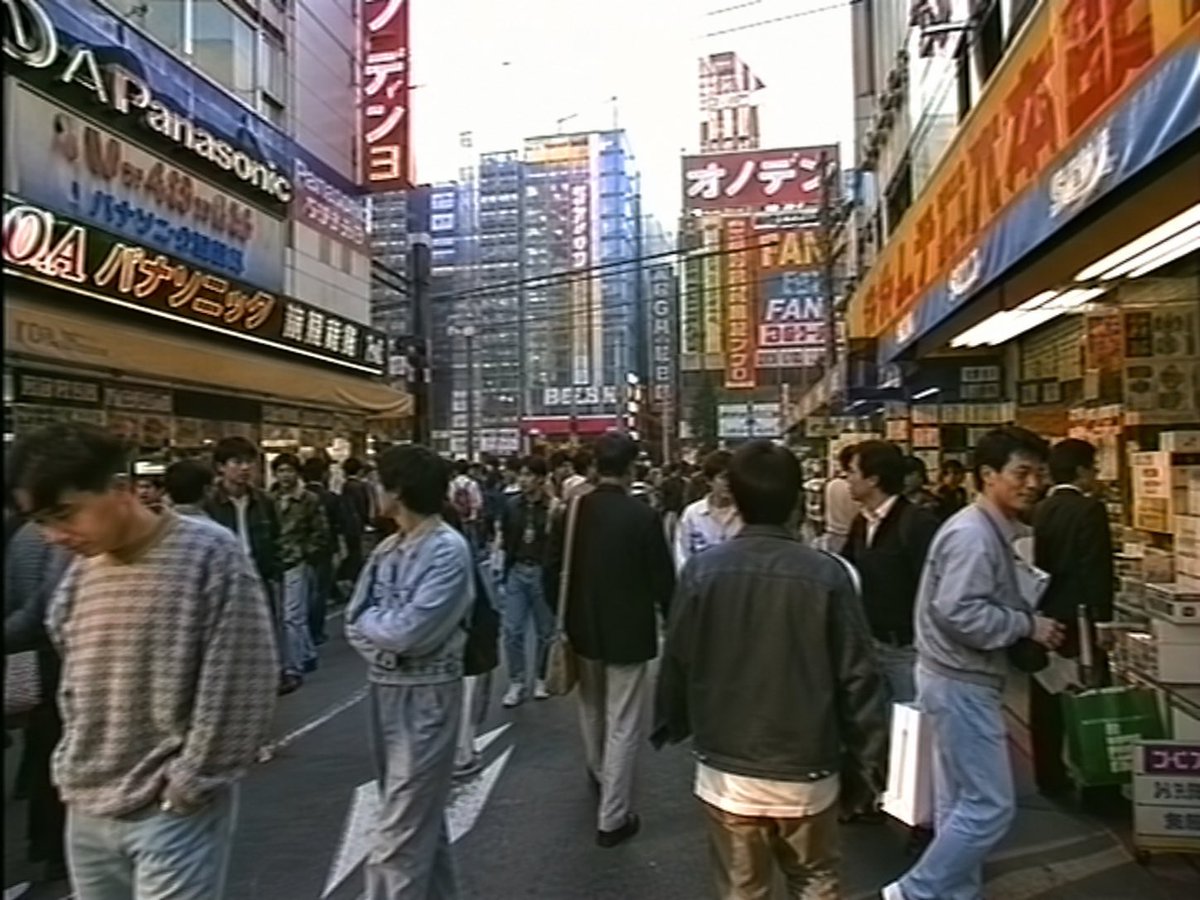
Create a photorealistic documentary street photograph of {argument name="location and era" default="Akihabara, Tokyo in the 1990s"}, shot from eye level in a narrow electronics shopping street at dusk or late afternoon. The scene contains about 30 visible pedestrians, mostly adult men in casual 1990s clothing such as denim jackets, plaid sweaters, light-wash jeans, bomber jackets, business suits, shoulder bags, and shopping bags; faces are soft, indistinct, or motion-blurred like an old candid TV still. The street is packed but not chaotic, with people standing, browsing, walking away from camera, and gathering near storefronts. Both sides of the street are lined with tall commercial buildings covered in dense Japanese electronics-store signage, including large vertical and horizontal signs with readable fragments such as {argument name="main sign text" default="オノデン"}, {argument name="store brand text" default="Panasonic"}, “FAN,” “BEST,” and other katakana shop signs. The left side has a prominent blue and yellow electronics storefront canopy, while the right side has an orange-and-blue shop awning, shelves, posters, and boxed merchandise displayed at the entrance. Overhead utility wires crisscross the bright washed-out sky between mid-rise buildings. Use a realistic 1990s Japanese consumer camcorder or VHS broadcast aesthetic: 4:3 aspect ratio, slightly low resolution, interlaced softness, muted colors, mild film grain, blown highlights in the sky, subtle barrel distortion, natural crowd clutter, and no modern smartphones, LED billboards, contemporary fashion, or futuristic elements.