Case Media
Case Notes
This page keeps the media, full prompt, and original source together so you can inspect the result first and decide whether the prompt is worth copying, saving, or comparing.
Case Insights
To make this page easier to search, cite, and reuse later, the case is also broken down into practical guidance about usage, visual cues, and prompt structure.
Best Fit Scenarios
- Use this as a portrait & photography benchmark when you need a fast style baseline before rewriting your own prompt.
- It is especially helpful if your target overlaps with Portrait, Fashion, Typography and you want to judge the image result before tuning wording.
- Keep it as a control sample when you compare nearby prompt variants one variable at a time.
Visual Signals To Notice
- The clearest style signals here are Portrait, Fashion, Typography, so those should usually stay in your first rewrite.
- Focus on framing, light direction, pose, and the distance between subject and camera.
- This case keeps 2 media outputs, which makes it easier to check whether the style remains stable across multiple results.
How The Prompt Is Structured
- The prompt reads as a long, highly specified prompt, which is useful when you want to judge how much specificity this direction needs.
- Its keyword cluster is centered on Portrait, Fashion, Typography, so you can usually keep that cluster while swapping subject, camera, layout, or copy details.
- A practical rewrite path is: keep the outcome, keep the strongest style cues, then replace only the subject and environment blocks.
Good Follow-up Questions
- What changes first if you keep Portrait, Fashion, Typography but switch the subject matter?
- Which part of the result comes from section-level structure (Portrait & Photography) versus tag-level style cues?
- Which related cases in the same section give you a cleaner or more extreme variation of the same direction?
Full Prompt
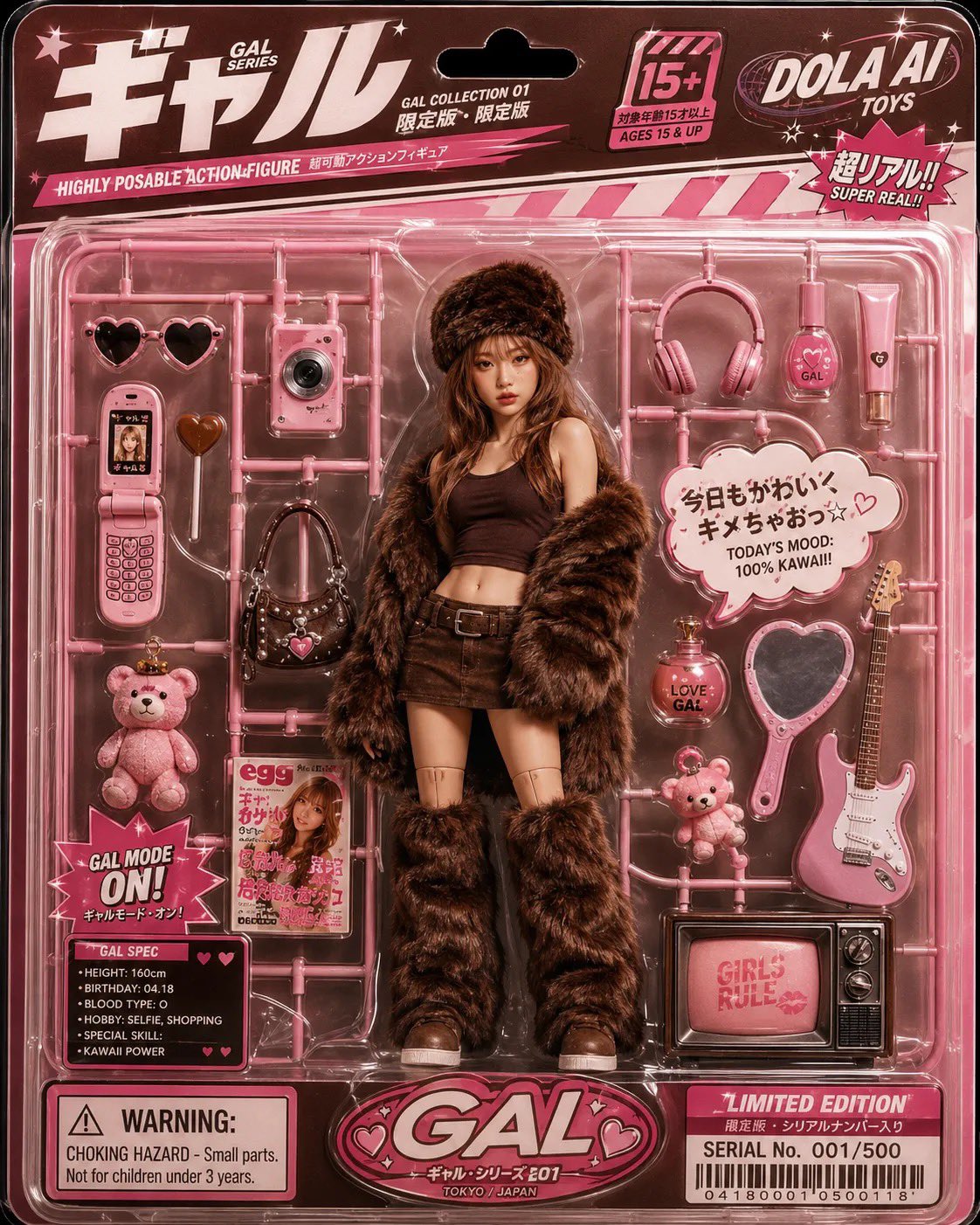
Transform [SUBJECT IMAGE] into a collectible toy model kit package while preserving the subject’s identity and overall silhouette. Place the subject inside a sealed transparent blister pack displayed front-facing like a retail toy. Style the subject as a stylized action figure / fashion doll version of themselves standing in the center, attached to a visible plastic sprue frame (model-kit runners) with multiple detachable accessories surrounding them. Packaging aesthetic: bold Japanese toy design, playful retro-futurism, glossy plastic reflections, exaggerated product graphics, sticker labels, warning icons, age rating, collectible branding, chaotic promotional text, and decorative typography. Surround the figure with themed accessories inspired by the subject’s personality and styling: gadgets, instruments, symbols, props, tiny companions, stickers, random novelty objects, and collectible pieces arranged symmetrically inside the sprue layout. Use highly saturated colors with one dominant palette color [PRIMARY COLOR]. Include fake product details such as: series title, edition number, slogan, and toy specifications. Lighting: commercial product photography with reflective plastic highlights and crisp studio illumination. Final feeling: Japanese capsule toy × fashion editorial × collectible figure × surreal packaging design. Preserve the full package view including header card, hang-tab slot, transparent plastic wrap, accessory frame, stickers, and retail presentation.