Case Media
Case Notes
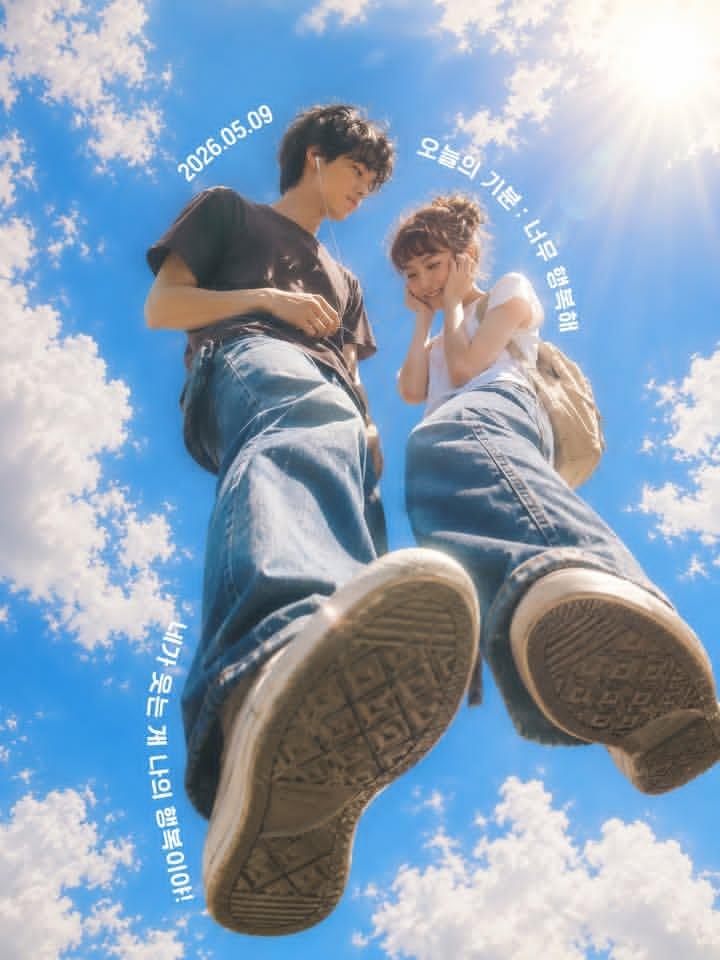
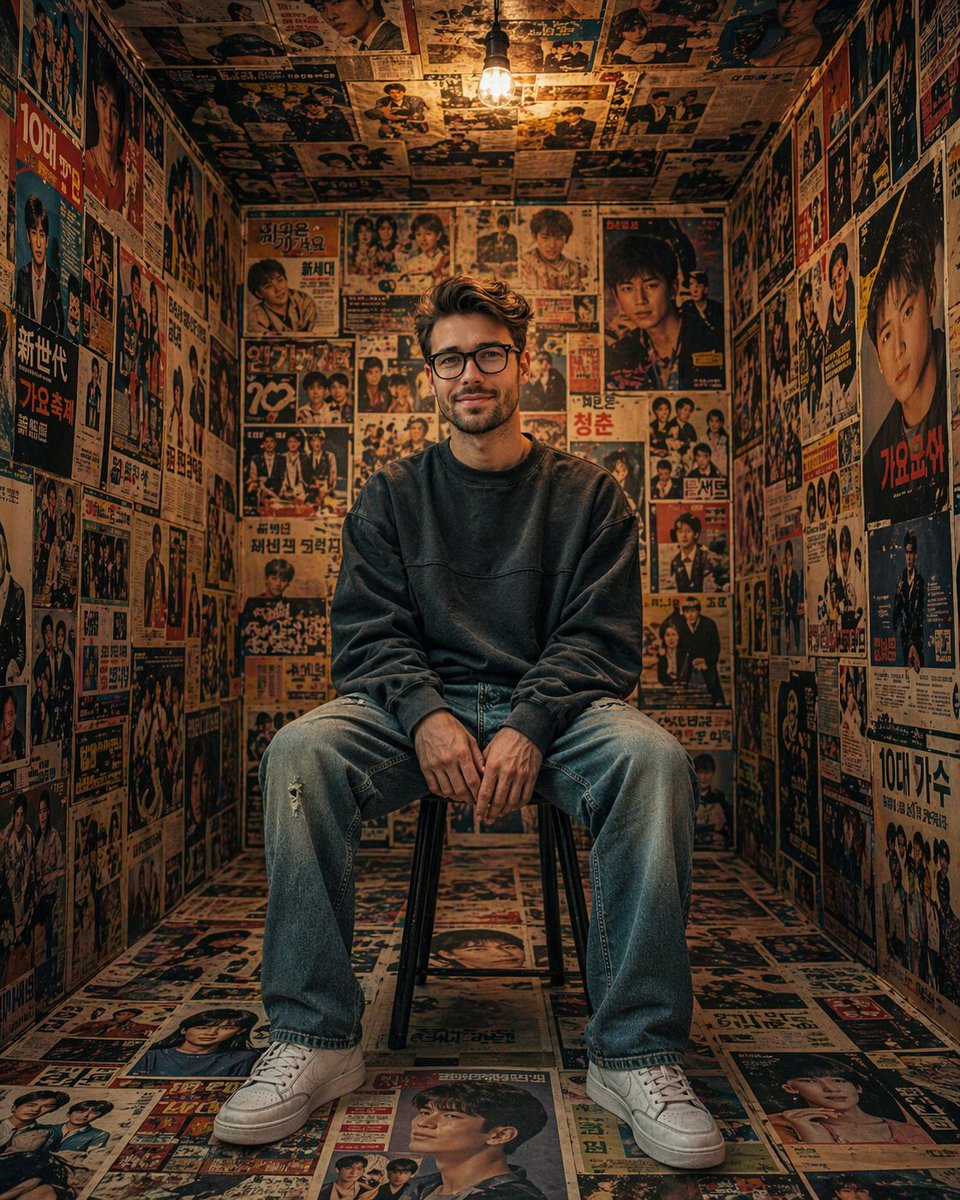
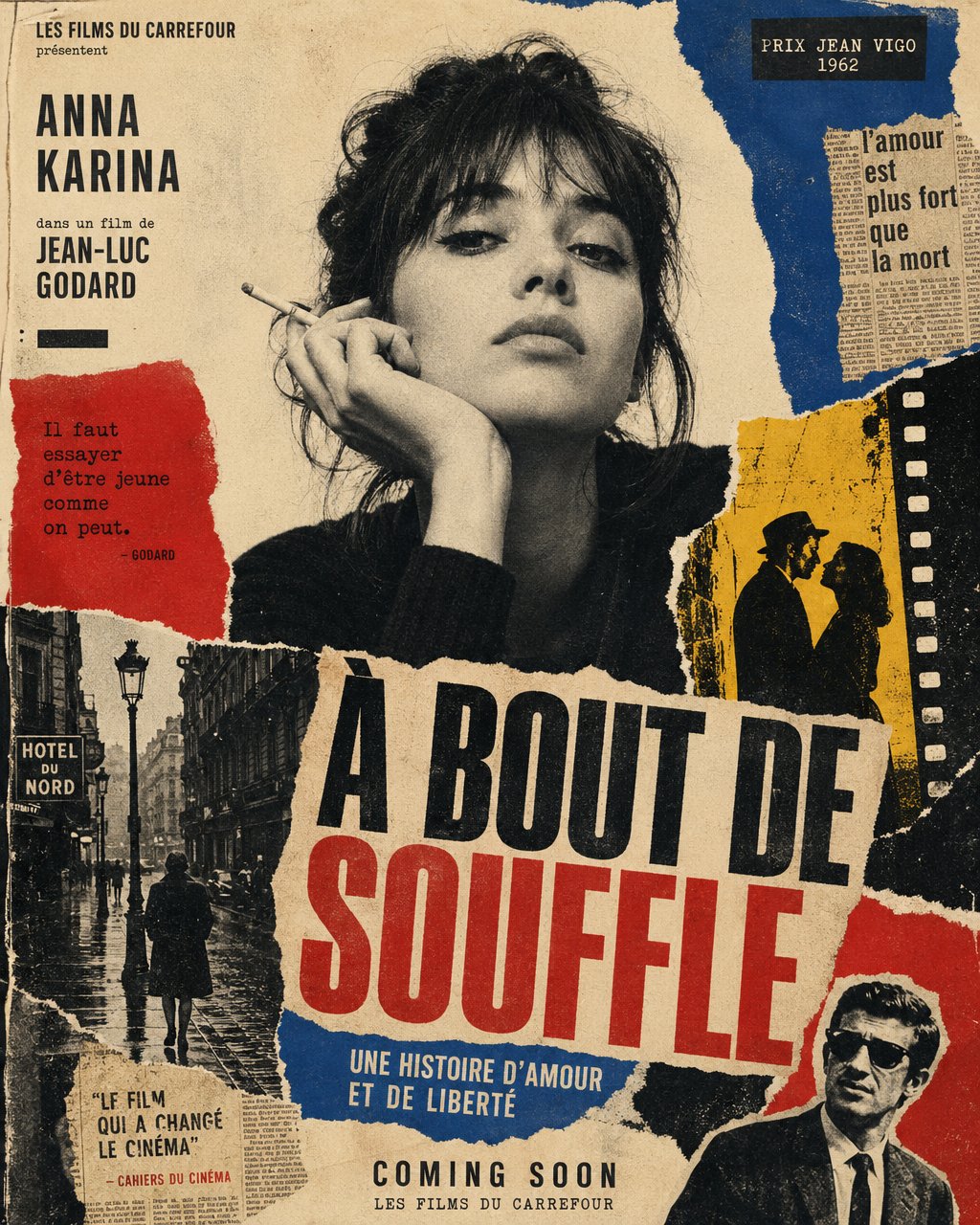
This page keeps the media, full prompt, and original source together so you can inspect the result first and decide whether the prompt is worth copying, saving, or comparing.
Case Insights
To make this page easier to search, cite, and reuse later, the case is also broken down into practical guidance about usage, visual cues, and prompt structure.
Best Fit Scenarios
- Use this as a portrait & photography benchmark when you need a fast style baseline before rewriting your own prompt.
- It is especially helpful if your target overlaps with 35mm, Portrait, Cinematic and you want to judge the image result before tuning wording.
- Keep it as a control sample when you compare nearby prompt variants one variable at a time.
Visual Signals To Notice
- The clearest style signals here are 35mm, Portrait, Cinematic, so those should usually stay in your first rewrite.
- Focus on framing, light direction, pose, and the distance between subject and camera.
- This case keeps one primary output, so the first image should be treated as the main visual reference.
How The Prompt Is Structured
- The prompt reads as a long, highly specified prompt, which is useful when you want to judge how much specificity this direction needs.
- Its keyword cluster is centered on 35mm, Portrait, Cinematic, so you can usually keep that cluster while swapping subject, camera, layout, or copy details.
- A practical rewrite path is: keep the outcome, keep the strongest style cues, then replace only the subject and environment blocks.
Good Follow-up Questions
- What changes first if you keep 35mm, Portrait, Cinematic but switch the subject matter?
- Which part of the result comes from section-level structure (Portrait & Photography) versus tag-level style cues?
- Which related cases in the same section give you a cleaner or more extreme variation of the same direction?
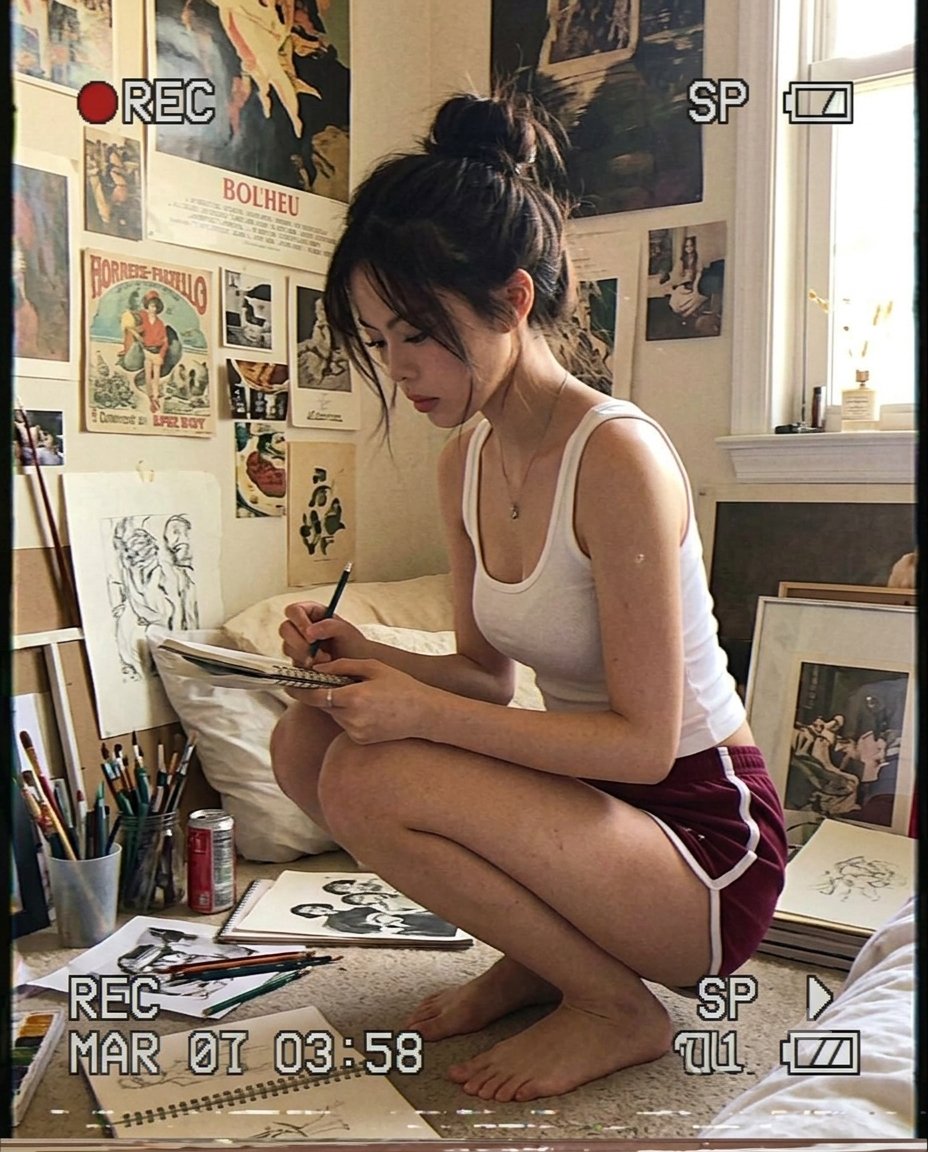
Full Prompt
Create image: use the attached image for facial reference. Preserve the exact facial features, facial proportions, and overall facial harmony with high precision. Maintain authentic facial asymmetry without beautification drift or facial reinterpretation. Create an authentic paused-frame snapshot from a late-90s / pre-2000s handheld camcorder recording inside a small bedroom art studio during daytime. SCENE: A young woman crouches barefoot on the floor while sketching quietly inside a cluttered bedroom filled with posters, vintage prints, and scattered art materials. Her posture feels natural and unposed, completely absorbed in the moment while soft daylight floods the room from the side. The atmosphere feels intimate, artistic, nostalgic, and emotionally personal — like forgotten home-video footage recorded during a quiet afternoon years ago. HAIRSTYLE: Dark hair tied into a messy bun with loose strands falling naturally around the face. MAKEUP: Soft natural makeup, lightly defined eyes, muted lips, subtle analog softness from low-resolution tape rendering. SKIN DETAILS: Soft natural skin texture partially softened by analog camcorder recording. Gentle tonal gradients, realistic facial depth, slight highlight bloom on skin under direct daylight. OUTFIT: White fitted tank top, vintage maroon athletic shorts with white trim, relaxed home-studio styling, barefoot casual posture. ENVIRONMENT: Small creative bedroom with taped posters, retro wall art, old wooden furniture, scattered papers, soft carpet texture, warm daylight entering from the left side, nostalgic DIY creative atmosphere. COMPOSITION: Authentic handheld camcorder framing with slight downward angle and imperfect balance. Subject positioned slightly right-of-center while the room details remain highly visible for environmental storytelling. Approximately 20% headroom preserved above the subject. Natural amateur framing typical of old home-video recordings. LIGHTING: Strong daylight entering from one side causing slight overexposure on walls and floor. Uneven indoor exposure with weak dynamic range typical of consumer camcorder footage. Soft shadow retention with natural light falloff toward darker corners of the room. CAMCORDER / VHS RENDERING: Authentic pre-2000s VHS camcorder recording aesthetic. Visible tape grain, faint interlacing, analog instability, frame blending, softened edge detail, slight motion smear, chroma bleeding, low-resolution rendering, tape compression artifacts, unstable white balance, fluctuating exposure, subtle horizontal tracking noise, temporal blur, noisy shadow regions, and emotional home-video realism. Preserve recognizable facial detail while maintaining genuine tape softness. COLOR SCIENCE: Warm faded analog tones with soft cream whites, dusty reds, muted browns, pale daylight highlights, slightly yellowed indoor rendering, and nostalgic VHS color drift. Maintain readable shadows without muddy blacks. AUTHENTIC CAMCORDER OVERLAY: Burned-in camcorder overlay integrated naturally into the footage: REC indicator, timestamp/date text, battery icon, tape counter, and SP recording mode using authentic aliased late-90s camcorder typography. AR 4:5 NEGATIVE PROMPT: modern smartphone clarity, DSLR sharpness, cinematic grading, HDR processing, ultra-clean rendering, AI beauty smoothing, glossy influencer aesthetic, hyper-detailed pores, studio lighting, modern 4K sharpness, polished commercial photography, crisp digital blacks, oversaturated colors, fake film overlays, editorial fashion posing, unrealistic detail separation, perfect symmetry, modern luxury aesthetic.