Case Media
Case Notes
This page keeps the media, full prompt, and original source together so you can inspect the result first and decide whether the prompt is worth copying, saving, or comparing.
Case Insights
To make this page easier to search, cite, and reuse later, the case is also broken down into practical guidance about usage, visual cues, and prompt structure.
Best Fit Scenarios
- Use this as a portrait & photography benchmark when you need a fast style baseline before rewriting your own prompt.
- It is especially helpful if your target overlaps with Portrait, Cinematic, Fashion and you want to judge the image result before tuning wording.
- Keep it as a control sample when you compare nearby prompt variants one variable at a time.
Visual Signals To Notice
- The clearest style signals here are Portrait, Cinematic, Fashion, so those should usually stay in your first rewrite.
- Focus on framing, light direction, pose, and the distance between subject and camera.
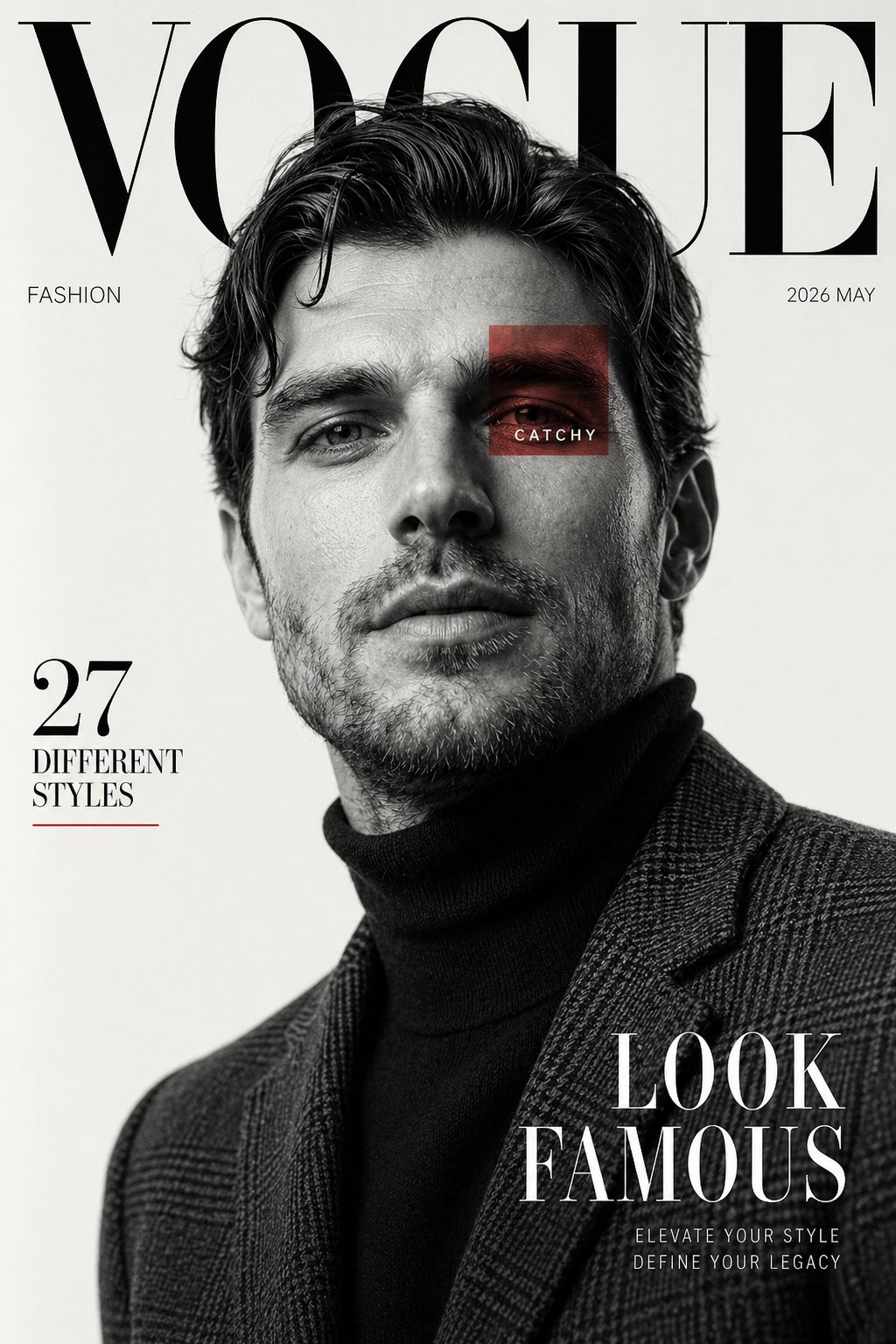
- This case keeps one primary output, so the first image should be treated as the main visual reference.
How The Prompt Is Structured
- The prompt reads as a long, highly specified prompt, which is useful when you want to judge how much specificity this direction needs.
- Its keyword cluster is centered on Portrait, Cinematic, Fashion, so you can usually keep that cluster while swapping subject, camera, layout, or copy details.
- A practical rewrite path is: keep the outcome, keep the strongest style cues, then replace only the subject and environment blocks.
Good Follow-up Questions
- What changes first if you keep Portrait, Cinematic, Fashion but switch the subject matter?
- Which part of the result comes from section-level structure (Portrait & Photography) versus tag-level style cues?
- Which related cases in the same section give you a cleaner or more extreme variation of the same direction?
Full Prompt
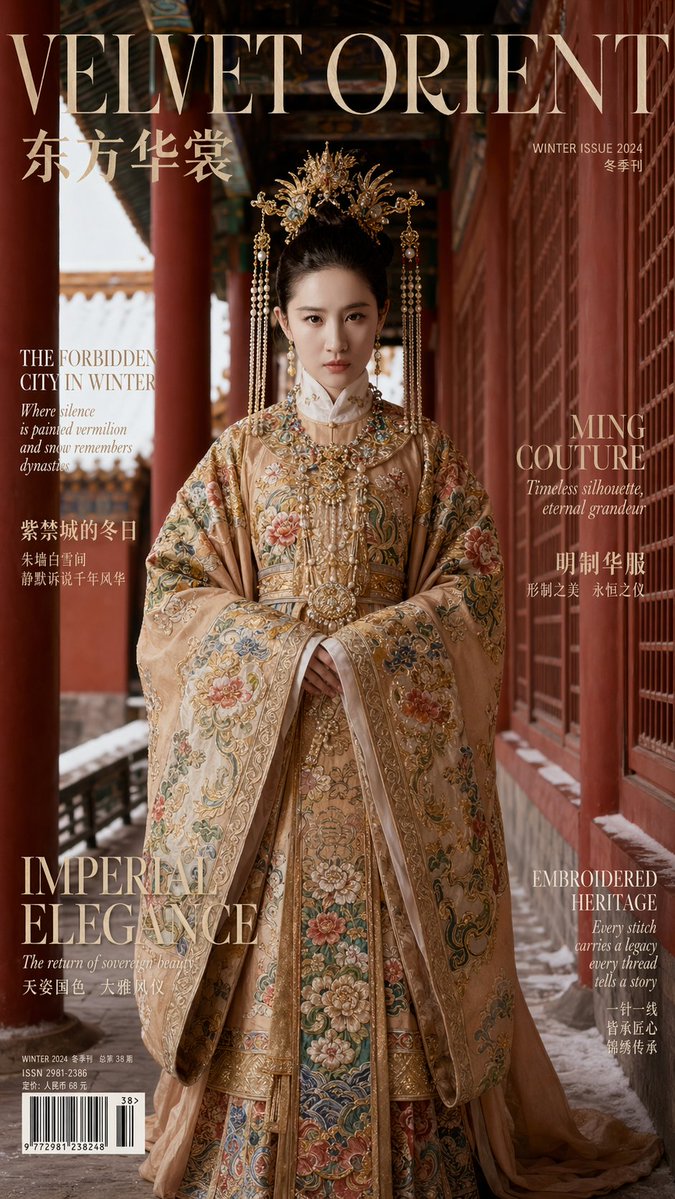
Aspect Ratio: 9:16 Vertical 【IDENTITY & REALISM (CRITICAL PRIORITY)】 The subject is an adult female whose facial features and bone structure must 100% perfectly match the provided FACE_REF image. Eye spacing, nose bridge, jawline, and cheekbone structure must be exact; no identity drift is allowed. Skin texture must be photorealistic, showing pores and fine details—do not over-smooth or apply an Instagram filter look. 【PHOTOGRAPHY & CINEMATOGRAPHY】 A high-end editorial fashion photograph with a cinematic quality, rivaling covers of Vogue, Harper’s Bazaar, or ELLE. Lens & Focus: Use an 85mm lens (for medium shot) or 50mm/70mm (for full body) with a shallow depth of field. The subject's eyes must be perfectly sharp. Lighting: Natural winter daylight supplemented by soft, professional fill light. Gold ornaments and precious stones should have realistic specular highlights without being blown out. Embroidery textures must be incredibly sharp and tactile. Color Grading: Rich, cinematic colors. The red walls and the attire's main color must be distinct and clean, not muddy. The overall image should feel deep, textured, and expensive. Composition: A clean magazine cover layout with deliberate negative space at the top or sides for typography. No torn paper or hand-drawn effects. 【SETTING: FORBIDDEN CITY WINTER】 The location is a red-walled long corridor in the Beijing Forbidden City. Environment: Visible details include vermilion walls, red pillars, intricate carved windows, and painted wooden beams with strong perspective depth. The scene must be clean: no tourists, modern signs, or watermarks. Weather Condition (Selected Randomly): [If Snowfall selected]: Fine snowflakes are gently falling. [If Post-Snow selected]: The air is crisp and clear, with remnant snow on the eaves and steps. 【WARDROBE: MING DYNASTY HEAVY INDUSTRY COUTURE】 The subject wears opulent, multi-layered Ming Dynasty ceremonial Hanfu. The aesthetic is gold-heavy, dense tassels, phoenix crown, large-area woven gold embroidery, complex layering, dignified and luxurious. Structure: A visible, crisp white standing inner collar provides a clean boundary. Over this is a structured duijin ao (jacket) with wide sleeves, topped by a heavy xiapei/pibo (stole) structure held by a large central yajin ornament. Fabric & Craft: The main fabric is real zhijin jin (woven gold brocade) with palpable fiber texture. The embroidery is heavy industry—using panjin goldwork, couched gold