Case Media
Case Notes
This page keeps the media, full prompt, and original source together so you can inspect the result first and decide whether the prompt is worth copying, saving, or comparing.
Case Insights
To make this page easier to search, cite, and reuse later, the case is also broken down into practical guidance about usage, visual cues, and prompt structure.
Best Fit Scenarios
- Use this as a portrait & photography benchmark when you need a fast style baseline before rewriting your own prompt.
- It is especially helpful if your target overlaps with Portrait, Fashion, Poster and you want to judge the image result before tuning wording.
- Keep it as a control sample when you compare nearby prompt variants one variable at a time.
Visual Signals To Notice
- The clearest style signals here are Portrait, Fashion, Poster, so those should usually stay in your first rewrite.
- Focus on framing, light direction, pose, and the distance between subject and camera.
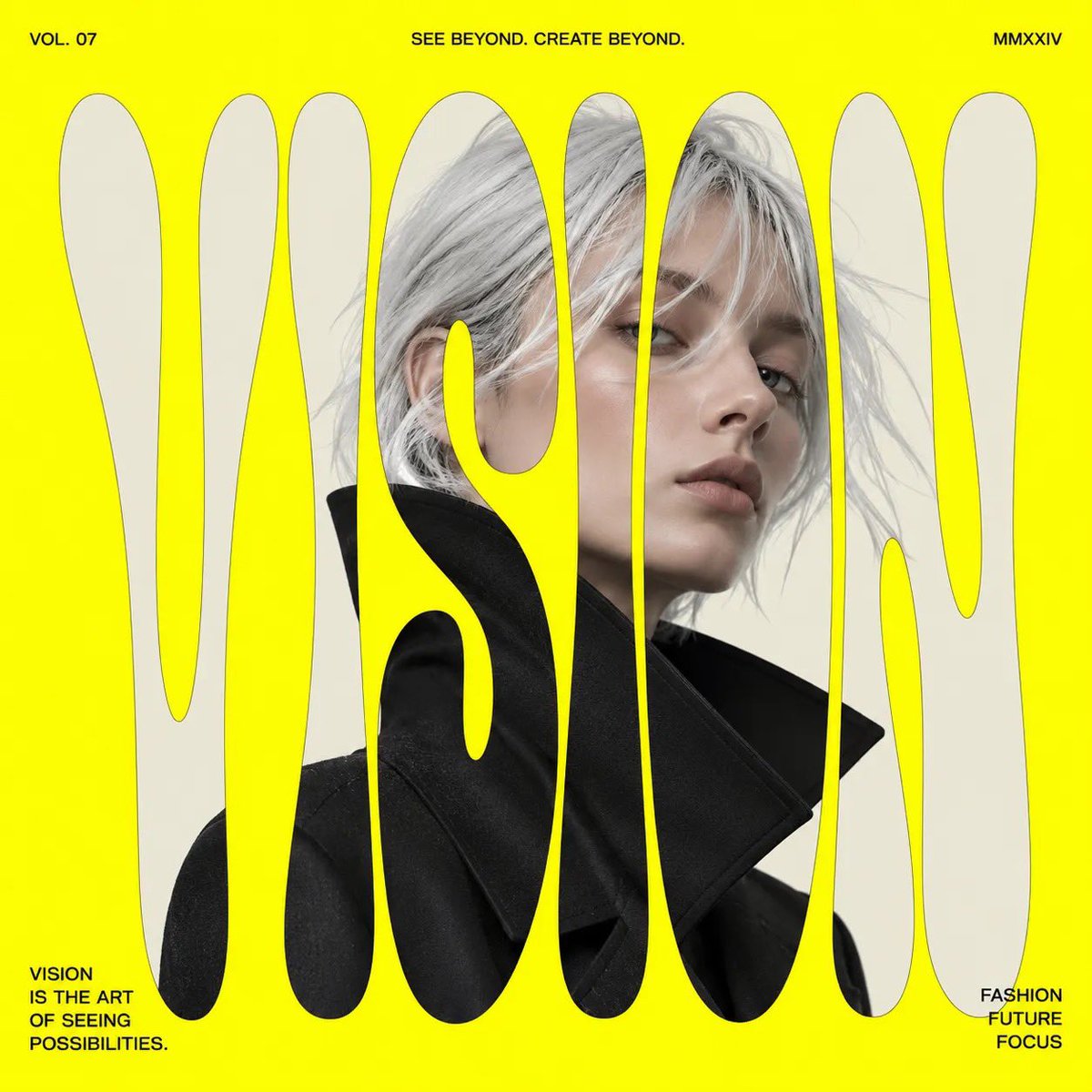
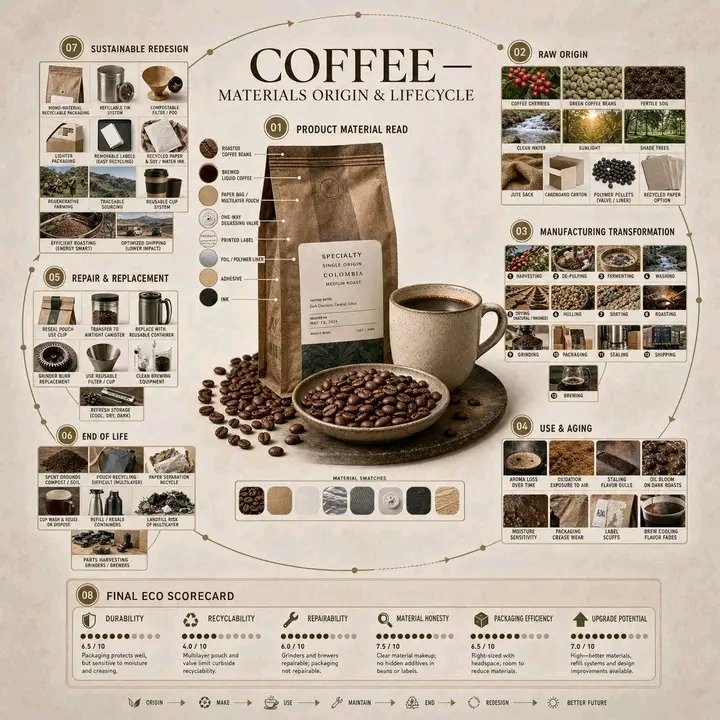
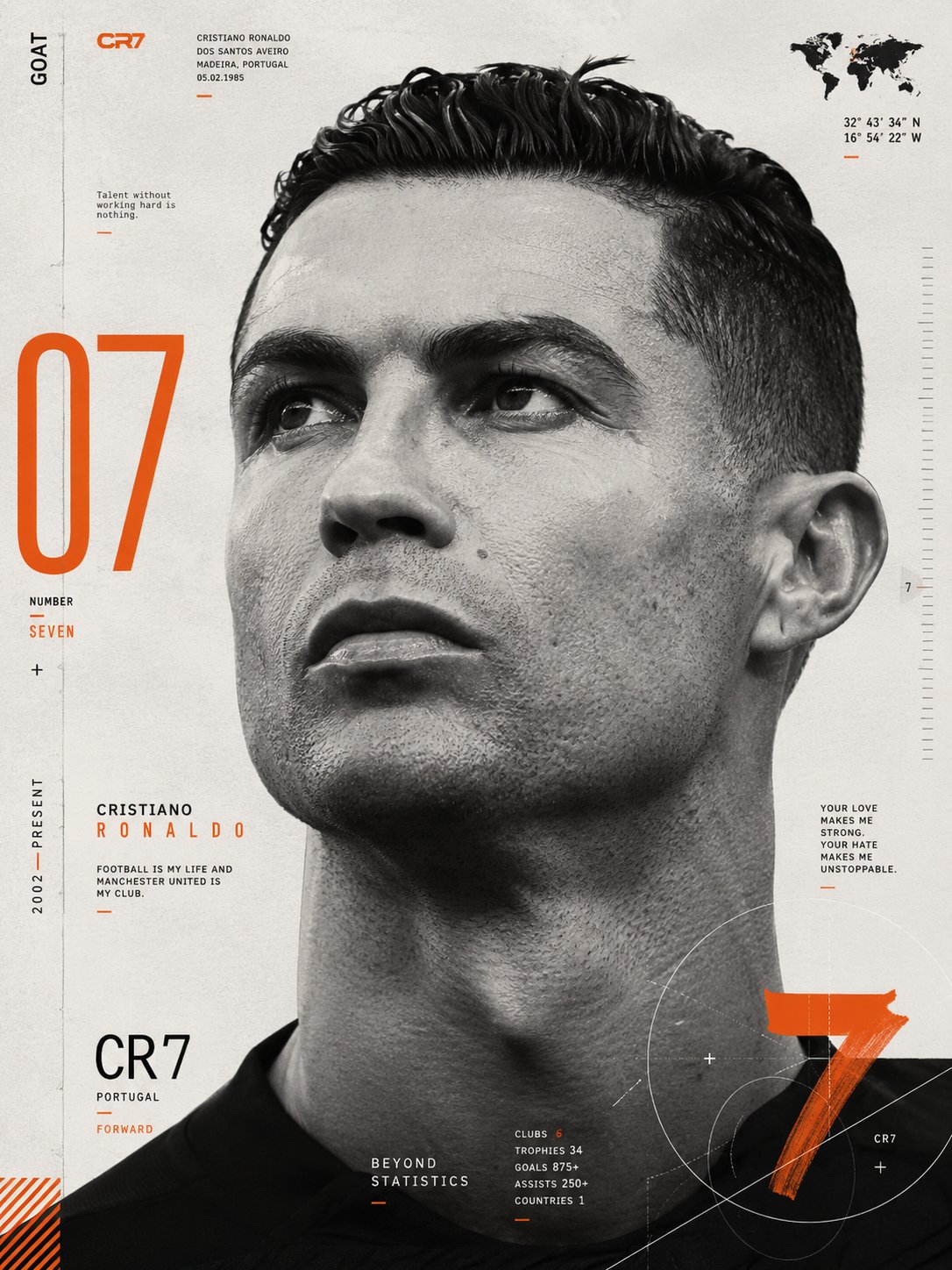
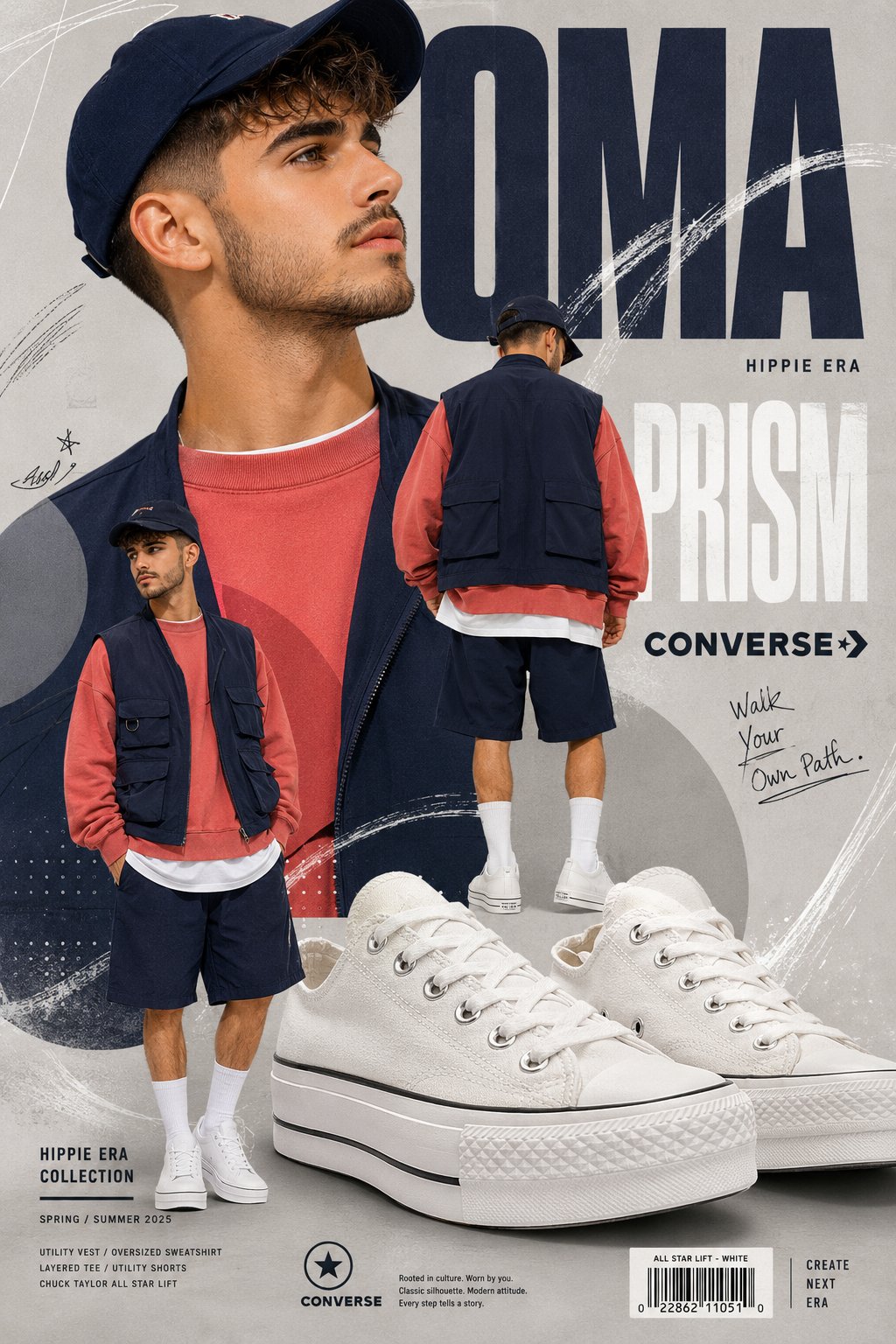
- This case keeps 4 media outputs, which makes it easier to check whether the style remains stable across multiple results.
How The Prompt Is Structured
- The prompt reads as a long, highly specified prompt, which is useful when you want to judge how much specificity this direction needs.
- Its keyword cluster is centered on Portrait, Fashion, Poster, so you can usually keep that cluster while swapping subject, camera, layout, or copy details.
- A practical rewrite path is: keep the outcome, keep the strongest style cues, then replace only the subject and environment blocks.
Good Follow-up Questions
- What changes first if you keep Portrait, Fashion, Poster but switch the subject matter?
- Which part of the result comes from section-level structure (Portrait & Photography) versus tag-level style cues?
- Which related cases in the same section give you a cleaner or more extreme variation of the same direction?
Full Prompt
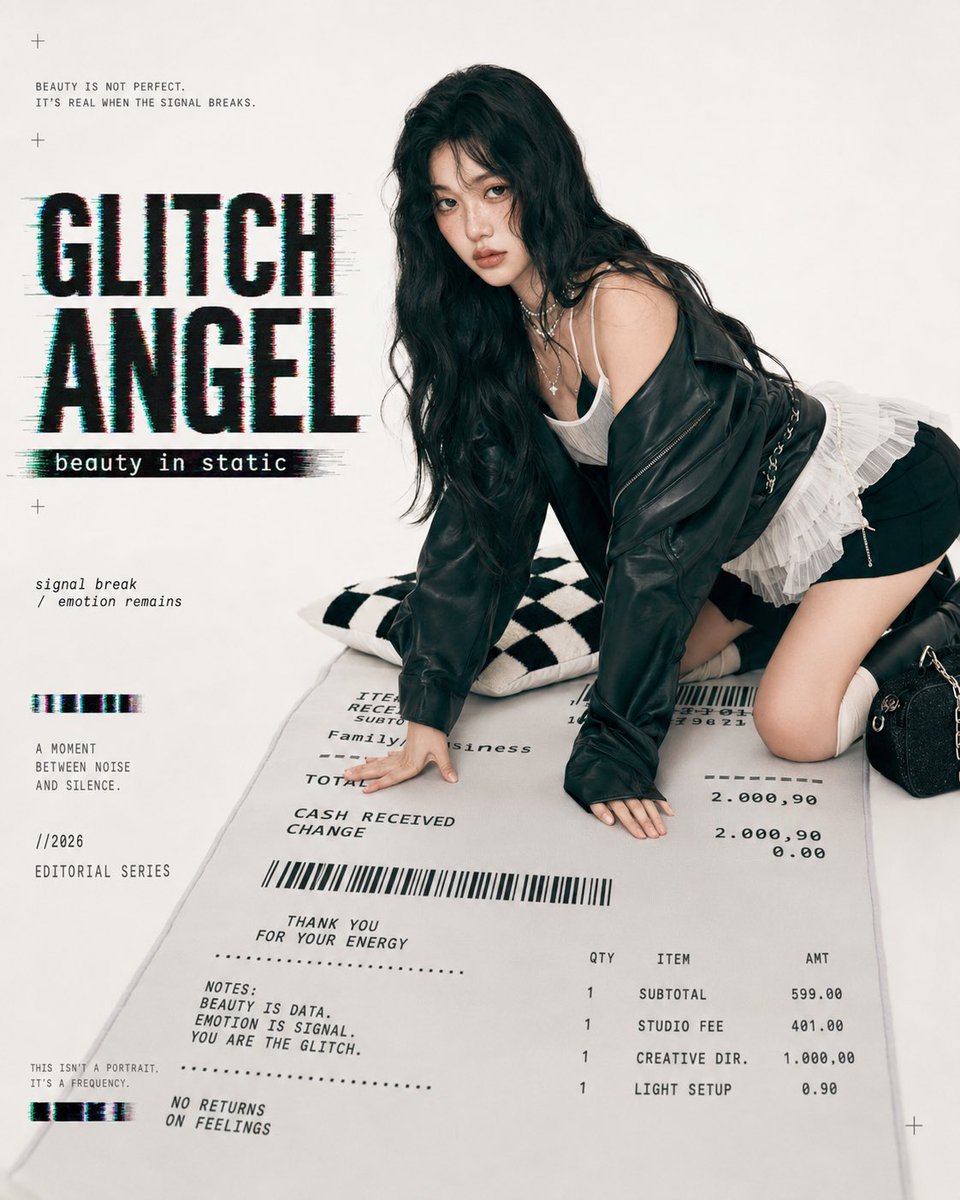
Create a high-end white studio fashion editorial poster with a glitch aesthetic, like a realistic magazine photoshoot mixed with an AI toy/catalog spread. Use a square canvas. The main subject is an adult female model with {argument name="hair style" default="long black slightly wavy hair"}, a cool distant gaze, realistic detailed skin, natural non-stiff expression, and a recognizable fashion-model presence. She is posed on all fours/kneeling forward on a large oversized printed receipt rug, body angled from center toward the right, wearing an oversized black leather jacket slipped off one shoulder, a white tank top, layered silver necklaces, a short black skirt or shorts with white pleated ruffle trim, and black boots; include a small black textured handbag near her right side and a black-and-white checkerboard cushion behind her hands. Keep the studio background seamless off-white with soft editorial lighting and subtle shadows. Design the image as a graphic poster with strong left-side typography and small technical details. Main headline text on the left: {argument name="headline text" default="GLITCH ANGEL"}, huge condensed bold black uppercase letters with RGB chromatic offset, scanline distortion, horizontal glitch streaks, and slight digital breakup. Under it, add a black strip subtitle reading {argument name="subtitle text" default="beauty in static"} in small monospaced lowercase white letters. At the top left, add small monospaced copy: "BEAUTY IS NOT PERFECT. / IT'S REAL WHEN THE SIGNAL BREAKS." Add tiny plus-sign registration marks near the corners and left margin. Add small editorial text blocks on the left: "signal break / emotion remains", a short colored glitch barcode, "A MOMENT BETWEEN NOISE AND SILENCE.", "//2026", "EDITORIAL SERIES", and near the bottom left: "THIS ISN'T A PORTRAIT. / IT'S A FREQUENCY." followed by another tiny glitch strip. The oversized receipt rug must contain readable black receipt-style monospaced printing, including a barcode, item table, and emotional editorial phrases. Include visible lines such as "CASH RECEIVED CHANGE", "THANK YOU FOR YOUR ENERGY", "NOTES: BEAUTY IS DATA. EMOTION IS SIGNAL. YOU ARE THE GLITCH.", "NO RETURNS ON FEELINGS", and an itemized list with quantities and amounts including "SUBTOTAL", "STUDIO FEE", "CREATIVE DIR.", and "LIGHT SETUP". Use scattered receipt numbers and barcode marks for realism. Overall color palette: off-white, black, charcoal leather, pale skin tones, with subtle cyan/red glitch fringes. The model should look like a real studio photograph, while the graphic typography and receipt details feel intentionally designed and editorial. Avoid extra subjects, avoid cartoon styling, avoid excessive clutter, and keep all text in English.