Case Media
Case Notes
This page keeps the media, full prompt, and original source together so you can inspect the result first and decide whether the prompt is worth copying, saving, or comparing.
Case Insights
To make this page easier to search, cite, and reuse later, the case is also broken down into practical guidance about usage, visual cues, and prompt structure.
Best Fit Scenarios
- Use this as a portrait & photography benchmark when you need a fast style baseline before rewriting your own prompt.
- It is especially helpful if your target overlaps with Portrait, Cinematic, Poster and you want to judge the image result before tuning wording.
- Keep it as a control sample when you compare nearby prompt variants one variable at a time.
Visual Signals To Notice
- The clearest style signals here are Portrait, Cinematic, Poster, so those should usually stay in your first rewrite.
- Focus on framing, light direction, pose, and the distance between subject and camera.
- This case keeps one primary output, so the first image should be treated as the main visual reference.
How The Prompt Is Structured
- The prompt reads as a long, highly specified prompt, which is useful when you want to judge how much specificity this direction needs.
- Its keyword cluster is centered on Portrait, Cinematic, Poster, so you can usually keep that cluster while swapping subject, camera, layout, or copy details.
- A practical rewrite path is: keep the outcome, keep the strongest style cues, then replace only the subject and environment blocks.
Good Follow-up Questions
- What changes first if you keep Portrait, Cinematic, Poster but switch the subject matter?
- Which part of the result comes from section-level structure (Portrait & Photography) versus tag-level style cues?
- Which related cases in the same section give you a cleaner or more extreme variation of the same direction?
Full Prompt
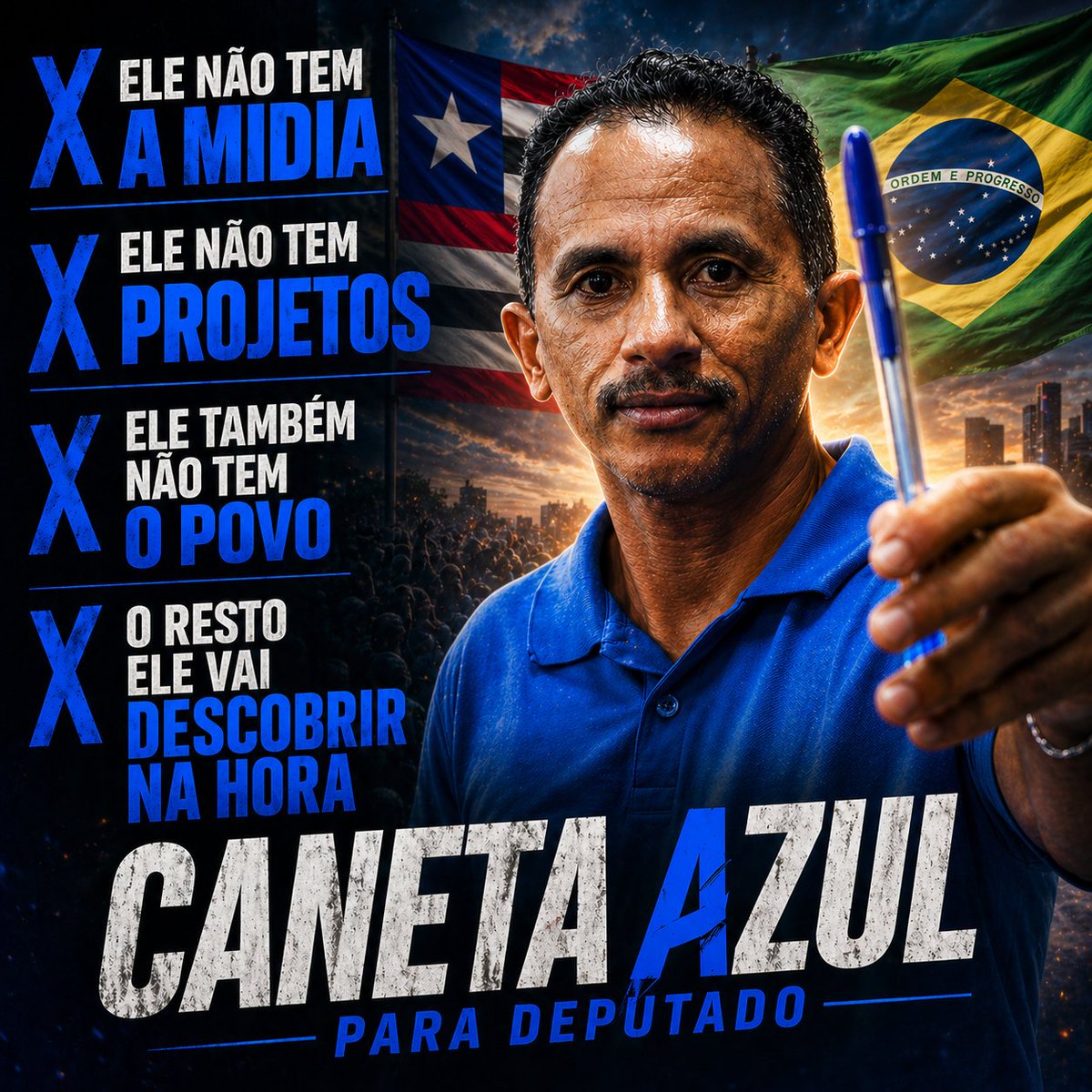
A dramatic Brazilian political campaign poster in a square social-media format, hyper-stylized and cinematic, with a dark blue and black color grade, intense contrast, gritty textures, and heroic propaganda-poster composition. On the right half, a middle-aged man wearing a bright royal-blue polo shirt faces the camera from the chest up, extending one hand toward the viewer and prominently holding a blue ballpoint pen upright as the central symbolic object. His pose is confident, assertive, and campaign-like, with the pen close to the lens for forced perspective. Behind him, two large waving flags fill the upper background: the Puerto Rico flag on the upper left side behind the subject and the Brazil flag on the upper right side. The lower background shows a dark crowd silhouette and a distant city skyline at sunset with glowing orange light on the horizon, adding a rally atmosphere. On the left side, create a vertical stack of 4 bold campaign statements, each preceded by a large blue X marker. The 4 text blocks must read exactly: "ELE NÃO TEM A MIDIA", "ELE NÃO TEM PROJETOS", "ELE TAMBÉM NÃO TEM O POVO", and "O RESTO ELE VAI DESCOBRIR NA HORA". Use condensed uppercase typography, mixing white and electric blue emphasis words, with each statement separated by thin horizontal blue divider lines. At the bottom, place an oversized distressed headline in uppercase reading "CANETA AZUL", with "CANETA" in weathered white and "AZUL" in vivid blue, spanning almost the full width. Below it, add a secondary subtitle in uppercase blue italic condensed text reading "PARA DEPUTADO", flanked by thin blue horizontal lines. The overall design should feel like a viral meme campaign ad, bold, satirical, aggressive, and highly shareable, with dramatic rim lighting, sharpened details, realistic skin and fabric texture, and polished poster-quality compositing.