Case Media
Case Notes
This page keeps the media, full prompt, and original source together so you can inspect the result first and decide whether the prompt is worth copying, saving, or comparing.
Case Insights
To make this page easier to search, cite, and reuse later, the case is also broken down into practical guidance about usage, visual cues, and prompt structure.
Best Fit Scenarios
- Use this as a model & community benchmark when you need a fast style baseline before rewriting your own prompt.
- It is especially helpful if your target overlaps with Illustration, Typography, Comparison and you want to judge the image result before tuning wording.
- Keep it as a control sample when you compare nearby prompt variants one variable at a time.
Visual Signals To Notice
- The clearest style signals here are Illustration, Typography, Comparison, so those should usually stay in your first rewrite.
- This kind of case is strongest when you watch deltas: what changed, what broke, and which prompt choice caused that shift.
- This case keeps one primary output, so the first image should be treated as the main visual reference.
How The Prompt Is Structured
- The prompt reads as a medium-detail prompt with clear visual constraints, which is useful when you want to judge how much specificity this direction needs.
- Its keyword cluster is centered on Illustration, Typography, Comparison, so you can usually keep that cluster while swapping subject, camera, layout, or copy details.
- A practical rewrite path is: keep the outcome, keep the strongest style cues, then replace only the subject and environment blocks.
Good Follow-up Questions
- What changes first if you keep Illustration, Typography, Comparison but switch the subject matter?
- Which part of the result comes from section-level structure (Model & Community) versus tag-level style cues?
- Which related cases in the same section give you a cleaner or more extreme variation of the same direction?
Full Prompt
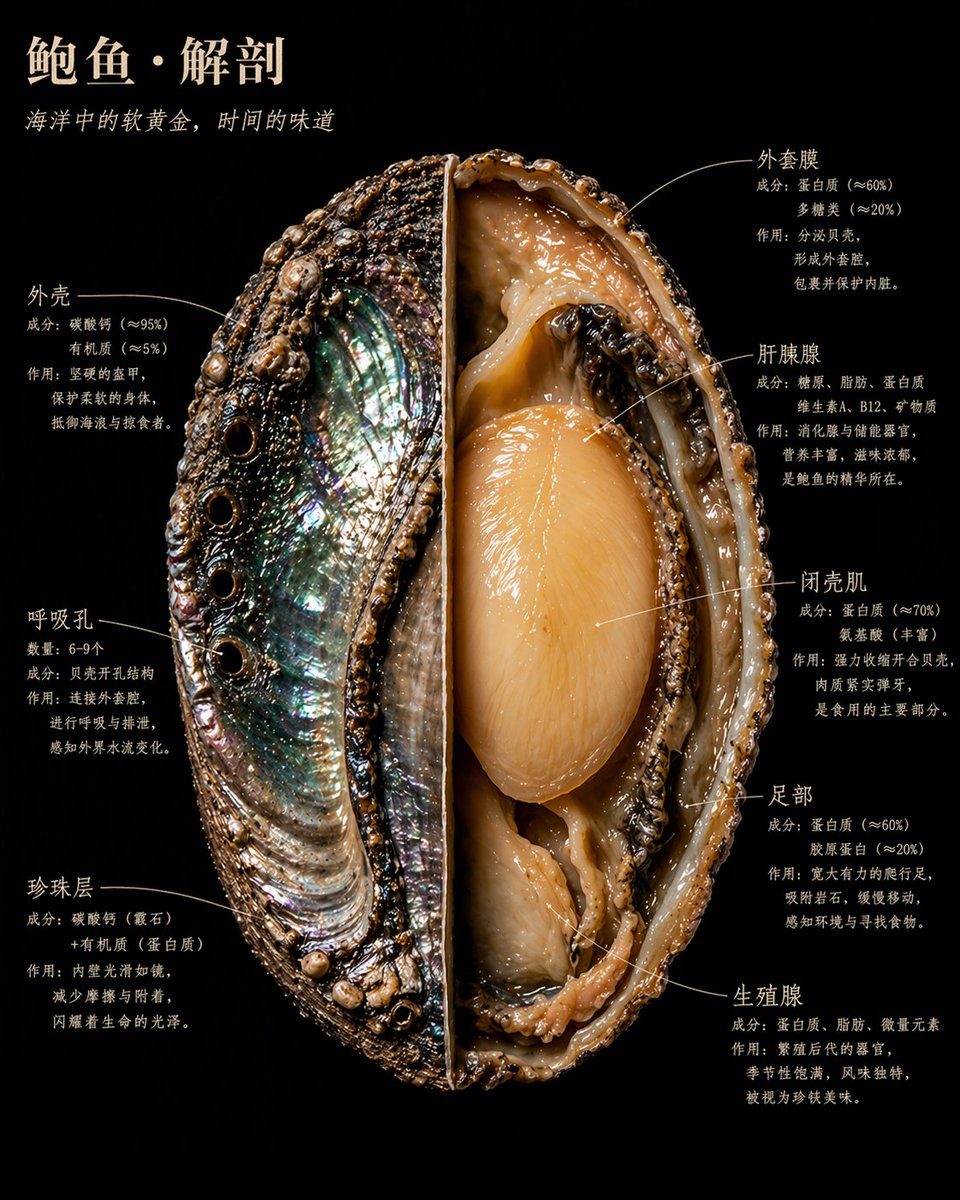
一颗/一块/一枚【食物名称】,以博物学大师发现野外标本的方式解剖。 剖开、展开、固定——如同博物馆的珍贵藏品, 却以卡拉瓦乔为《国家地理》掌镜时的光线照亮。 每一个内部结构都以自身的材质真相发光。 截面锋利得近乎暴力。内部美丽得近乎神圣。 画面中呈现完整标本: 一半保持原状,展示【外表面描述:质感/颜色/纹理】; 另一半剖开至核心,【内部核心结构描述:最重要的1—2个内部视觉特征】清晰可见。 【补充1—2句该食物最具视觉张力的横截面细节描述】 背景:纯粹的黑丝绒。 【食物名称】悬浮其中,如同某件珍贵而危险的事物。 标注文字紧贴结构边缘,手写感衬线字体,绝不悬空飘浮。 画面包含以下标注,每处标注三行:第一行结构名称,第二行成分数据,第三行一句人话: 【结构01名称】 【成分/数据说明】 【这个结构在做什么,为什么重要】 【结构02名称】 【成分/数据说明】 【这个结构在做什么,为什么重要】 【结构03名称】 【成分/数据说明】 【这个结构在做什么,为什么重要】 【结构04名称】 【成分/数据说明】 【这个结构在做什么,为什么重要】 【结构05名称】 【成分/数据说明】 【这个结构在做什么,为什么重要】 【结构06名称】 【成分/数据说明】 【这个结构在做什么,为什么重要】 省略其他如果有继续保持这个格式 主标题,左上角,暖象牙白大写字体: 【食物名称】·解剖 斜体副标题紧随其下: 【一句揭示这种食物本质的话,不超过15字】 整体气质:奥杜邦博物插画×卡拉瓦乔光影×有史以来最美的科学摄影。 4K精度,标本照明,极致内部细节。 没有任何临床感,一切都鲜活。 写实风格,非示意图,非卡通,非简化图解。 每一种材质都有真实的物理质感: 粗糙的、光滑的、湿润的、干燥的、致密的、疏松的。