Case Media
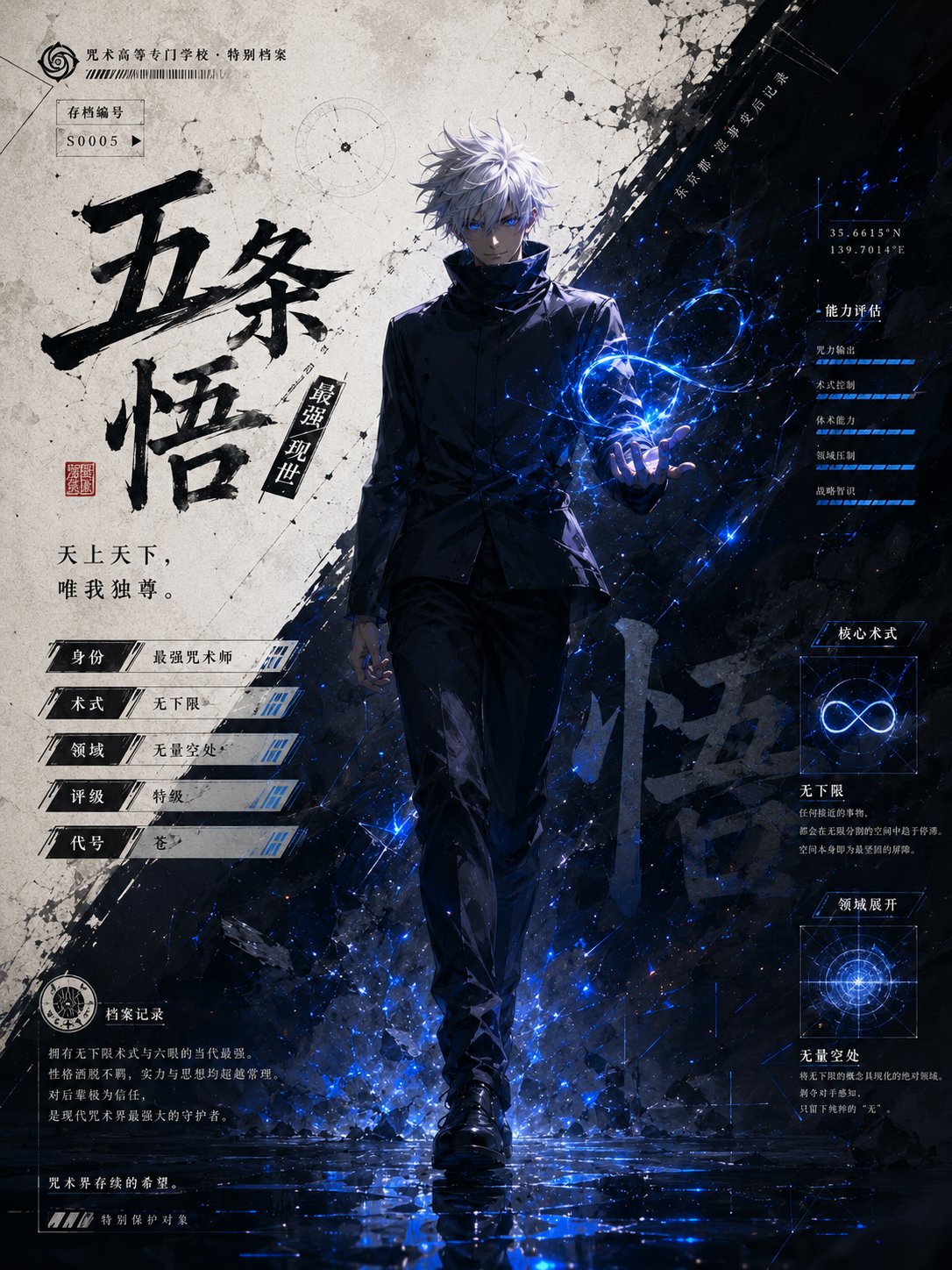
Case Notes
This page keeps the media, full prompt, and original source together so you can inspect the result first and decide whether the prompt is worth copying, saving, or comparing.
Case Insights
To make this page easier to search, cite, and reuse later, the case is also broken down into practical guidance about usage, visual cues, and prompt structure.
Best Fit Scenarios
- Use this as a character design benchmark when you need a fast style baseline before rewriting your own prompt.
- It is especially helpful if your target overlaps with Poster, Illustration, Character and you want to judge the image result before tuning wording.
- Keep it as a control sample when you compare nearby prompt variants one variable at a time.
Visual Signals To Notice
- The clearest style signals here are Poster, Illustration, Character, so those should usually stay in your first rewrite.
- Look at silhouette, costume language, mood styling, and whether the character reads clearly at a glance.
- This case keeps 2 media outputs, which makes it easier to check whether the style remains stable across multiple results.
How The Prompt Is Structured
- The prompt reads as a long, highly specified prompt, which is useful when you want to judge how much specificity this direction needs.
- Its keyword cluster is centered on Poster, Illustration, Character, so you can usually keep that cluster while swapping subject, camera, layout, or copy details.
- A practical rewrite path is: keep the outcome, keep the strongest style cues, then replace only the subject and environment blocks.
Good Follow-up Questions
- What changes first if you keep Poster, Illustration, Character but switch the subject matter?
- Which part of the result comes from section-level structure (Character Design) versus tag-level style cues?
- Which related cases in the same section give you a cleaner or more extreme variation of the same direction?
Full Prompt
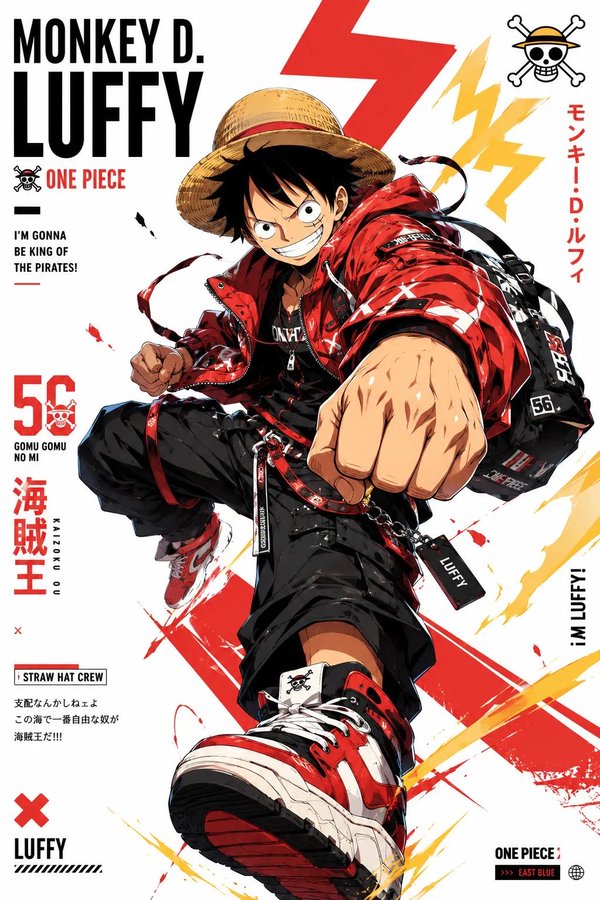
Please generate a high-completion 'Character Worldview Archive Card.' [Basic Settings] Character Name: [Name] Source Work: [Title] Role: [Protagonist / Villain / Mentor / Warrior / Mage / Ninja / Captain / Sorcerer / Elf, etc.] Main Title: [Must accurately display the character's full Chinese name, e.g., 漩涡鸣人] Subtitle: [Character title / Slogan / Role] Aspect Ratio: [3:4 Vertical] Main Colors: [e.g., Black & Orange, Black & Blue, Silver & Blue, etc.] Accent Colors: [e.g., Flame Orange, Electric Blue, Crimson, Gold, Cold White Light, etc.] Core Abilities: [e.g., Rasengan, Nine-Tails Power, Infinite Void, Omni-directional Mobility Gear, Ancient Magic, etc.] Iconic Elements: [e.g., Fox phantom, Flames, Mechanical devices, Astral circles, Blue energy, Ruined towers, etc.] [Overall Style] This is not a regular character illustration or a simple card; it is an 'anime character archive poster' with high information density, strong visual impact, a sense of character setting, and poster-level completion. The style merges character standee posters, visual archive design, Chinese typography posters, setting book covers, anime collectible cards, and high-end magazine layouts. The image must be exquisite, clear, cool, and impactful, with a complete information structure and a sense of a series. [Composition Requirements] Adopt a strong 'Diagonal Split Composition': - Top-left area: Light-colored negative space / Paper texture / Archive information area. - Bottom-right area: Dark-colored atmospheric area / Energy zone / Worldview scene area. - A clear diagonal boundary separates the two, creating strong visual tension. - The character stands full-body in the center, slightly centered, walking forward or standing firmly. - The character must be complete; do not crop the head or feet, and do not let text obscure the character. - The character should have a clear sense of being the protagonist, with a sense of pressure and presence. [Character Representation] Clear facial features and accurate expressions reflecting the character's typical temperament. High recognition of clothing, hairstyle, weapons, armor, devices, and accessories. Pose suggests walking forward or standing firmly with slight movement. Add energy effects related to their abilities around the character, such as smoke, flames, particles, magic circles, chakra, or lightning to enhance visual impact. [Background and Worldview] The background should be strongly related to the character setting: - Light area: May include old paper, worn textures, archive patterns, ink marks, stamps, and fine line frames. - Dark area: May include ruins, night sky, flames, energy vortexes, mechanical devices, ancient ruins, battlefields, or distant buildings. - The background should provide atmosphere without overshadowing the character. - Large semi-transparent Chinese characters can be added as a background watermark to enhance the design. [Text and Typography System] All main information should follow a Chinese layout, emphasizing the visual quality of a 'Chinese Character Archive Poster.' The main title must accurately show the [Character's full Chinese name] using large calligraphy/brush fonts with high visual impact, placed in the top-left light area. Smaller subtitle labels can be included, such as 'Strongest Sorcerer,' 'Ninja Archive,' or 'Captain of the Survey Corps.' [Information Module Suggestions] Include 5–8 concise archive information modules, such as: Identity, Faction, Goal, Weapon/Device, Core Technique/Skill, Rating, Code Name, Belief, Bonds, Combat Style, Ability Assessment, Archive Records, or Character Quotes. These can be arranged as horizontal bars on the left, small module boxes on the right, or short paragraph notes at the bottom. [Graphics and Decoration] Incorporate modern Chinese visual design elements: diagonal info bars, fine line borders, geometric guide lines, small data tags, serial numbers, coordinates, rating scales, small instruction boxes, red/black stamps, ink splashes, and semi-transparent large character backgrounds. Graphics should be auxiliary and not cluttered. [Atmosphere] The overall look should be premium, clear, collectible, and impactful, possessing the temperament of an anime character setting book and the power of Chinese poster design. [Special Requirements] 1. The main title must accurately display the character's full Chinese name without typos. 2. The character must be presented in full body. 3. The layout must use a 'Diagonal Cut' rather than a standard split. 4. All text is primarily in Chinese, with minimal English for numbering or decoration. 5. The final product should look like an 'Anime Character Archive Poster' rather than a standard promotional image.