Case Media
Case Notes
This page keeps the media, full prompt, and original source together so you can inspect the result first and decide whether the prompt is worth copying, saving, or comparing.
Case Insights
To make this page easier to search, cite, and reuse later, the case is also broken down into practical guidance about usage, visual cues, and prompt structure.
Best Fit Scenarios
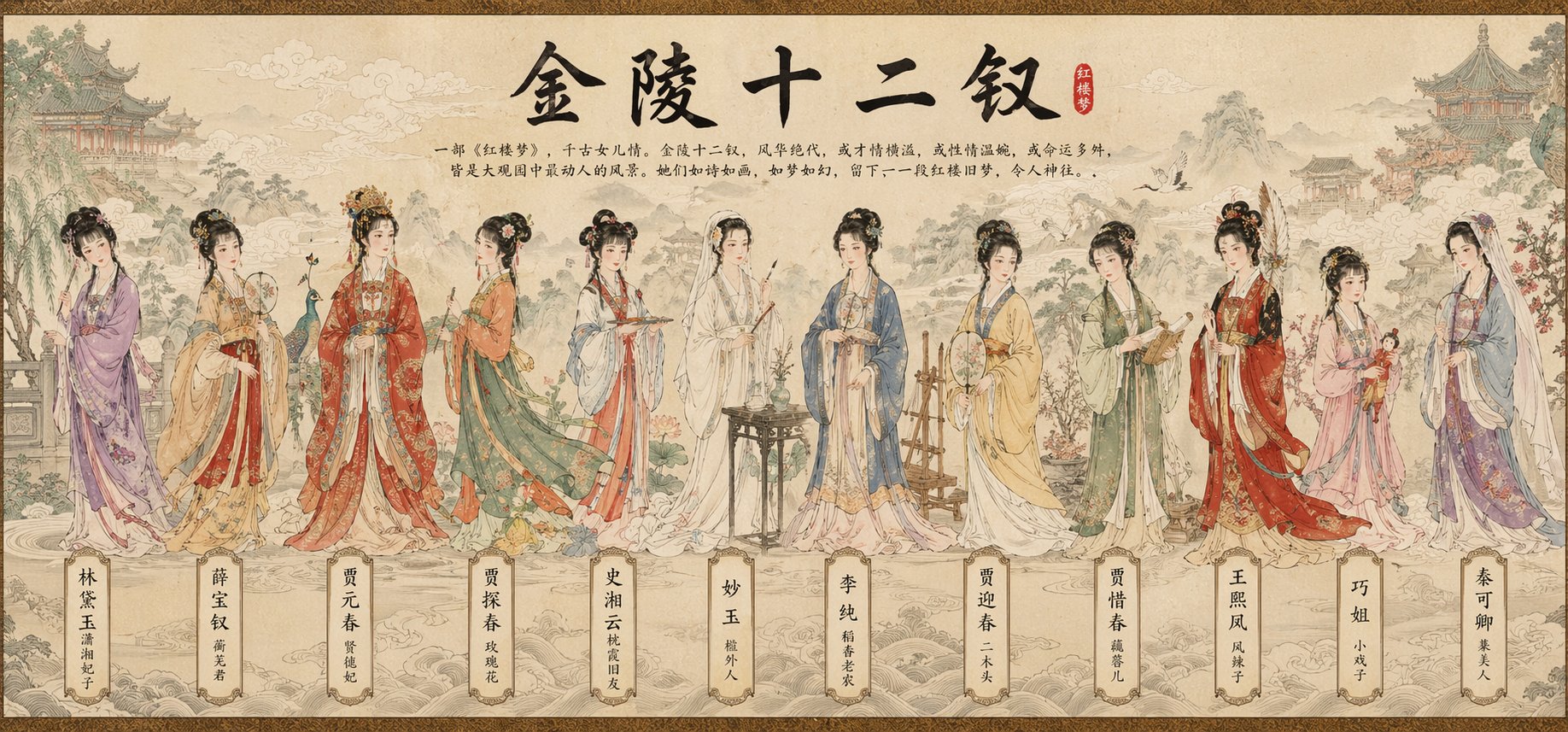
- Use this as a character design benchmark when you need a fast style baseline before rewriting your own prompt.
- It is especially helpful if your target overlaps with Poster, Illustration, Character and you want to judge the image result before tuning wording.
- Keep it as a control sample when you compare nearby prompt variants one variable at a time.
Visual Signals To Notice
- The clearest style signals here are Poster, Illustration, Character, so those should usually stay in your first rewrite.
- Look at silhouette, costume language, mood styling, and whether the character reads clearly at a glance.
- This case keeps one primary output, so the first image should be treated as the main visual reference.
How The Prompt Is Structured
- The prompt reads as a long, highly specified prompt, which is useful when you want to judge how much specificity this direction needs.
- Its keyword cluster is centered on Poster, Illustration, Character, so you can usually keep that cluster while swapping subject, camera, layout, or copy details.
- A practical rewrite path is: keep the outcome, keep the strongest style cues, then replace only the subject and environment blocks.
Good Follow-up Questions
- What changes first if you keep Poster, Illustration, Character but switch the subject matter?
- Which part of the result comes from section-level structure (Character Design) versus tag-level style cues?
- Which related cases in the same section give you a cleaner or more extreme variation of the same direction?
Full Prompt
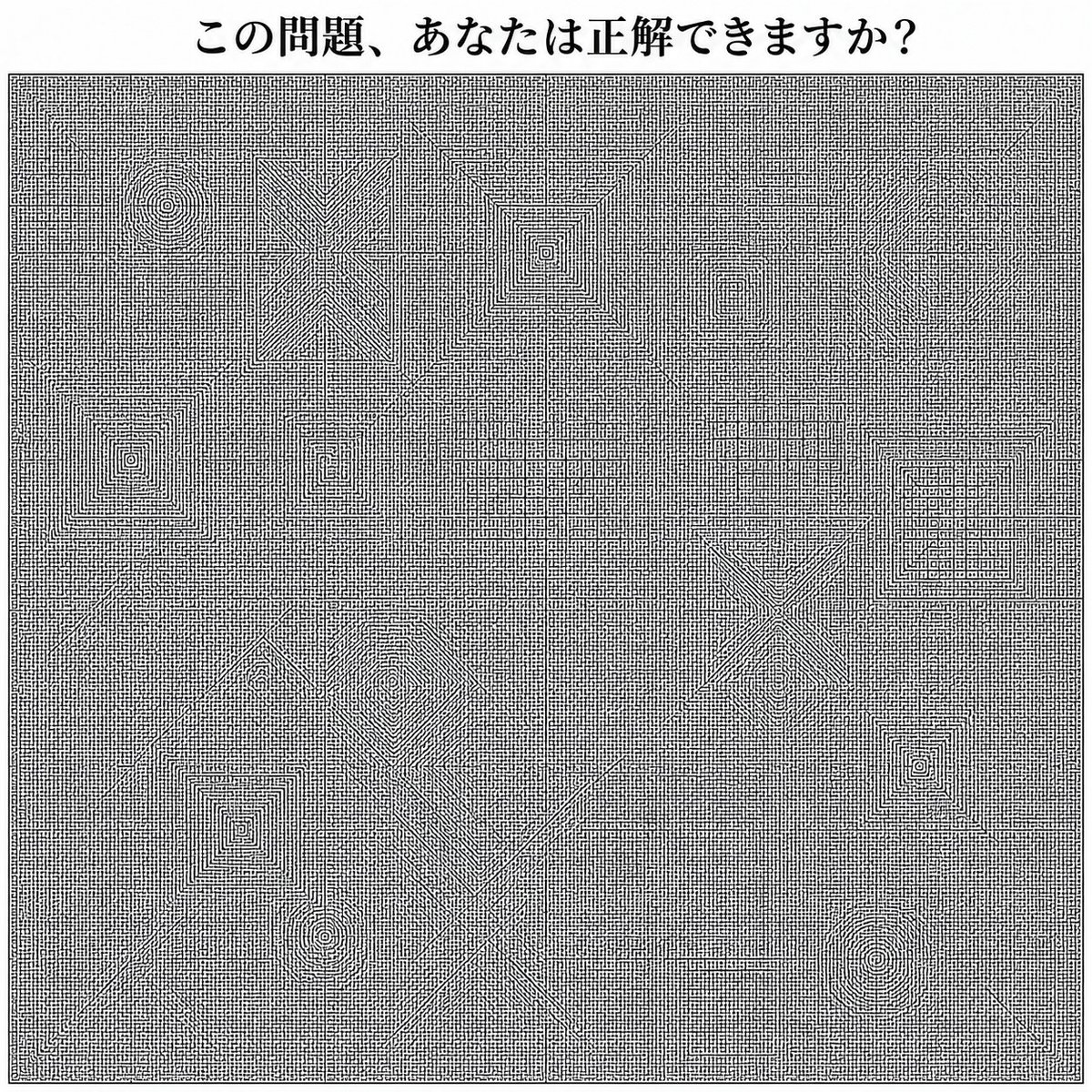
Create a square black-and-white puzzle poster in the style of an extremely intricate hand-drawn notebook maze, clean monochrome ink on white paper. At the top center, place a bold Japanese headline reading {argument name="headline text" default="この問題、あなたは正解できますか?"} in a Mincho-style serif font. Below it, fill almost the entire page with one huge rectangular maze inside a thin double-line border, made from thousands of tiny orthogonal corridors, micro-grid strokes, dead ends, and tight right-angle passages, like a 2026 upgraded version of a middle-school original maze. The maze should be overwhelmingly dense and difficult, with no color and no shading except black linework. Include exactly 15 larger embedded maze motifs visible within the dense field: 4 concentric square spiral targets, 3 circular spiral targets, 2 large X-shaped starburst maze structures, 1 tall rectangular diamond/chevron maze block, 1 central nested-square pyramid-like maze, 1 large asymmetric diamond spiral maze in the lower-left center, 1 large diagonal crossing X near the lower center, and 2 horizontal ladder/grid maze blocks. Add faint long straight divider-like corridors running vertically and horizontally through the maze, plus diagonal corridor cuts, while keeping every area packed with tiny solvable-looking paths. Overall composition: crisp scan-like puzzle sheet, centered, high contrast, no illustrations, no characters, no gradients, no background texture beyond the maze lines.