Case Media
Case Notes
This page keeps the media, full prompt, and original source together so you can inspect the result first and decide whether the prompt is worth copying, saving, or comparing.
Case Insights
To make this page easier to search, cite, and reuse later, the case is also broken down into practical guidance about usage, visual cues, and prompt structure.
Best Fit Scenarios
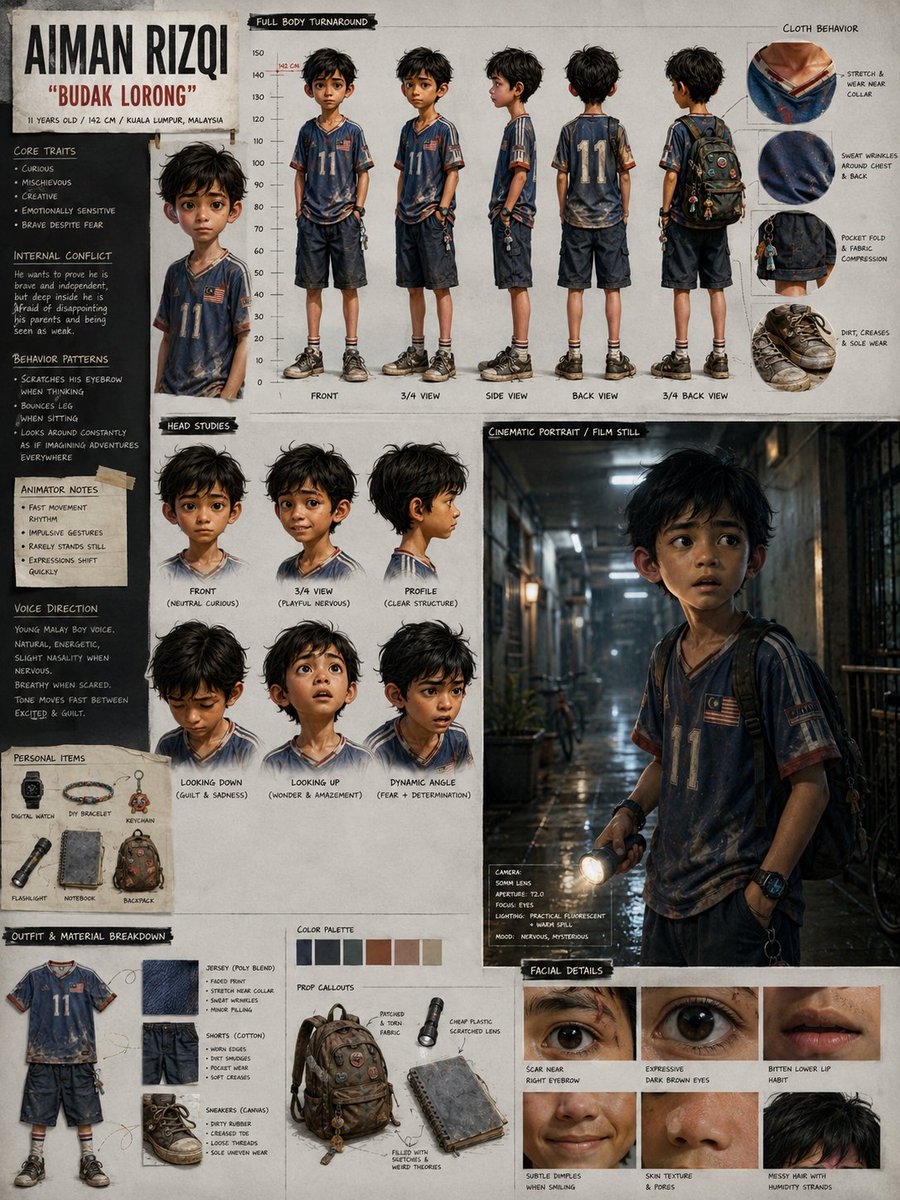
- Use this as a character design benchmark when you need a fast style baseline before rewriting your own prompt.
- It is especially helpful if your target overlaps with 35mm, Cinematic, Illustration and you want to judge the image result before tuning wording.
- Keep it as a control sample when you compare nearby prompt variants one variable at a time.
Visual Signals To Notice
- The clearest style signals here are 35mm, Cinematic, Illustration, so those should usually stay in your first rewrite.
- Look at silhouette, costume language, mood styling, and whether the character reads clearly at a glance.
- This case keeps one primary output, so the first image should be treated as the main visual reference.
How The Prompt Is Structured
- The prompt reads as a long, highly specified prompt, which is useful when you want to judge how much specificity this direction needs.
- Its keyword cluster is centered on 35mm, Cinematic, Illustration, so you can usually keep that cluster while swapping subject, camera, layout, or copy details.
- A practical rewrite path is: keep the outcome, keep the strongest style cues, then replace only the subject and environment blocks.
Good Follow-up Questions
- What changes first if you keep 35mm, Cinematic, Illustration but switch the subject matter?
- Which part of the result comes from section-level structure (Character Design) versus tag-level style cues?
- Which related cases in the same section give you a cleaner or more extreme variation of the same direction?
Full Prompt
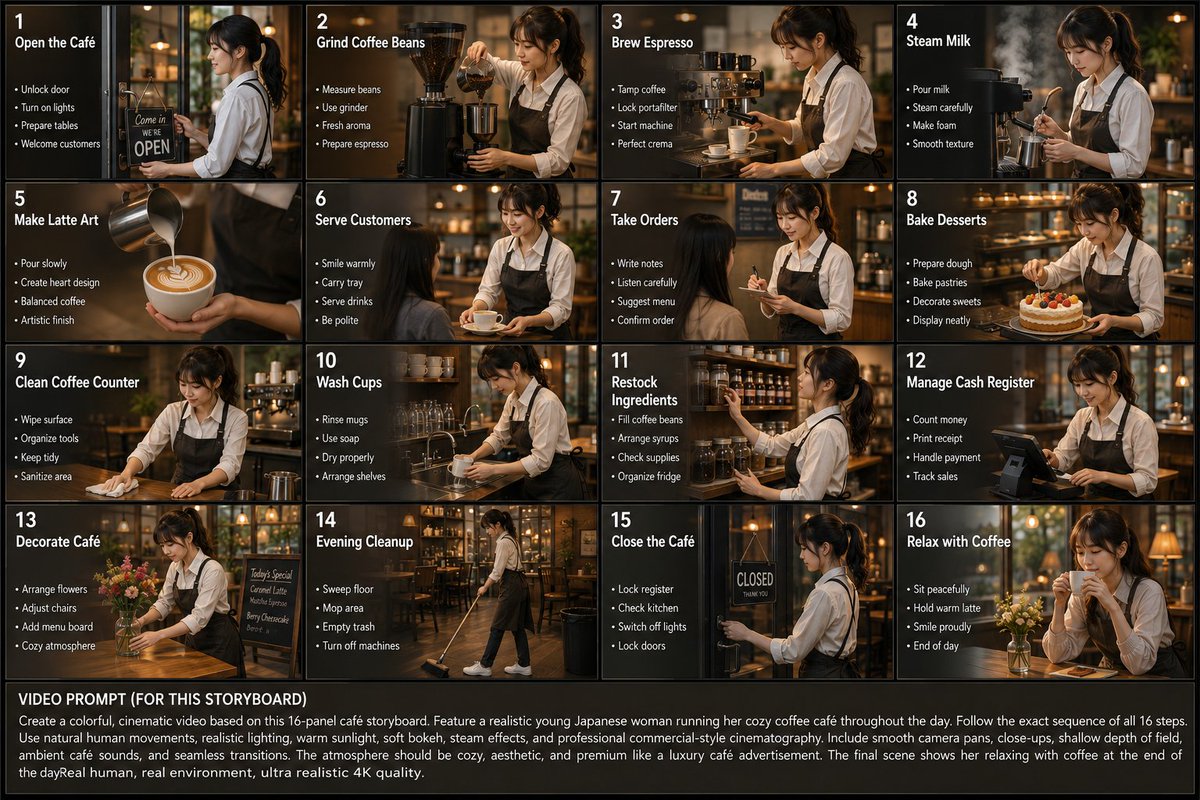
Create a wide 16-panel cinematic storyboard infographic showing the daily routine of a young Japanese woman running her own cozy coffee café. Use a realistic photography style with warm cinematic colors, soft café lighting, shallow depth of field, detailed interiors, and premium coffee-shop atmosphere. Each panel should feature the same realistic Japanese woman with a ponytail, white shirt, dark apron, and natural expressions. Arrange the storyboard in a clean 4x4 grid layout with numbered panels, bold titles, short bullet points, and smooth visual storytelling similar to a professional film-production storyboard. Scenes include: opening the café, grinding coffee beans, brewing espresso, steaming milk, creating latte art, serving customers, taking orders, baking desserts, cleaning the coffee counter, washing cups, restocking ingredients, managing the cash register, decorating the café, evening cleanup, closing the café, and relaxing with coffee at the end of the day. Add realistic steam, reflections, warm sunlight, café décor, cinematic camera angles, and cozy ambience throughout all scenes. Ultra-detailed, realistic human appearance, luxury café commercial aesthetic, visually organized storyboard composition, 4K quality.