Case Media
Case Notes
This page keeps the media, full prompt, and original source together so you can inspect the result first and decide whether the prompt is worth copying, saving, or comparing.
Case Insights
To make this page easier to search, cite, and reuse later, the case is also broken down into practical guidance about usage, visual cues, and prompt structure.
Best Fit Scenarios
- Use this as a character design benchmark when you need a fast style baseline before rewriting your own prompt.
- It is especially helpful if your target overlaps with Character, Product, Vertical and you want to judge the image result before tuning wording.
- Keep it as a control sample when you compare nearby prompt variants one variable at a time.
Visual Signals To Notice
- The clearest style signals here are Character, Product, Vertical, so those should usually stay in your first rewrite.
- Look at silhouette, costume language, mood styling, and whether the character reads clearly at a glance.
- This case keeps one primary output, so the first image should be treated as the main visual reference.
How The Prompt Is Structured
- The prompt reads as a long, highly specified prompt, which is useful when you want to judge how much specificity this direction needs.
- Its keyword cluster is centered on Character, Product, Vertical, so you can usually keep that cluster while swapping subject, camera, layout, or copy details.
- A practical rewrite path is: keep the outcome, keep the strongest style cues, then replace only the subject and environment blocks.
Good Follow-up Questions
- What changes first if you keep Character, Product, Vertical but switch the subject matter?
- Which part of the result comes from section-level structure (Character Design) versus tag-level style cues?
- Which related cases in the same section give you a cleaner or more extreme variation of the same direction?
Full Prompt
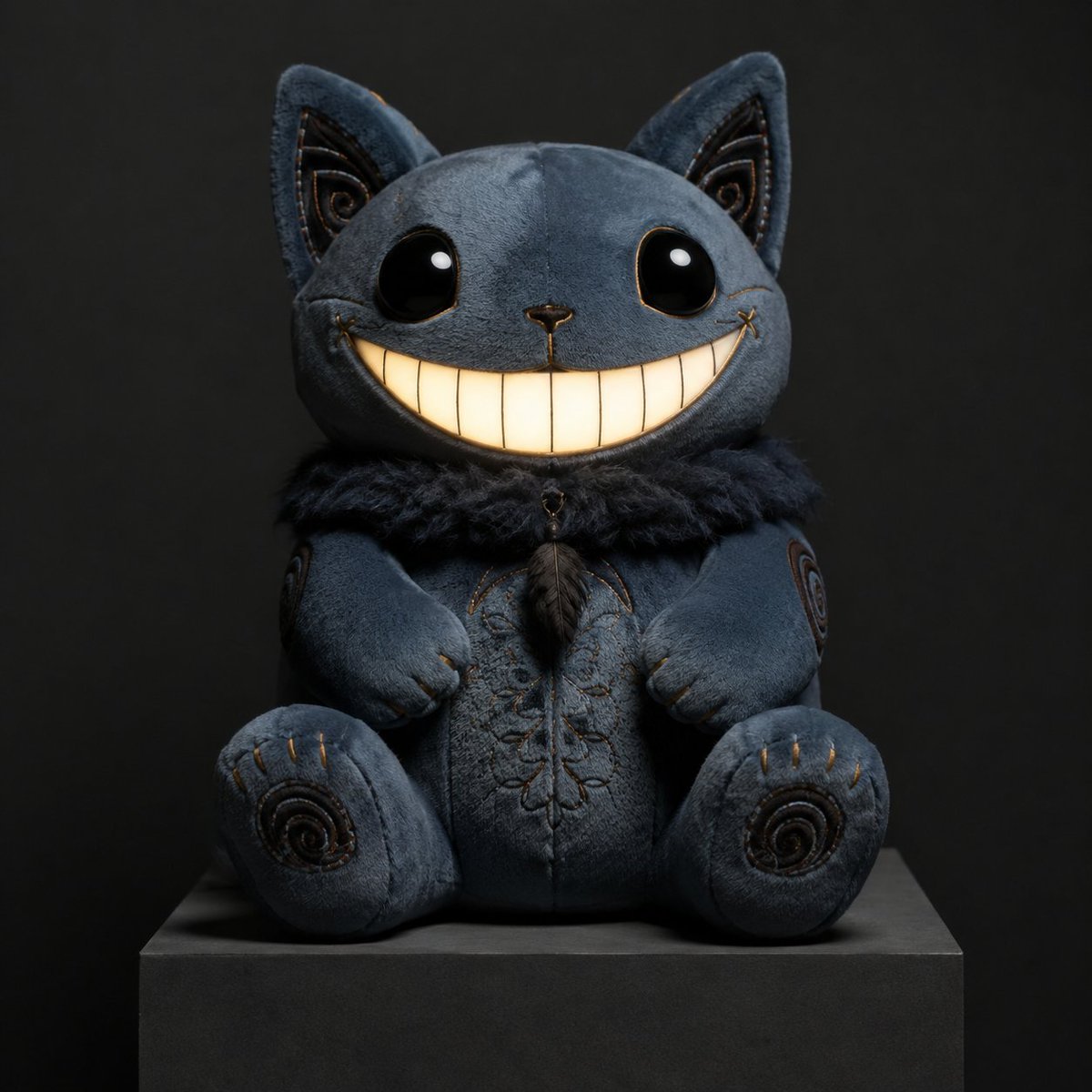
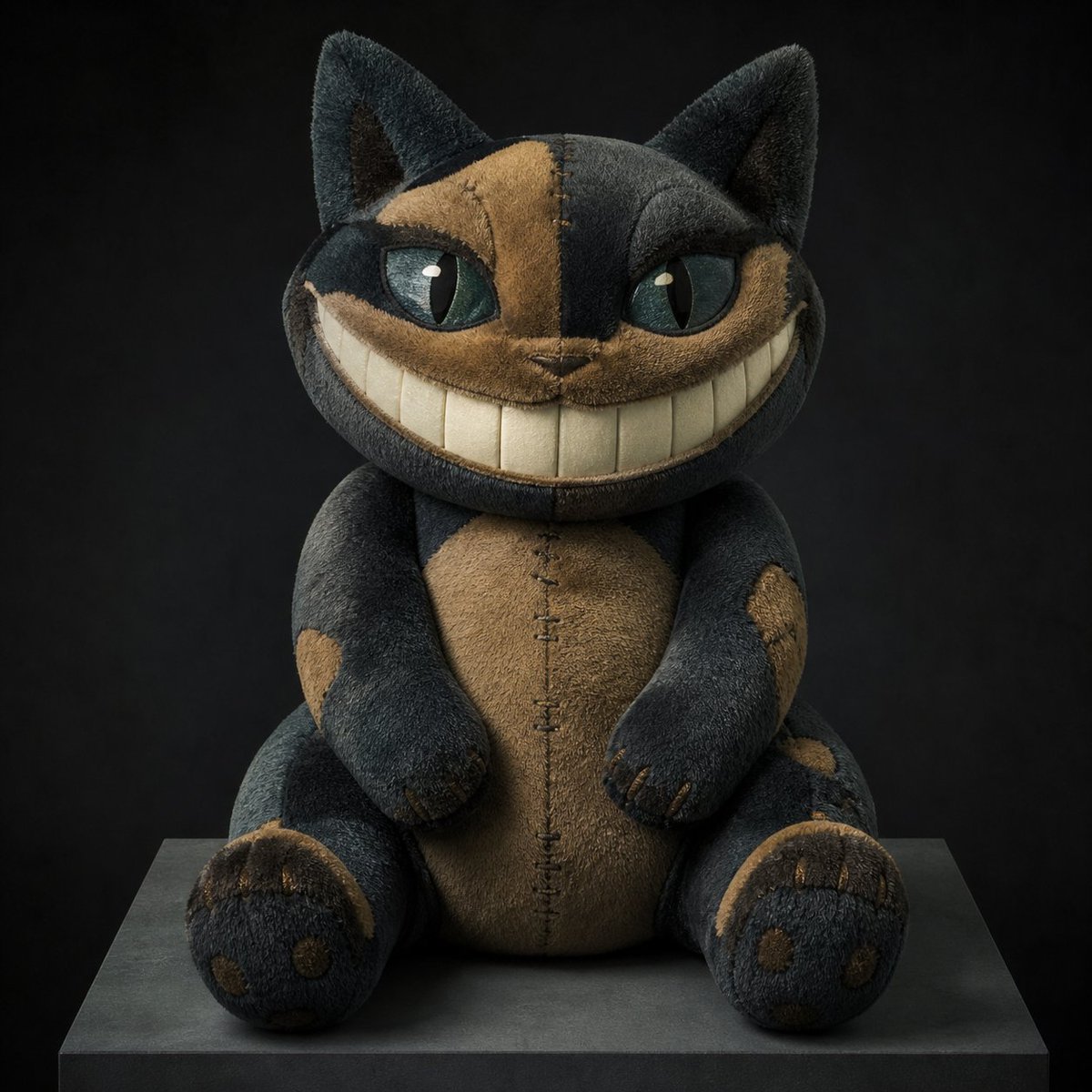
Create a studio product photograph of a handmade plush toy inspired by {argument name="character concept" default="the Cheshire Cat"}, seated front-facing on a dark square pedestal against a nearly black charcoal background. The plush has a round oversized head, two tall triangular cat ears, two large almond-shaped teal-green glassy eyes with tiny white catchlights, and an exaggerated crescent grin filled with many vertical rectangular cream-colored teeth. Use a moody patchwork design in {argument name="main fabric colors" default="deep charcoal black and warm tan brown"}, with mismatched fabric panels across the face, belly, arms, legs, and feet, visible hand stitching down the forehead, muzzle, torso, and paws, and slightly worn fuzzy velour texture. The body is squat and cuddly with two rounded arms resting forward, two short seated legs, two circular feet with tan paw-pad patches and small stitched claws, and a tan oval belly panel split by a vertical seam. The expression should feel mischievous but cute rather than scary, like a premium collectible plushie prototype. Lighting is soft and directional from above-left, emphasizing the fabric nap, seams, and toothy smile, with subtle shadows under the toy and a high-end toy photography look. Use {argument name="background color" default="matte black"} surroundings, centered symmetrical composition, shallow depth of field, realistic materials, no text, no packaging, no extra objects.