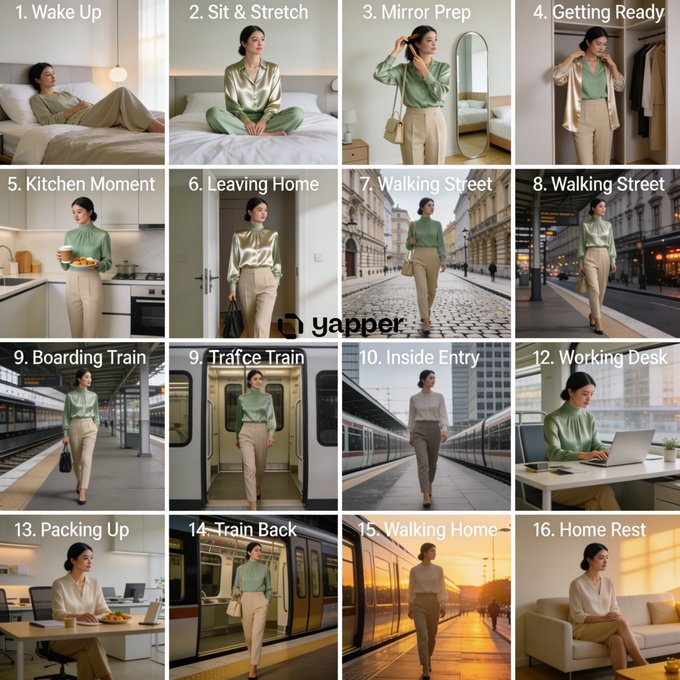
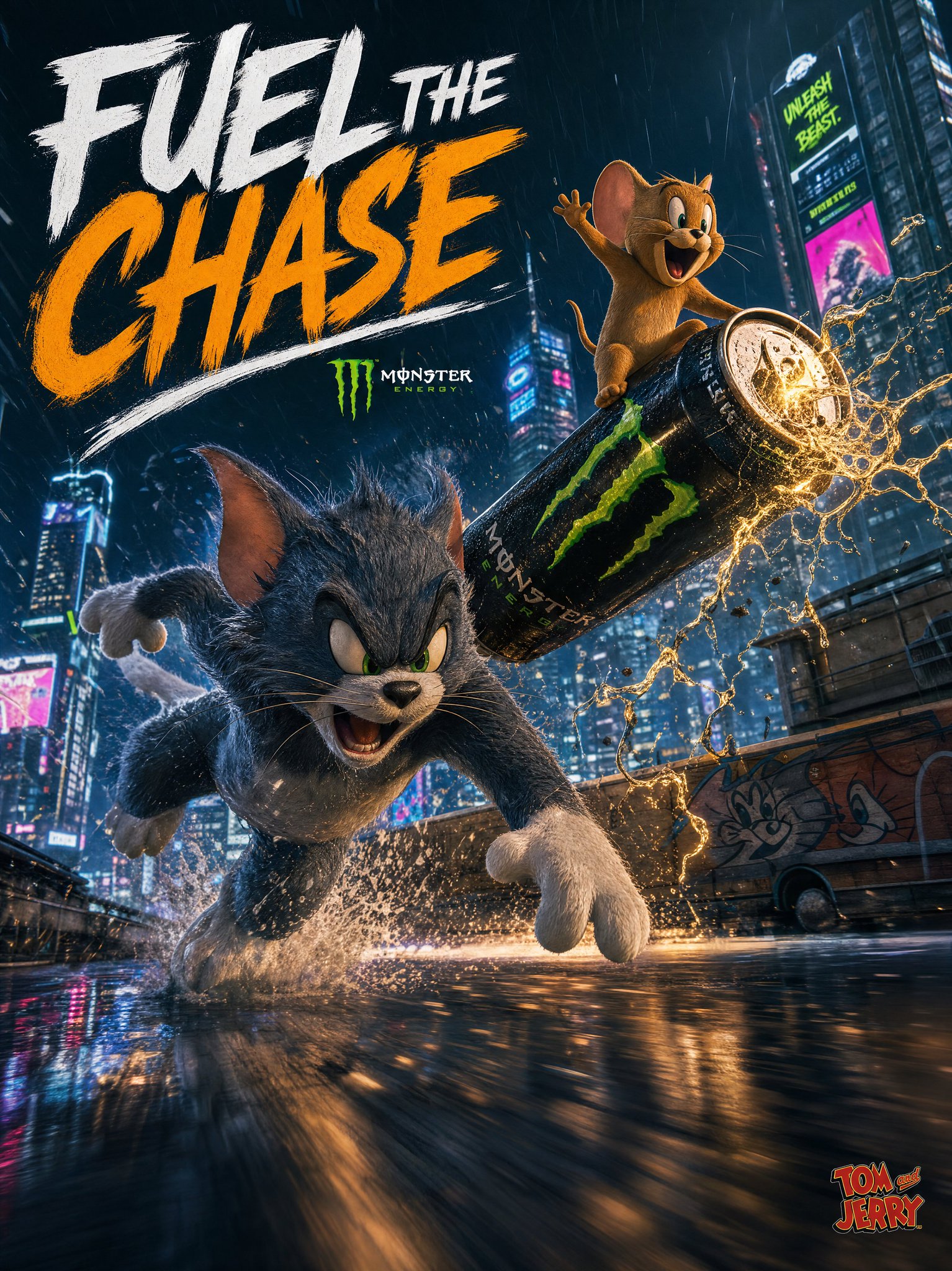
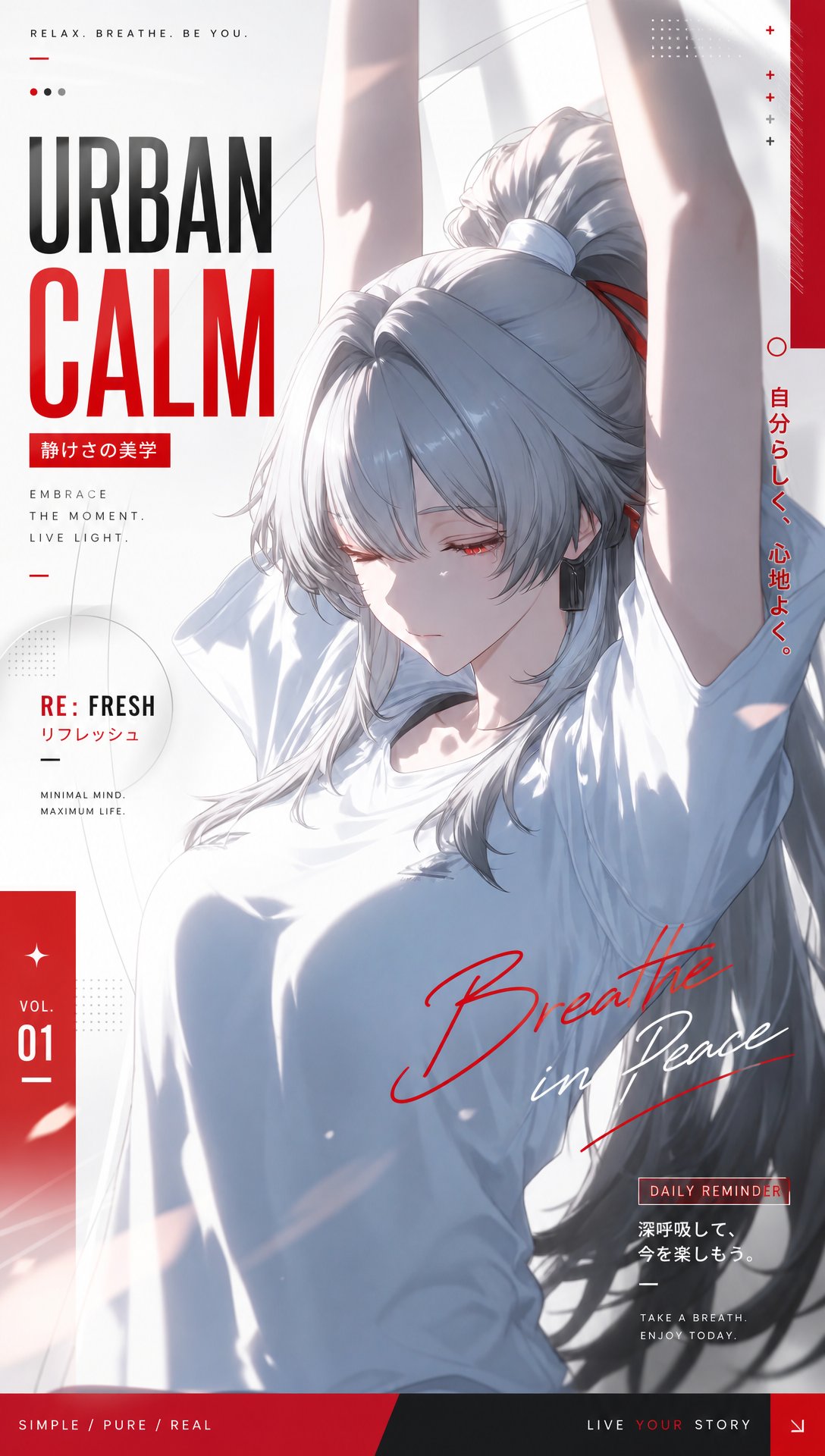
Case Media
Case Notes
This page keeps the media, full prompt, and original source together so you can inspect the result first and decide whether the prompt is worth copying, saving, or comparing.
Case Insights
To make this page easier to search, cite, and reuse later, the case is also broken down into practical guidance about usage, visual cues, and prompt structure.
Best Fit Scenarios
- Use this as a character design benchmark when you need a fast style baseline before rewriting your own prompt.
- It is especially helpful if your target overlaps with Cinematic, Illustration, Character and you want to judge the image result before tuning wording.
- Keep it as a control sample when you compare nearby prompt variants one variable at a time.
Visual Signals To Notice
- The clearest style signals here are Cinematic, Illustration, Character, so those should usually stay in your first rewrite.
- Look at silhouette, costume language, mood styling, and whether the character reads clearly at a glance.
- This case keeps one primary output, so the first image should be treated as the main visual reference.
How The Prompt Is Structured
- The prompt reads as a long, highly specified prompt, which is useful when you want to judge how much specificity this direction needs.
- Its keyword cluster is centered on Cinematic, Illustration, Character, so you can usually keep that cluster while swapping subject, camera, layout, or copy details.
- A practical rewrite path is: keep the outcome, keep the strongest style cues, then replace only the subject and environment blocks.
Good Follow-up Questions
- What changes first if you keep Cinematic, Illustration, Character but switch the subject matter?
- Which part of the result comes from section-level structure (Character Design) versus tag-level style cues?
- Which related cases in the same section give you a cleaner or more extreme variation of the same direction?
Full Prompt
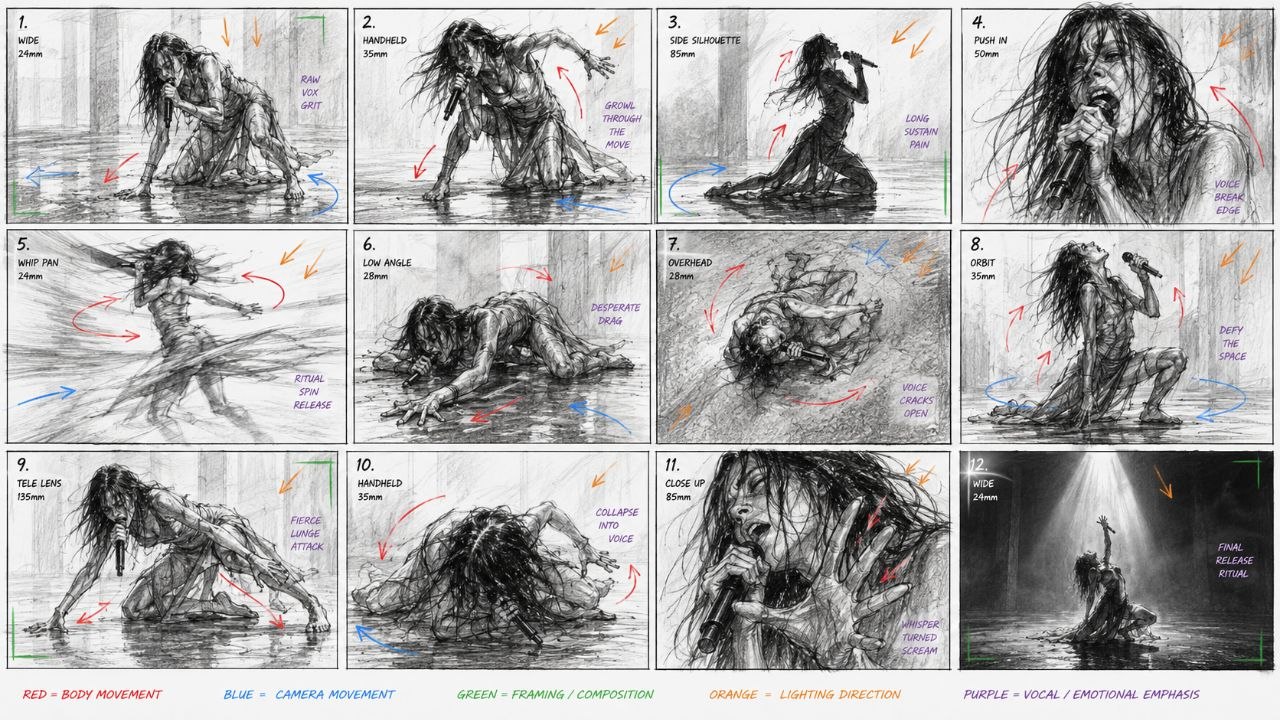
Create a raw contemporary dance performance storyboard focused on intense physical movement and live singing. Use reference image for the character. 16:9 storyboard sheet, 12 cinematic panels. The actual storyboard drawings must be black and white only: rough pencil lines, minimal detail, fast gesture drawing energy, simple anatomy construction and strong silhouette readability. Keep the artwork lightweight, dynamic and unfinished like early choreography previs. A solitary female performer sings continuously while executing an emotionally charged contemporary dance routine inside a massive empty brutalist hall. The choreography is aggressive, fluid and constantly evolving: rapid turns, floor slides, crawling transitions, sharp body isolations, trembling hands, extreme balance shifts, hair whips, lunges, jumps, collapsing movements and distorted sculptural poses. Every panel must contain visible motion and strong body momentum. Avoid static standing poses. The performer should feel trapped between ritual, exhaustion and emotional release. Use cinematic arthouse camerawork with handheld energy, whip pans, orbit movement, overhead shots, side silhouettes, aggressive close-ups, long lens compression and extreme negative space. the environment minimal: empty space, smoke, fabric motion, harsh light beams and wet floor reflections only. Annotation color system: red arrows = body movement blue arrows = camera movement green marks = framing / composition notes orange marks = lighting direction purple marks = vocal / emotional emphasis black text = short lens notes and panel labels No timestamps. End with one overwhelming final movement pose beneath a harsh isolated spotlight.